Digital Processor Reviews

Sort By: Post DateTitle Publish Date

Enlightened Audio Design DSP-1000 Series III D/A processor

The EAD DSP-1000 III is housed in a 2.5" high, U-shaped chassis with a brushed-aluminum front panel. The cover is made of solid, 1/10"-thick steel with a nice "powder" finish, giving the unit an expensive feel. A pushbutton standby switch sitting below a green LED indicator sits at the panel's left. Even when set to Off, power is maintained for the decoder's circuits, but the digital inputs and analog outputs are muted. To the right, three pushbuttons allow selection of one of the three digital input sources (TosLink, 750 ohm coaxial, or glass optical interface). Like the EAD DSP-7000 unit reviewed by J. Gordon Holt and Steven Stone (Vol.18 Nos.1 & 5), the DSP-1000 accepts any of the three sampling rates: 32kHz, 44.1kHz, or 48kHz. Toward panel center is a lock light that illuminates when a digital data link is established. HDCD decoding occurs automatically whenever an HDCD disc is played, causing the front-panel HDCD indicator to light. No remote is available for this decoder.

PS Audio UltraLink Two digital processor

Of all the products I've reviewed or auditioned, a select few jump out as "best buy" recommendations. Almost universally, such products are liked by a wide range of audiophiles, and seem to match well sonically to many systems. Moreover, these products all have outstanding value; they offer a higher level of musical performance than you'd expect from the price.

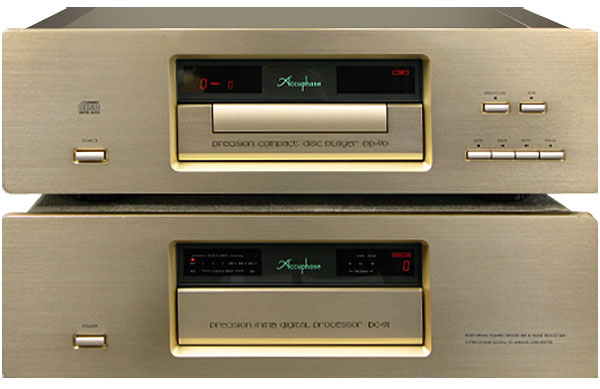
Accuphase DP-90 CD transport & DC-91 D/A processor

In 1995, as the compact disc enters its second decade of commercial reality, it's fair to say that the associated hardware has come of age, exorcising at last the digital gremlins of time-base jitter and quantization noise. Digital-processor maturation is particularly evident in the design of the all-critical D/A processor. The simplistic digital circuitry of yesterday has given way to considerable design sophistication that deals directly with jitter and low-level nonlinearities.

Sumo Axiom CD transport & Theorem II D/A processor

Making digital audio sound good appears to be a much more difficult job than its developers first realized. When digital audio was in its infancy, there was a tendency to think that digital either worked perfectly, or didn't work at all. This belief led the engineering community to devise ill-considered and flawed standards that affect the musical quality of digitally reproduced music today.

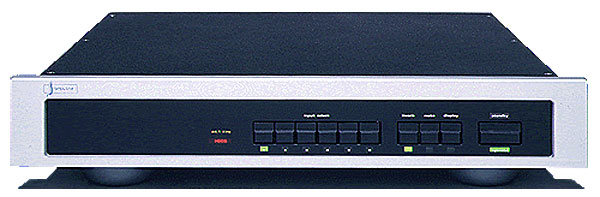
Spectral SDR-2000 Professional D/A processor

Spectral is a bit of an enigma in the high-end audio world. Although nearly 20 years old and one of the founders of the American high-end audio industry, Spectral isn't a name that comes quickly to mind when considering the best of the best in high-end.


Spectral's low profile is of their own choosing. They advertise very little, their products are demonstrated in a small number of stores, they almost never send products to magazines for review, and they are very quiet about their accomplishments.

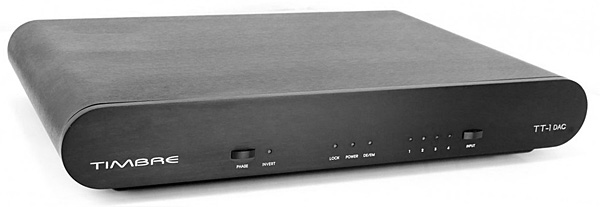
Timbre Technology TT-1 D/A processor

As the sides of the slim-line Timbre Technology TT-1 DAC are radiused rather than flat, it's elegant compared to its typical boxy competition. While the TT-1's handsome shape stands out more than your average audiophile device, its curved sides help create a stronger, less resonant shape than the usual box, and serve as just one of the many elements contributing to a high degree of mechanical integrity and damping.

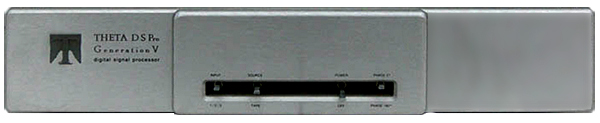
Theta DS Pro Generation V digital processor

Some high-end audio companies develop reputations for having a particular "sound." This reputation develops when every product the company makes has a similar sonic flavor. These products appeal to certain customers who like the company's sound, and who therefore tend to stay with that company's products year after year. Unfortunately, such an approach can limit a manufacturer's appeal to a broader audience.
Advertisement
Advertisement
Advertisement