Digital Processor Reviews

Sort By: Post DateTitle Publish Date

dCS Debussy D/A processor
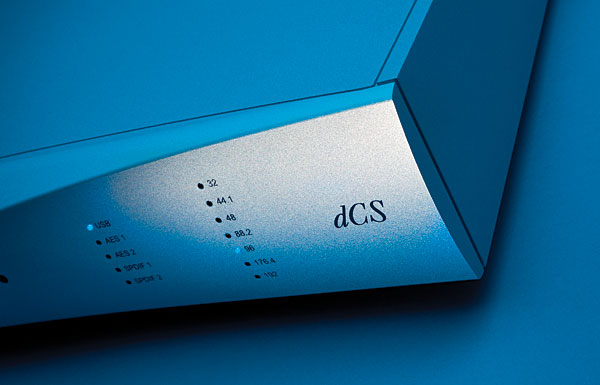
Don't have $80,000 to drop on dCS's four-component Scarlatti SACD stack that I reviewed in August 2009, or $17,999 for their Puccini SACD/CD player that John Atkinson raved about in December 2009? Even if you do, the new Debussy D/A processor ($10,999) might be a better fit for your 21st-century audio system. Sure, you don't get an SACD transport—or any kind of disc play, for that matter—but the odds today are that you already have a player you like that's got an S/PDIF output that can feed the Debussy.
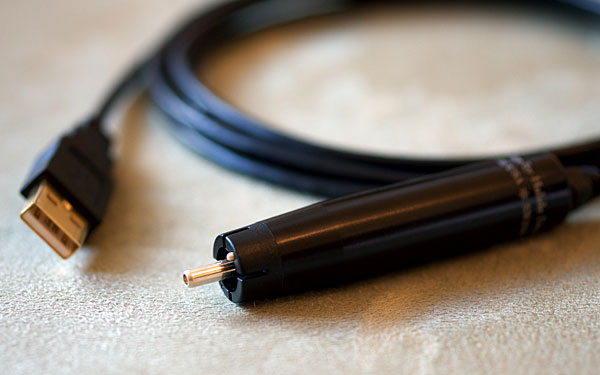
Halide Design S/PDIF Bridge USB-S/PDIF converter

The weekly Vote! Page is one of the most popular features of the Stereophile website, and the August 22 question, "Should Stereophile review more or fewer computer-audio products?", generated a record number of responses. No less than 88% of those responding asked for more coverage of products that allow a computer to be a legitimate source of music in a high-end context. Just 7% of readers wanted less coverage.

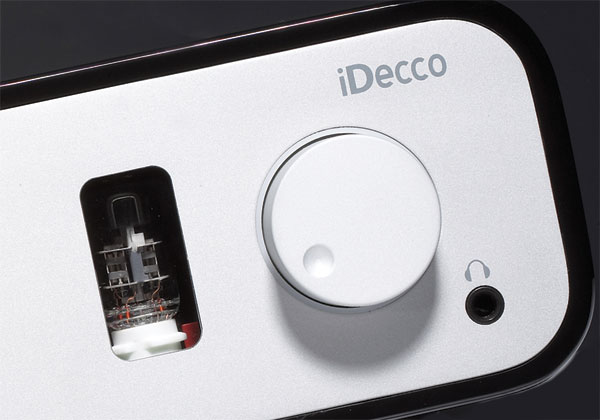
Peachtree iDecco D/A integrated amplifier

As with so many other things, from cell phones to soy milk, the idea of a portable MP3 player was something I at first disdained, only to later embrace with the fervor of any reformed sinner. But not so the idea of a high-fidelity iPod dock: Given that I now carry around several hundred high-resolution AIFF files on my own Apple iPod Touch, the usefulness of a compatible transport seemed obvious from the start. Look at it this way: In 1970, whenever I bought a music recording, I could enjoy it on any player, in any room in the house. In 2010, why shouldn't I enjoy at least that degree of convenience and flexibility—without resorting to a pair of tinny, uncomfortable earbuds?

YBA Design WD202 D/A headphone amplifier

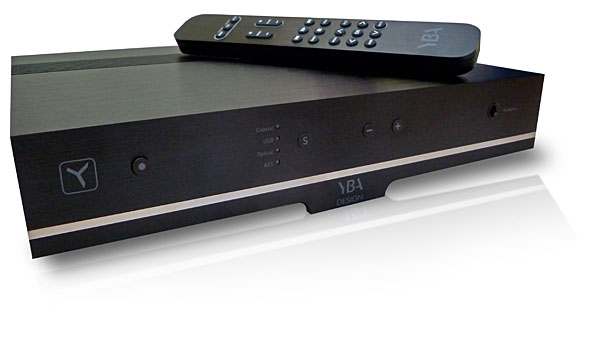
YBA Design's new WD202 D/A processor and headphone amplifier showed up while I was turning the pages of Don and Jeff Breithaupt's Precious and Few: Pop Music of the Early '70s, recommended by John Marks in his October 2009 "Fifth Element" column. Each page drips with great examples of why the 1970s often wind up on the wrong end of the culture stick (the Osmonds, anyone? Terry Jacks?).

Lindemann & Stello USB-S/PDIF converters

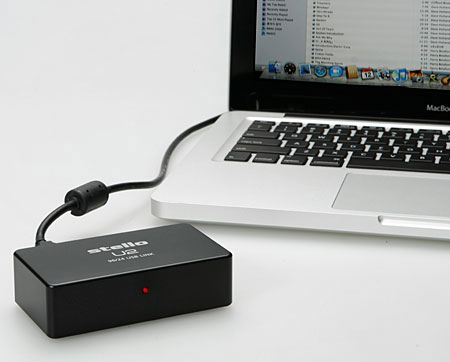
As someone who wrestled endlessly with the nine-pin serial ports and the RS-232 protocol with which early PCs came fitted (footnote 1), I welcomed the Universal Serial Bus (USB) interface when I first encountered it a decade ago, on the original Apple iMac. Plug it in. Don't worry. Be happy. The computer peripherals work as they should, which was often not the case with RS-232. It was a given, therefore, that the then-new USB port would be seen as a natural means of exporting audio data from a PC (footnote 2), but the first generation of USB-connected audio devices offered disappointing performance.

Naim Uniti CD player/receiver

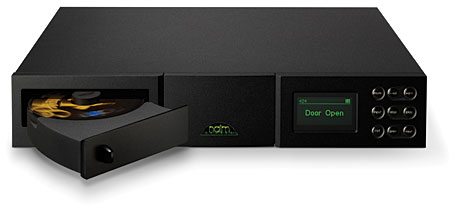
In an industry whose newest products are often as discouragingly unaffordable as they are short of the sonic mark, the Naim Audio Uniti ($3795) stands out. In a single reasonably sized box, the Uniti combines the guts of Naim's Nait 5i integrated amplifier and CD5i CD player with various additional sources: an FM/DAB tuner, and interfaces for an iPod, a USB memory stick, an iRadio, and a UPnP-compatible connected computer or server—all for the price of a very good television set.


Bryston BDA-1 D/A converter

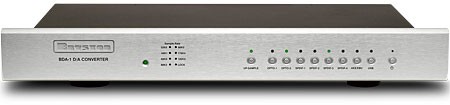
In February 2009, I reviewed Bryston Ltd.'s first CD player, the $2695 BCD-1, and was very impressed by what I heard. The BDA-1 ($1995) is the Canadian company's first standalone DAC. It's slim, only 2.75" high, with the engraved company name, model number, and infrared sensor grouped at the extreme left of a front panel of polished aluminum. Farther to the right are two columns of four LEDs each that comprise the sample-rate indicator, which identifies the selected input's signal frequency and whether the BDA-1 has locked to it. Closer to the center is the Upsample control, which governs the conversion of the incoming digital signal synchronously to 192kHz or 176.4kHz. The Upsample LED turns green for 192kHz, red for 176.4kHz. Digital sources are selected by pressing one of eight pushbuttons just right of center: two TosLink, four S/PDIF (coaxial), one AES/EBU XLR, and one USB 1.1, the last accepting only signals with sample rates at or below 48kHz. An LED above each pushbutton lights green for an incoming PCM datastreams and red for other types, including multichannel Dolby Digital streams.

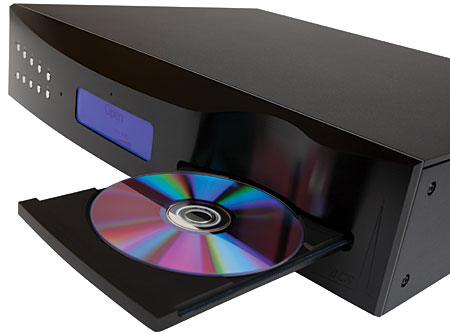
dCS Puccini SACD playback system

It's now 10 years since the launch of the two high-resolution audio disc formats, SACDhttp://www.stereophile.com/asweseeit/164">SACD; and DVD-Audiohttp://www.stereophile.com/asweseeit/1099awsi">DVD-Audio;. Yet, perhaps partly because both were hobbled">http://www.stereophile.com/asweseeit/257">hobbled in various ways to please the record industry, perhaps partly because too many supposed hi-rez releases sounded no better than CD, and perhaps partly because record retailers weren't sure how to display the formats to their best advantage, neither took off in any substantive way. DVD-A disappeared, and SACD survived only as a niche format for high-quality classical releases in both two- and multichannel forms. As we got deeper into the same decade, digital technology, despite various sparks and flashes, went into the doldrums. Mainstream digital technology was increasingly concerned with squashing the music into fewer and more portable bits, not with increased sound quality. Even the concept of "CD sound quality" began to seem an unattainable goal, as MP3">http://www.stereophile.com/features/308mp3cd">MP3 files became the dominant music carrier.


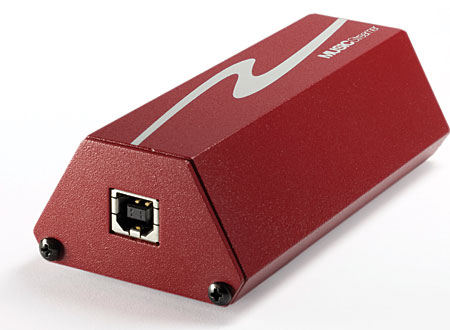
HRT Music Streamer USB D/A Converter

My favorite moment in the Zack Snyder film Watchmen—apart from the Dylan-fueled title sequence, which itself contains some of the most memorable scenes in recent cinema—comes when retired crimefighter Daniel "Nite Owl II" Dreiberg arrives home to find the doctrinaire and mildly crazy Walter "Rorschach" Kovacs in his kitchen, eating beans straight from the can. The startled Dreiberg asks his visitor, "Would you like me to heat those up for you?"


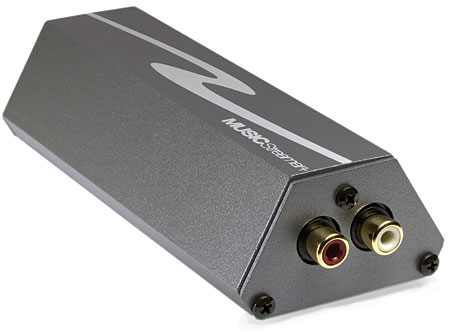
HRT Music Streamer+ USB D/A Converter

Every now and then an affordable product comes along that's so good, even wealthy shoppers want it. Past examples in domestic audio include the Rega">http://www.stereophile.com/turntables/184rega">Rega RB300 tonearm, the original Quicksilver Mono amplifier, the Grace F9E phono cartridge—even Sony's unwitting CD player, the original PlayStationhttp://www.stereophile.com/cdplayers/708play">PlayStation;. Based on word of mouth alone, one might add the HRT Music Streamer+ to that lauded list.


Advertisement
Advertisement
Advertisement