Phono Preamp Reviews

Sort By: Post DateTitle Publish Date

Channel D Pure Vinyl 5 & Seta L phono preamplifier
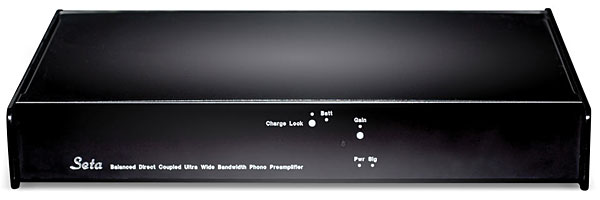
Ever since I stopped using my Audio Research SP10 preamplifier in the early 1990s—its eight phono-stage tubes used to get too noisy too quickly—I tried a variety of standalone phono preamplifiers. Seeing the most service through the 1990s and 2000s were, first, a Mod Squad Phono Drive EPS, then a Linn Linto, both of which I purchased. But when I measured Channel D's Seta Model L, which Michael Fremer reviewed in the August 2010 issue, the Linto was pushed to one side. The battery-powered Seta L (footnote 1) had the lowest noise and distortion I had encountered in a phono preamplifier, and I eventually bought the sample I had been sent for a follow-up review in 2013.
FollowUp RoundUp

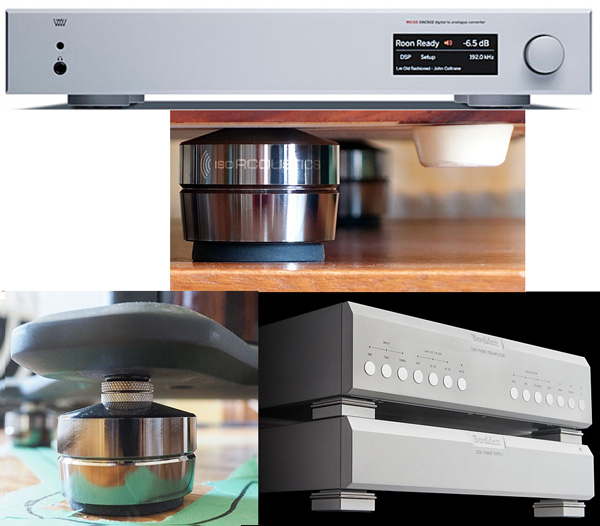
When Stereophile publishes followup reviews of various kinds in the print magazine, we add the followup as a "child page" to the full review. That means that they don't appear on the website's home page and might get missed. The October 2020 issue included three followups: of the Boulder 2108 phono preamplifier, the Weiss DAC502 D/A processor, and the IsoAcoustics Gaia loudspeaker isolation feet.

Analog Corner #300: Boulder 2108, Consolidated Audio Monster Can

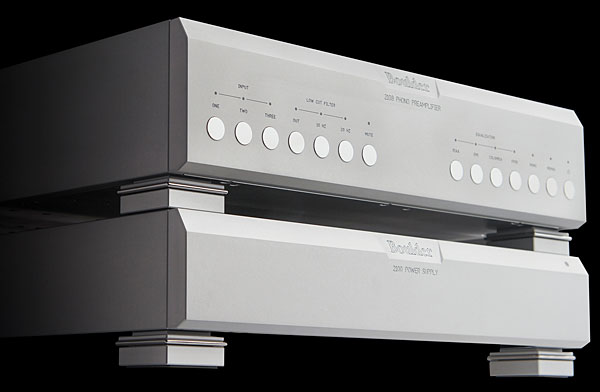
The two biggest sonic jolts I've experienced involving phono preamps were from two very different ones: the Petr Mares's Connoisseur 2.0 and Boulder's 2008, which was reviewed in the July 2002 Stereophile. The first was hand-built, single-ended, housed in a wooden case, limited to 100 units, and, when I got to hear it in the mid-1990s, cost around $6000, or about $10,000 in today's dollars. The other was a feature-laden, double-chassis monument to flexibility and surface-mount high technology. It featured beautifully finished, flush-mounted mirrored buttons your fingers just wanted to press.

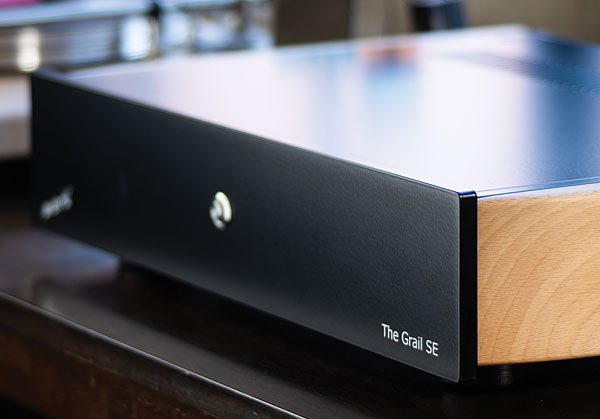
Analog Corner #297: van den Hul The Grail SE+ phono preamplifier & SAEC WE-4700 tonearm

The catastrophic February 6 fire at the factory where Apollo Masters produced LP-mastering lacquers—flat aluminum discs covered with nitrocellulose lacquer—will be old news by the time this column gets to you, but the repercussions of the loss will be ongoing for at least the next year and probably beyond.

PS Audio Stellar Phono phono preamplifier

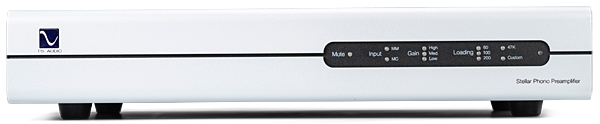
We usually save the question of value for the end of a review, but this time it's worth mentioning up front, if only because PS Audio has been in the news lately. Late last August, the company announced they were switching from a traditional dealer network to a factory-direct sales model. So, to some readers, it might seem fair to judge the brand-new, full-featured Stellar Phono Preamplifier ($2500) against ones selling in stores for $5000.

Analog Corner #292: AVM R 2.3 turntable, Miyajima Destiny phono cartridge, Sutherland Phono Loco phono preamplifier

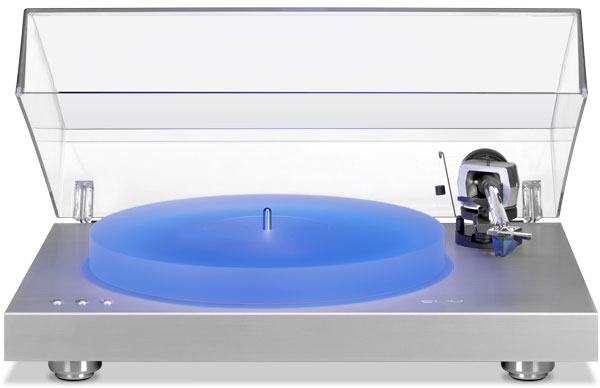
AVM Audio, which has been in business since 1986 (footnote 1), chose last year to enter the turntable market with two models that reflect the company's brushed-aluminum/blue LED visual aesthetics.


It doesn't take a forensic turntable scientist to figure out who manufactures both of those turntable models. Clearly, Pro-Ject does (footnote 2)—although some audiophiles might recognize only a few key parts. Other elements, especially the two different tonearm models, may appear unique to AVM, having been built to their specs.

Analog Corner #291: SME Synergy LP player, Boulder 508 phono preamplifier

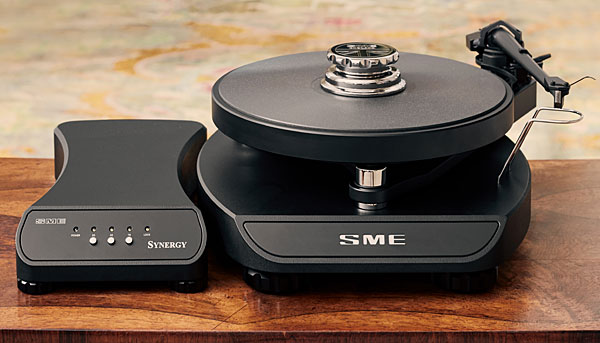
Since acquiring SME in late 2016, Ajay Shirke's Cadence Group has moved cautiously. First, it revamped and cleaned up the company's somewhat chaotic worldwide distribution. More recently, the new owners eliminated from the bottom of the line the SME Model 10 turntable, introduced in 2000.

Sutherland Engineering Little Loco phono preamplifier

Descriptions of the sounds of products from Sutherland Engineering nearly always include "refined." While that word is certainly justified, it would be more apt to use it as a verb: Ron Sutherland spends more time than any audio designer I've known studying and fine-tuning and refining every detail of his work. I have the impression he knows those products so well that when he decides to design a less expensive version of his newest and best models, he knows exactly what to do.

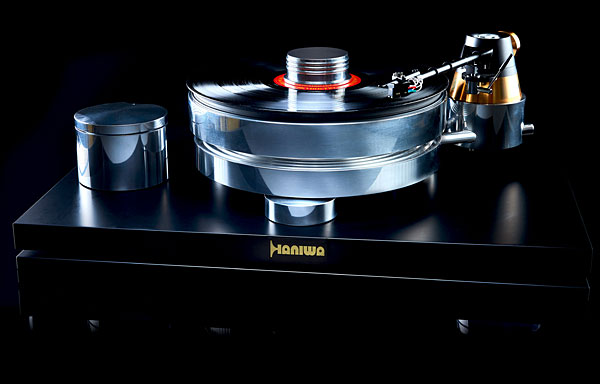
Analog Corner #290: The Haniwa LP Playback System

Haniwa's Dr. Tetsuo Kubo is an interesting fellow. If you go to shows, domestic or overseas, you've possibly encountered him in his room a space known for being strewn, shrine-like, with LPs that once belonged to The Absolute Sound's founder, the late Harry Pearson: Dr. Kubo was a fan.

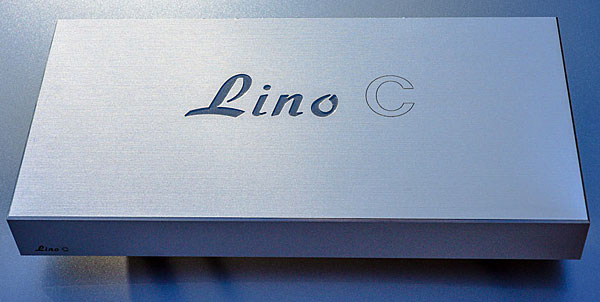
Analog Corner #286: Channel D Lino C 2.0 phono preamplifier

Install a new component in your system and there's usually a period of adjustment as you get used to the difference in sound—especially if the new product costs much less than your reference. Channel D's new Lino C 2.0 balanced phono preamplifier costs $2499, yet my ears instantly accepted its combination of drop-dead, noise-free backgrounds and lack of obvious colorations or sonic personality. I didn't hear it—I heard only my Ortofon A95 cartridge, with which I'm well familiar, as amplified by far more costly phono preamps.
Advertisement
Advertisement
Advertisement