Integrated Amp Reviews

Sort By: Post DateTitle Publish Date

T+A R 2500 R multisource receiver
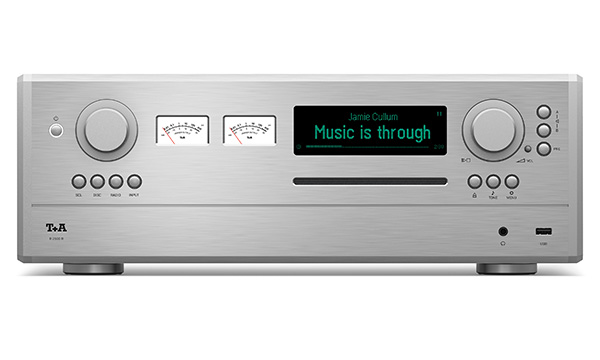
The hi-fi receiver has been many different things. Early examples, like the Harman Kardon "Stereo Festival" TA-230 from 1958 (said by modern-day Harman/Samsung to be the first stereo receiver), featured separate FM and AM monophonic tuners that could assign a speaker to each if you wanted to listen to what was then a fad: stereo broadcasts over two stations (left channel over FM, right over AM, for instance). Standardized FM stereo broadcasting began in 1961, and by then, receivers had evolved into large, complex, nearly complete stereo systems; an example of that was the Fisher 800.


It might be nice if the receiver can connect to a modern TV, which will have either TosLink or HDMI-ARC output, or both. For those of us who still own a bunch of CDs, we might as well include a robust DAC—and maybe even a built-in CD transport. Throw in FM analog and digital tuners, and voilà, you have the R 2500 R, the "21st Century Receiver" from T+A Elektroakustik of Herford, Germany, southwest of Hanover.
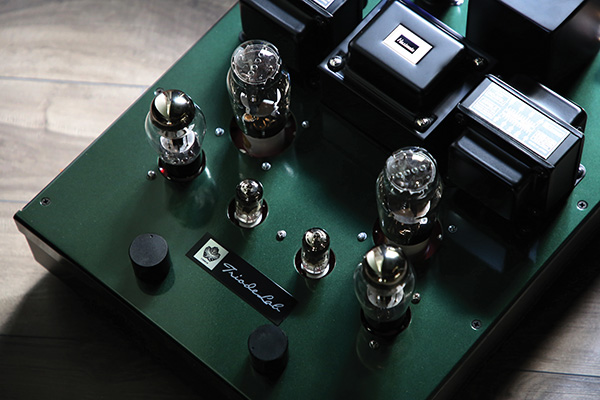
Triode Lab 2A3 EVO integrated amplifier

For 16 years, I bled jazz. Countless hours alone in my practice shed, honing technique, recording myself for brutal self-analysis, dissecting and transcribing master drummers' solos note for note. My dream was to transcend technique, to exist in a state of pure reaction among musicians in perfect communion, where improvisation flows as effortlessly as thought.


The years melted away—George Lawrence Stone's sticking variations, Benjamin Podemski's concert drum solos, dog-eared "Real Book" charts, college big band concerts, smoky jam sessions, a basement practice routine that nearly deafened Mom. Once I was in NYC, there were classes at Drummer's Collective.


With intense application, playing became rote. But in rare moments of surrender, it wasn't me playing the music anymore. The music played me—ideas transmitted effortlessly, without thought, guided by some unseen force: maybe the woman in the third row, maybe the ghost of Tony Williams. In such moments, when fatigue stilled the mind, instrument and music intertwined, a single entity responding not to conscious thought but to some unknown, unknowable force. What ensued was beyond my mental reach.

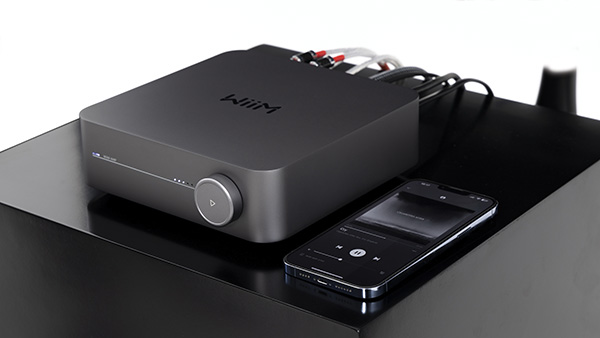
WiiM Amp streaming D/A integrated amplifier

Life is not for Goldilocks. "Just right" is elusive. Every day, we face countless situations where our choices are either too many to navigate or too few to find satisfaction. Behavioral scientists call those dissatisfying alternatives "choice overload" and "choice deprivation," respectively.


I think choice overload may scare some audiophiles away from the glorious world of streaming, where the bulk and finite scope of a physical music-media collection can be traded for (or augmented by) many more listening choices. If you're willing to explore and choose, you can hear as deep and wide as most musical rabbit holes are likely to go, and then return to your favorite songs with a couple of finger-pecks on your phone.


For some people, all that choice is intimidating, paralyzing, overwhelming, highly stressful. That's no way to enjoy music! I sympathize. I'm not ready to leave physical media behind. But I am very happy in the streaming present. In fact, I urge the hesitant: Cast aside your fears and trepidations, sign up for a free month of Qobuz, Spotify, Tidal, Apple Music, you decide—then take it slow. At first, avoid browsing—just search for the music you want to hear. Try something new each day. Over time, you'll adjust to the overwhelming abundance. By the end of the month, especially with a full-resolution service like Qobuz, Tidal, or Apple Music+HD, you may not want to give it up. The future-present beckons loudly.

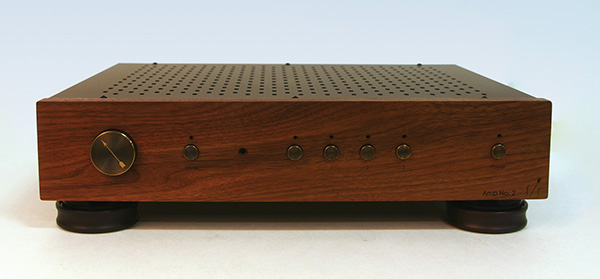
Fern & Roby Amp No. 2 integrated amplifier

I know from experience that the manner in which a sound system occupies its environment affects every listening session, its feel and its quality. Which is what first attracted my attention to Fern & Roby products: This is serious, quality audio gear that looks elegant and unpretentious. The component I'm about to describe, Fern & Roby's new, $8500 Amp No. 2 integrated amplifier, is bureau friendly. It looks more stylish than tech-savvy, and it is not big or heavy, but its sound quality would put the sound of many amp farms to shame. A system consisting of an Amp No. 2, a pair of Raven speakers, and a Montrose turntable exemplifies owner-founder Christopher Hildebrand's materials-based, simple-is-better, form-follows-function design ethic.

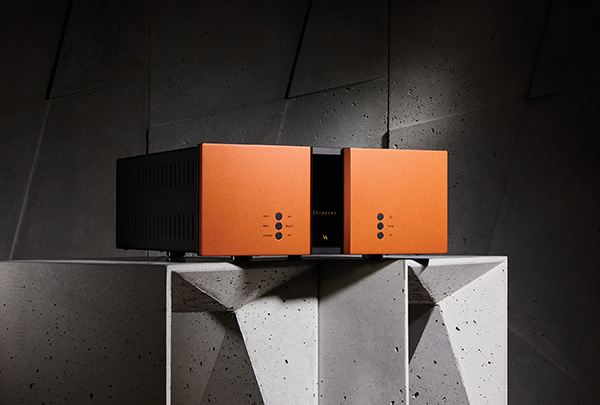
Vitus RI-101 Mk.II streaming integrated amplifier

Six years after Hans-Ole Vitus, the founder of Danish company Vitus Audio, visited the United States to premier his first three products at CES 2004, Michael Fremer went gaga over the company's top-line MP-P201 Masterpiece Series phono preamplifier. Thirteen years later, at AXPONA 2023, it was my turn to be blown away, this time by the sound of a $385,000 Vitus Audio top-of-the-line Masterpiece series front-end and amplifiers that sang through price-commensurate Estelon Extreme Mk II loudspeakers.


In between—and not for want of trying—Vitus's presence in these pages has been limited to show reports. It's time to change that.

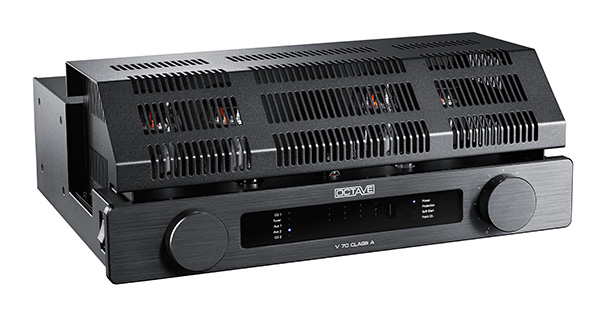
Octave Audio V70 Class A integrated amplifier

It may be strange to read what I'm about to say in the pages of Stereophile, but it's the cold hard truth so here goes: Audio reviews are inadequate. They don't tell the whole story. They come up short and can even misdirect.


It's not their fault, or at least sometimes it isn't. Even the good ones can't tell you how something will sound to you—let alone make you feel, the ultimate point—in your own room. As helpful as they may be, they can't address the elephant in the listening room: synergy.


In reviewing the Octave Audio V 70 Class A integrated amplifier ($12,000 and up; $15,900 as reviewed), I was reminded of the importance of synergy in our hobby.

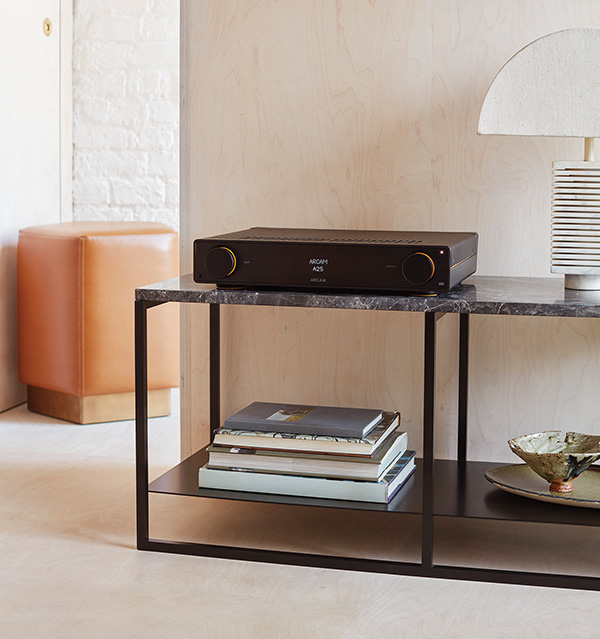
ARCAM Radia A25 integrated amplifier

I've been to a few bowling parties and passed a bottle around a few fire pits, but I've never watched an audiophile unboxing video. Lately though, I have been paying closer attention to my first impressions of each new audio product as it enters my realm.


I'm finding it interesting to notice how a device previously unseen and unheard declares itself one small step at a time as I open its box, feel its heft, observe its form, study its manual, and, finally, wire it into my system. Those start-up experiences, plus my gut feelings during my first moments of music listening, establish a tone of innocent discovery I wish would last the whole month. It never does.


I mention this because my first impressions for my first-ever review of an ARCAM product, the Radia A25 integrated amplifier, were in that "innocent and receptive" mode from the instant I saw the box sitting outside my door.

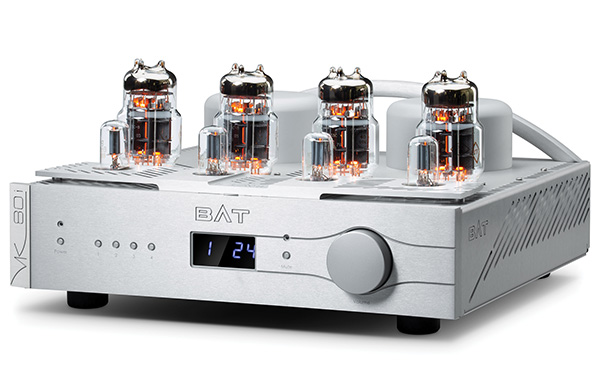
Brilliant Corners #12: Balanced Audio Technology VK-80i integrated amplifier, Ortofon Cadenza Bronze phono cartridge

In 1976, a Soviet fighter pilot named Viktor Belenko made an emergency landing in Hokkaido, Japan. He was flying a MiG-25 supersonic interceptor jet and, upon touching down, requested political asylum. This proved to be a stroke of brilliant luck for the Americans. The MiG-25 remains one of the fastest and highest-flying aircraft ever produced, and Belenko's defection allowed them to have a tantalizing look at the technology inside.


Among the top-secret loot found inside the Soviet jet was a large, heavy triode vacuum tube used as a regulator in the power supply of the MiG's radio. It was known as the 6C33C. (The enormous electromagnetic pulse caused by a nuclear explosion would fry a transistor. Tubes were used in military equipment with such an eventuality in mind.)

Luxman L-509Z integrated amplifier

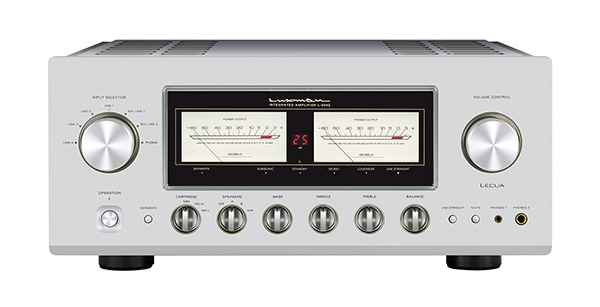
When I reviewed Luxman's L-509X flagship integrated amplifier, in May 2018, that sleek machine shook me to my vitals. I wrote, "Record after record, the L-509X illuminated every important aspect and area of the recording. It lived and breathed in the air around the notes, consistently creating big, solid, spatially natural images that presented me with a) the roundness and complexity of each instrument, b) a holistic sense of the musicians' intent, c) excellent touch and texture and impact, and d) a unified whole, regardless of musical style or dynamic level." I concluded, "the Luxman L-509X integrated amplifier takes a different path to musical involvement. The L-509X is one of the most intimate-sounding, dynamic, texturally nuanced, truthful purveyors of music of my experience."


Luxman's new flagship integrated, the L-509Z, has the same thick aluminum top plate and steel casework as its forebear and weighs a similarly knee-crushing 64lb. The older L-509X cost $9495; its newer, younger sibling rachets that up to $12,495. The front-panel controls are nearly identical, including those big, eye-catching dual VU meters; except for a new 4.4mm Pentaconn five-conductor mini headphone jack and a mute button, the Z matches the cosmetics of the X to a T. But as in all things, appearances can be deceiving.

Advertisement
Advertisement
Advertisement