Budget Component Reviews

Sort By: Post DateTitle Publish Date

Music in the Round #30
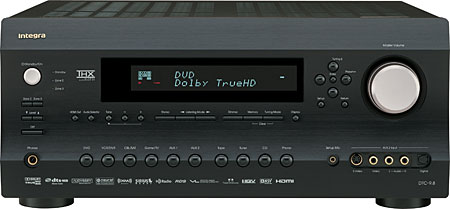
In Januaryhttp://www.stereophile.com/musicintheround/108mitr">January;, I reported on my experiences with the Integra DTC-9.8 preamplifier-processor, which I found to be outstanding with digital sources. That assessment was due, in no small part, to the performance of the Audyssey MultEQ XT room-correction system, which is included in the DTC-9.8. With only a little serious effort, MultEQ opened up the entire soundstage, making possible a better appreciation of the hi-rez sources now available on all sorts of discs. I have no doubt that any careful user can achieve similar satisfaction.
Paradigm Reference Studio/20 loudspeaker

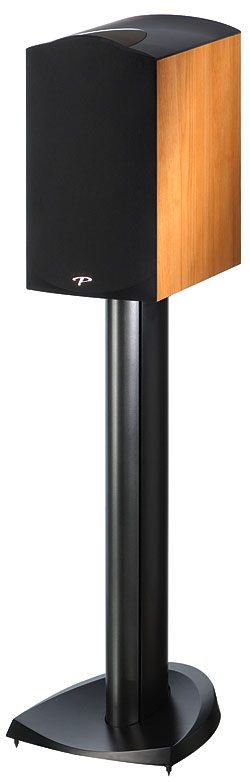
One of the first affordable loudspeakers I reviewed for Stereophile was the original Paradigm">http://www.stereophile.com/standspeakers/628">Paradigm Reference Studio/20 bookshelf model, in the February 1998 issue (Vol.21 No.2). At the time, I felt that the $650/pair speaker was a breakthrough—although not completely devoid of colorations, its ratio of price to performance set a benchmark a decade ago. I kept the Studio/20s around for several years to compare with other bookshelf speakers I reviewed, and they remained listed in Stereophile's "Recommended Components" for several years after that. The Studio/20 is now in its fourth (v.4) iteration, so I thought I'd grab a pair to hear how they compared with current affordable bookshelf designs.


Soundsmith SMMC1 moving-iron phono cartridge

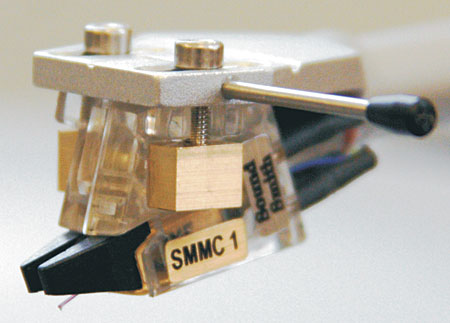
The audio industry may have lost a legend and a prolific innovator in Henry">http://www.stereophile.com/news/11260">Henry Kloss a few years back, but it still has another affable, creative eccentric in Peter">http://blog.stereophile.com/ces2008/011008smith/">Peter Ledermann. In the mid-1970s, Ledermann was director of engineering at Bozakhttp://www.stereophile.com/historical/1005bozak">Bozak;, where, with Rudy Bozak, he helped develop a miniature bookshelf speaker and a miniature powered subwoofer. Before that, Ledermann was a design engineer at RAM Audio Systems, working with Richard Majestic on the designs of everything from high-power, minimal-feedback power amplifiers and preamplifiers to phono cartridge systems. He was also an award-winning senior research engineer at IBM, and the primary inventor of 11 IBM patents.


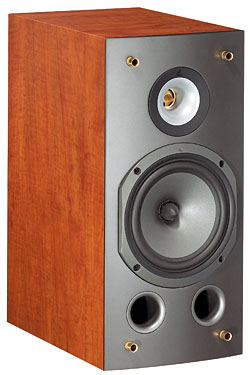
Triangle Esprit Comete Ex loudspeaker

The first reference I saw to the Count of Saint Germain was in Foucault's Pendulum, Umberto Eco's dense novel about a man whose paranoid delusions become so overpoweringly real that, by the end of the book, the reader is left wondering whether the protagonist's enemies actually exist. That their number should include Saint Germain was a nice touch: Part cabalist, part confidence man, the real-life Count was thought by some to be immortal (in Pendulum he's pushing 300), and while Casanova wrote vividly of meeting Saint Germain at a dinner party in 1757, so did the English writer and pederast C.W. Leadbetter—in 1926. Like Aleister Crowley, the Count of Saint Germain can be seen peering over the shoulders of countless parlor (but not parleur, or even haut-parleur) occultists: He keeps popping up all over the place.


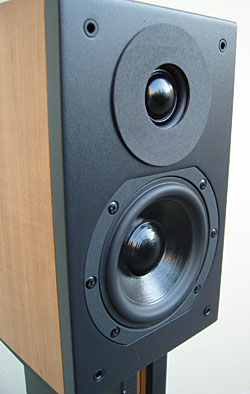
Silverline Audio Minuet loudspeaker

I always look forward to Stereophile's Home Entertainment Shows, where I scout out interesting new models of affordable loudspeakers. At HE2007">http://blog.stereophile.com/he2007">HE2007 in New York City, I was struck by the Silverline Audio room—not only by the sound I heard there, but by the way Showgoers reacted to that sound.


The Fifth Element #47

US composer Morten Lauridsen's Lux Aeterna is one of the indisputable masterpieces of the 20th century. John Atkinson has recorded the male vocal group Cantus's performances of Lauridsen's O Magnum Mysterium (on Comfort">http://www.stereophile.com/musicrecordings/1105cantus">Comfort and Joy: Volume One, Cantus CTS-1204) and Ave Maria Dulcissima (on Cantushttp://www.stereophile.com/news/121007cantus">Cantus;, Cantus CTS-1207). (And great recordings they are—one engineer chum thinks JA's Cantus recording of OMM is the single best-engineered choral recording he's ever heard.)


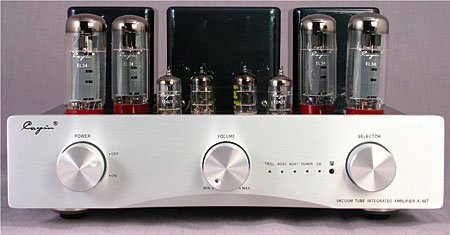
Cayin A-50T integrated amplifier

Late in 2006, I was watching John Atkinson set up a pair of DPA cardioid microphones in front of the stage of New York City's Otto's Shrunken Head to record a performance of my jazz quartet, Attention">http://www.myspace.com/attentionscreen">Attention Screen (footnote 1). Before the first set, Wes Phillips approached me. "Bob, I found a piece of equipment you must review—the Cayin A-50T integrated amp. It's only 1300 bucks and you'll love it!"


Shanling MC-30 Music Center CD receiver

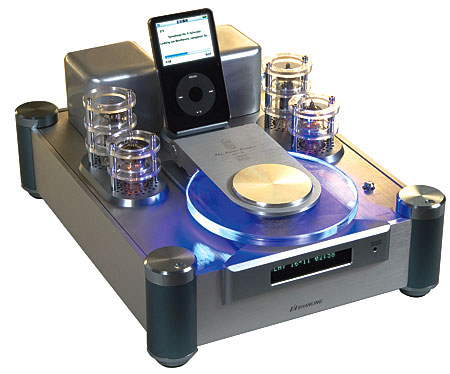
My first one-piece stereo—I think I paid $60 for it, including a pair of speakers with pegboard backs—gave me a lot of pleasure when I was young, and I loved it. Everything that came after has been better in every way but one: None has inspired that kind of love. And most have left me wondering if there might be something just a little bit better.


Onkyo DX-7555 CD player

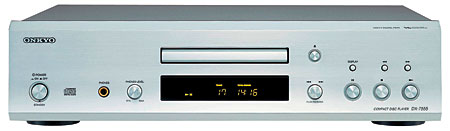
I first heard a CD player in my own system in 1984 or 1985, several years before I began writing for Stereophile. I was curious about the Compact Disc medium—I'd read about it, had listened to CDs in stores, and was eager to hear what they sounded like in my own system. I'd even bought a CD: the original-cast recording of 42nd Street, which I already had on LP. One evening, a friend who worked for Sony and knew that I was an audiophile brought over his latest acquisition: a CDP-501ES, the second from the top of Sony's line of CD players. He also brought along a bunch of CDs, including some solo-piano discs, and Erich Kunzel and the Cincinnati Symphony's then-famous recording of Tchaikovsky's 1812 Overture (Telarc CD-80041).


Advertisement
Advertisement
Advertisement