Budget Component Reviews

Sort By: Post DateTitle Publish Date

Wadia Digital 170iTransport digital iPod dock
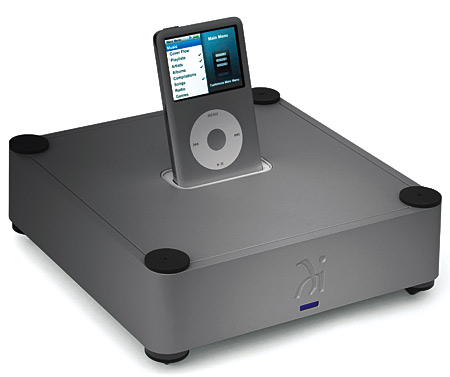
Last December, when Wadia Digital announced that it was releasing an iPod docking cradle that could access the digital signal before it had passed through the player's own D/A converter, many audiopundits were surprised. I was disbelieving, and nearly told Wadia's John Schaffer that he was shining me on. After all, Apple has tiptoed around the whole issue of consumers being able to digitally copy their iTunes files, going so far as to wrap its iTunes Music Store files in digital rights management (DRM) code.
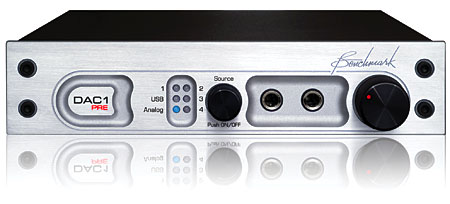
Benchmark DAC1 Pre USB D/A headphone amplifier

Most of this column is dedicated to two hi-fi products for the masses—not from Lvov, via Vladimir Lamm, of Lamm Industries; or from Leningrad, via Victor Khomenko, of Balanced Audio Technologies; nor from any other Soviet-born audio hero. (Neither Vladimir nor Victor is on the list of "Name of Russia" contenders for greatest Russian of all time.) Nor from any consumer audio company, but from the world of professional audio. An Iron Curtain almost separates the two.

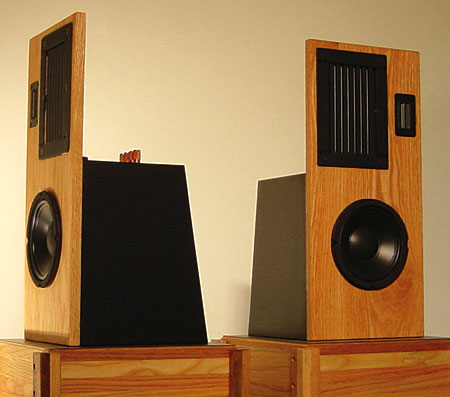
Eminent Technology LFT-16 loudspeaker

There is much to admire and to enjoy in this idiosyncratically charming hybrid loudspeaker. Eminent Technology has been around for about 25 years. Founder Bruce Thigpen was a pioneer in air-bearing technology, and ET's first product was a well-regarded air-bearing tonearm. The company later developed and was awarded patents for its Linear Field Transducers (LFTs): push-pull">http://www.stereophile.com/floorloudspeakers/308et">push-pull loudspeaker panels that operate on the magnetic rather than the electrostatic principle. Arraying magnets both front and rear of the plastic-membrane diaphragm eliminates a problem inherent in many planar-magnetic designs: as excursion increases, the magnetic restorative force diminishes. As can be expected, this technology is not efficient at reproducing bass, so most such speakers have been hybrids.


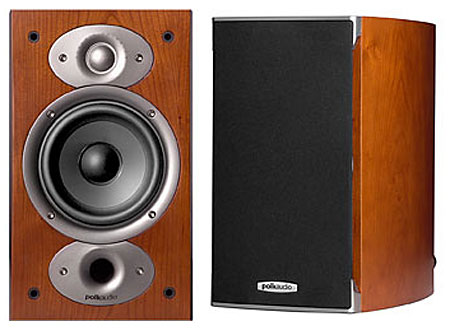
Polk RTi A1 loudspeaker

I always enjoy reviewing affordable loudspeakers from Polk Audio, who trumpet high value for the dollar with their philosophy of "Incredible Sound/Affordable Price." They also update their broad and deep product lines more frequently than do most manufacturers. I've always been intrigued by how much Polk has been able to deliver at the bottom of the price range. In fact, the first Polk speaker I reviewed, the RT25i (September">http://www.stereophile.com/standloudspeakers/417">September 2001, Vol.24 No.9), is the only affordable speaker I've reviewed for Stereophile that I ended up buying (for my computer-based musical-composition system). So, when approached by Polk to review a speaker from their affordable RTi A series, I was interested in the least expensive of that line's five models: the RTi A1 ($349.95/pair).


The Fifth Element #49

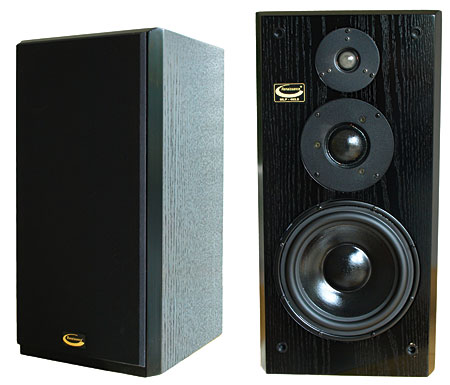
We continue the search for the successor to Fried's Q loudspeaker of yore. Renaissance Audio is the former Morel USA, so they have a long track record in both OEM driver manufacture and making complete loudspeakers. As I mentioned in my June">http://www.stereophile.com/thefifthelement/608fifth/index1.html">June column, their MLP-403.5 loudspeaker is a two-cubic-foot, sealed-box three-way with a dome midrange driver, at the near-improbable price of $1090/pair (footnote 1).


ASW Genius 100 loudspeaker

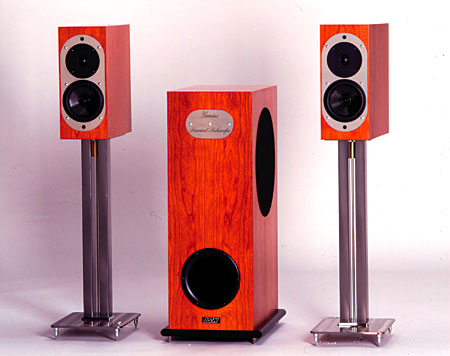
A while back, out of the blue, I was contacted by audio distributor May Audio Marketing. They wanted to know if I was interested in reviewing any models from the Genius line of German manufacturer ASW Loudspeakers. I have a lot of time for distributors such as May Audio, whose primary role is to promote lesser-known European audio products on this side of the pond. All of May's principal clients—Castle, Enigma, and Gradient speakers; Sonneteer and Sphinx electronics; and Roksan turntable systems—are much better known in their home countries than in the US.


Avalon NP Evolution 2.0 loudspeaker

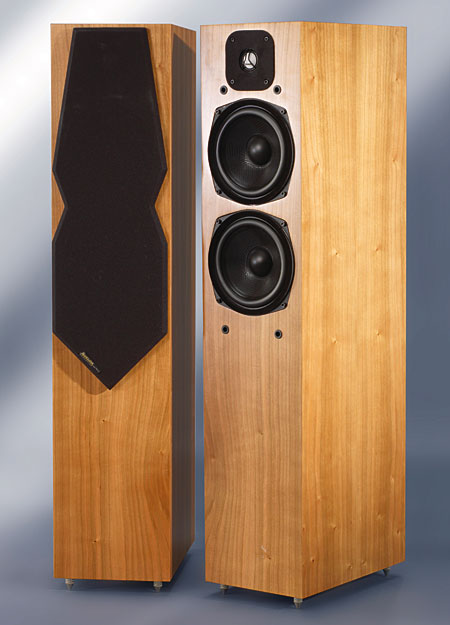
After a year spent exploring the best that can be obtained from minimonitor loudspeakers, I embarked on what will be an equally long examination of what floorstanding towers have to offer. I began with the Sonus">http://www.stereophile.com/floorloudspeakers/1207sonus">Sonus Faber Cremona Elipsa ($20,800/pair) in December 2007, followed in 2008 by: in February, the KEF">http://www.stereophile.com/floorloudspeakers/208kef">KEF Reference 207/2 ($20,000/pair); in April, the PSB">http://www.stereophile.com/floorloudspeakers/408psb">PSB Synchrony One ($4500/pair); and in May, the Magico">http://www.stereophile.com/floorloudspeakers/508mag">Magico V3 ($25,000/pair). For this review, I've been listening to a speaker aimed at those with shallower pockets than are required even for the PSB: the Avalon NP Evolution 2.0, which costs just $1995/pair.


Rega P3-24, RB301, & Elys 2 turntable, tonearm, & phono cartridge

It's now been eight years since a Rega P3 turntable passed through my listening room. While the new P3-24 superficially resembles the P3 (and virtually every other Rega 'table), the company has made some significant changes, including upgrading to the high-quality, low-voltage (24V), electronically adjusted motor used in the more expensive P5, P7, and P9. As in those models, an electronic circuit trims the phase angle of the P3-24's motor coils, thus substantially reducing motor vibrations. In 1998, during a factory tour, a Rega engineer demonstrated the circuit's effectiveness to me. As he adjusted the circuit board's pot, vibrations from the motor dramatically decreased, until it was difficult to tell if the motor was spinning or not. Back then, this "hand-trimmed" motor technology was available only in the P9. The P3-24 uses a less sophisticated version of the same basic idea.
Advertisement
Advertisement
Advertisement