J. Gordon Holt

Sort By: Post DateTitle Publish Date

The Weakest Link

While we will not pretend for a moment that the millennium of high fidelity has arrived, we are finally having to face up to a fact that has been staring us in the face and nudging us in the ribs increasingly rudely of late: The state of the art of sound reproduction has gotten to be pretty damned sophisticated. Perfection is just as unattainable as it was almost 100 years ago when Thomas Edison was diddling with different diaphragm materials on his phonograph because some sounded better than others.
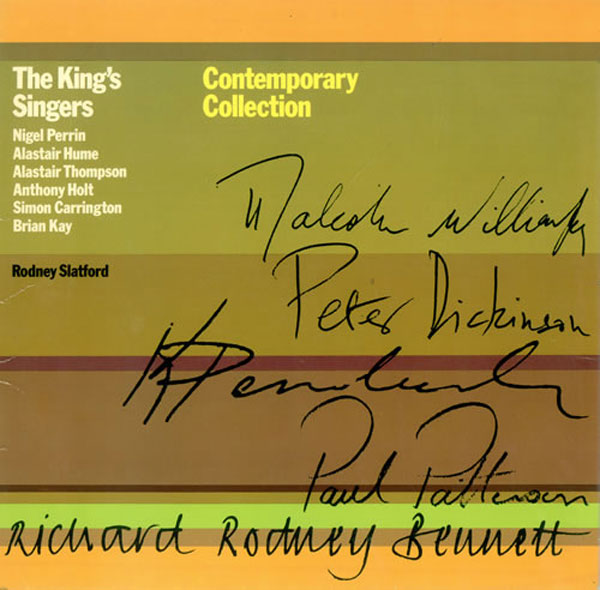

Recording of September 1975: A Contemporary Collection

The King's Singers: A Contemporary Collection

Works by Peter Dickinson, Malcolm Williamson, Richard Rodney Bennett, Krzystof Penderecki, Paul Patterson

EMI EMD 5521 (UK LP). MMG Records MMG 1142 (US LP). 1975. Christopher Bishop, prod.


Astounding performances! Every piece here was commissioned by the King's Singers, those six English gentlemen whose vocal artistry surely has never been surpassed. The works here are by Peter Dickinson, Malcolm Williamson (recently appointed by HRH Elizabeth II to the post of Master of the Queen's Musick, succeeding the late Sir Arthur Bliss), Richard Rodney Bennett, Krzystof Penderecki, and Paul Patterson.

A Plague Upon Our House

The summer of 1975 will be remembered by us, with no fondness whatsoever, as The Time the Roof Fell In. Or the Murphy Months, or the Period of the Plague Upon Our House.


Ye Editor can recall from the days of WWII hearing and reading about the depredations of some mischievous sprites called Gremlins, who would cause aircraft hatchcovers to jam and control cables to get hung up at the worst possible moment, but I don't think I ever really did believe in Gremlins. I think I sensed somehow that the mishaps attributed to their malevolent machinations were too capricious to be the work of thinking, calculating little spirits. But I was not clever enough to put my finger on what was going on. That had to wait for a gentleman named something-or-other Murphy, who was (to my knowledge) the first person to put a tag on it, and to formulate a basic law about it. The tag was "the perversity of inanimate objects," and the law was "If anything can possibly go wrong, it will."

Magnepan Tympani I loudspeaker

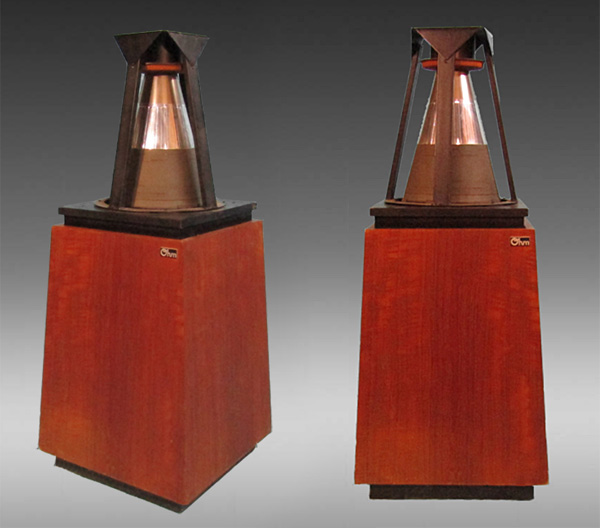
The Magnep1anar Tympani I that is the subject of this report is already an obsolete model, having been superseded by the Tympanis IA, II, and III that were unveiled at the CE Show in Chicago this past June. Since many of our readers already own Tympani Is, and dealer stocks of them are being sold at a substantial price reduction, the report should still be of interest. We will publish follow-up reports on the newer models as soon as they become available for testing.

Transcriptors Vestigal tonearm

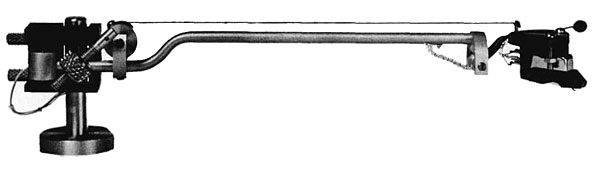
Because this is an unusual and controversial tonearm design, and has had astonishing claims made for its performance by the manufacturer, this in-depth report goes deeper and is longer than is usual for Stereophile. We will return to a reasonable balance of reportage in the next issue.


The manufacturer's initial advertisement for their mis-named "Vestigal" arm (footnote 1) was so laced with nonsense that we will admit to having been skeptical about the product from the outset.

The Flexible Firms

Some years ago, we attended a hi-fi show in New York City where one of the exhibitors was RCA Victor. Their presence there would have been forgotten were it not for the fact that their exhibit, featuring their own discs played on their own line of phonographs, was producing some of the filthiest sound at the entire show. And that, in the proverbial nutshell, is why you never see reports in Stereophile on equipment made by RCA, Philco or General Electric.

Three Pickups: Which is the Best?

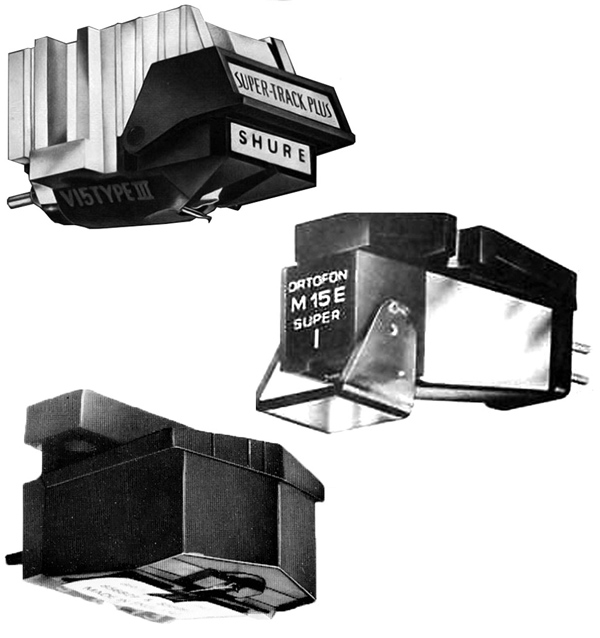
If you have read my reviews of the Ortofon M-15, the Shure V15-III, and the Decca Mark V, you have probably formed a pretty firm impression of which of the three contenders for the title "Best Pickup" is the winner. In case you haven't, though, here's a capsule wrap-up of our reactions to the three phono cartridges reviewed in May 1974.

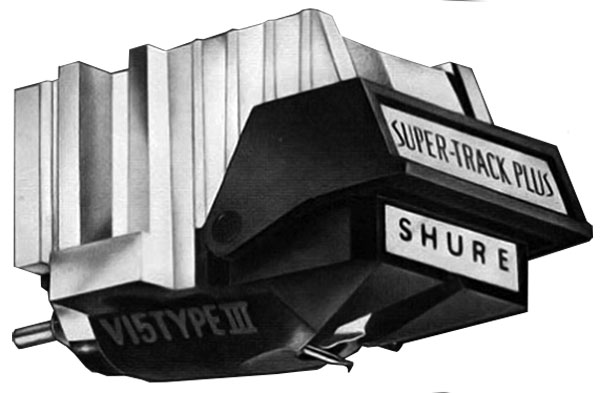
Shure V15-III phono cartridge

The Shure V15-III is the latest of Shure's top-of-the-line "Super-track" pickups, earlier versions of which we scorned because of their dished-down response in the 6kHz range and their consequent "dead" sound. (We were unimpressed with Shure's suggestion that the pickup cable capacitance be increased to a total of around 300pF, since few audiophiles are equipped to measure either cable capacitance or frequency response).
Advertisement
Advertisement
Advertisement