J. Gordon Holt

Sort By: Post DateTitle Publish Date

Audio Research D-100 power amplifier
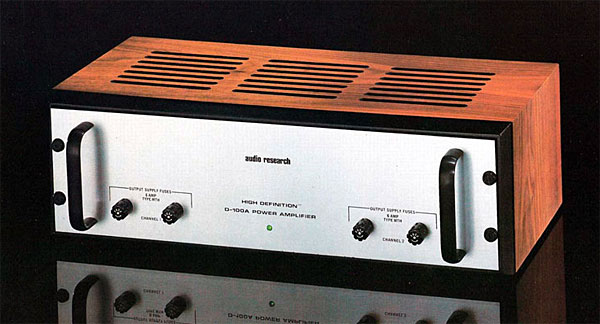
We cannot recall when any new products have generated as much of a stir among perfectionists as the new solid-state equipment from Audio Research. Preceded by rumors of "a new kind of amplifying device—a cross between a tube and a transistor"—the announcement of ARC's new power amp and SP-4 preamplifier elicited very mixed reactions from loyal ARC customers, some of whom gleefully anticipated a virtual revolution in audio electronics, others of whom felt betrayed by the company which, having originally convinced them that "Tubes Are Better," suddenly seemed to be doing an about-face and espousing the views of the Enemy—the "Soiled-State"—forces.

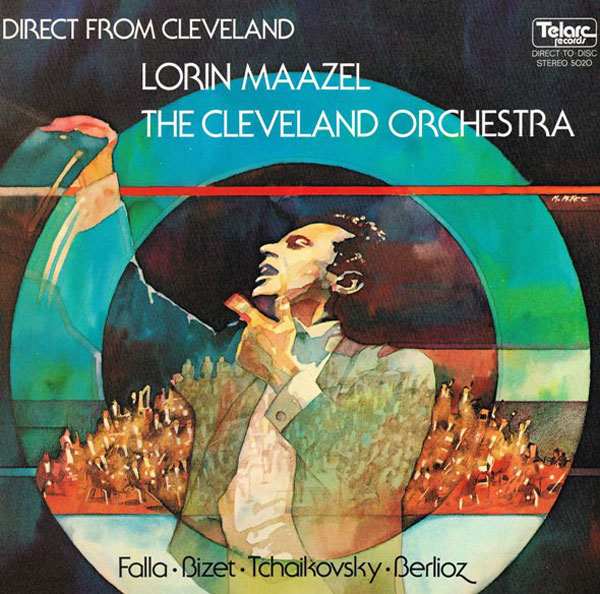
Recording of March 1977: Direct from Cleveland

Direct From Cleveland

Orchestral works by De Falla, Bizet, Tchaikovsky, Berlioz

The Cleveland Orchestra, Lorin Maazel (cond.)

Telarc 5020 DD1 (LP). Robert Woods, prod.; Jack Renner, sound eng.; Glenn Glancy, Michael Bishop, disc-cutting engs.


Potentially the best news for perfectionists in years is the announcement of the first stereophonic direct-to-disc recording (in the US, at least) of a major symphony orchestra. Advent records of Cleveland, in collaboration with Discwasher, Inc. of Columbia, MO put four complete and usable runsthrough onto two sets of lacquers. The program was a collection of potboilers—what Sir Thomas Beecham used to call "lollypops"—much of it musically rather trivial, but all ideally suited for demonstrating what a no-holds barred recording can do in terms of sonics: works with bass drum, percussion, deep double-bass material, rich string sonorities" and so on.

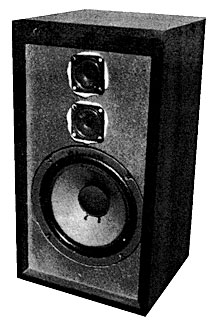
Dahlquist DQ-10 loudspeaker

The Dalhquist DQ-10 loudspeaker has not as yet been formally submitted for review. (The designer tells us he is still working on the low end.) We auditioned a pair at the one local dealer we could find who had the DQ-10s on demo, and were immensely impressed. Obviously, Jon Dahlquist is on to something that other speaker designers have been overlooking, for, despite the multiplicity of driver speakers in the system, the DQ-10 sounds like one big speaker. There is no awareness of crossovers or separate drivers (except at the low end, about which more subsequently), and the overall sound has a degree of focus and coherence that is surpassed only by the Quad full-range electrostatic, which don't go as low at the bottom or as far out at the top.

Fulton Musical Industries Model 80 & "J-Modular" loudspeakers

In the last issue we published a rather enthusiastic "Quickie" report on a small, $190/pair speaker system from a new company—the FMI Model 80. It was virtually devoid of low end, even as a stereo pair (pairing effectively doubles bass output), and slightly rough as well as a shade soft at the high end, but it had a quality of "aliveness" to it that almost defied belief. Was it a breakthrough in design? A new transducing principle? No, it was neither. In fact, the Model 80 looks like any one of those hundreds of little bookshelf systems that clutter, the pages of Stereo Review's "Hi-Fi Directory" in tedious profusion.

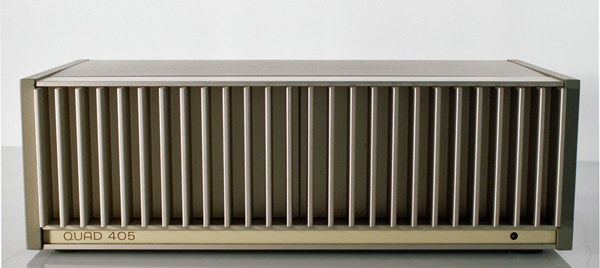
Quad 405 power amplifier

This is something we don't see too often: an entirely new approach to power amplifier design. As Quad points out in its literature for the 405, class-A operation of transistors provides the lowest distortion, but drastically limits the amount of power an output transistor can deliver without overheating. (Most transistor amps use class-AB output operation, in which each of a pair of power transistors handles part of each signal cycle and shuts down during the other part. Imperfect synchronism between the two halves causes the familiar "crossover distortion," which accounts for most solid-state sound. In class-A operation, each output transistor draws current though the entirety of each signal cycle, eliminating the crossover transition but doubling the amount of time current is drawn, and thus tending to cause the transistor to heat up more.)

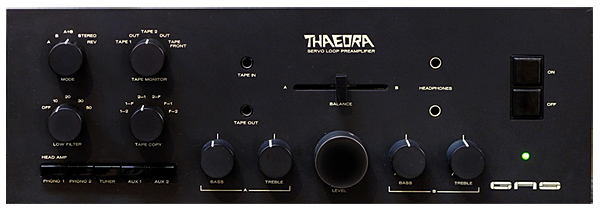
Great American Sound Thaedra preamplifier

Our first sample of this preamplifier was returned to the manufacturer before we had completed our tests on it, and was replaced with the latest version (ours is serial number 500108). Enough time elapsed between the time we shipped back the first sample and the time we got around to auditioning the second that we are unable to report on any sonic differences between the two.

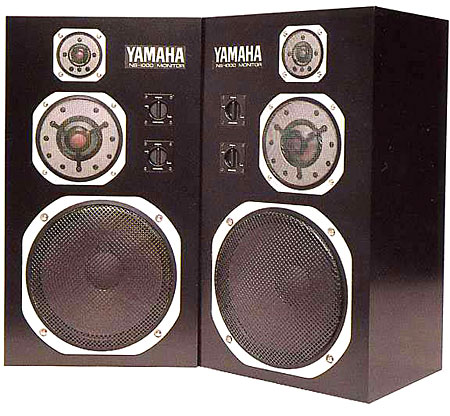
Yamaha NS-1000 Loudspeaker

Every engineer has known for years that, while beryllium has excellent physical qualities for use as a speaker radiator—light weight, rigidity, and a remarkable degree of internal damping—it is not usable as such because it cannot be stamped out like most other materials. It will not stretch, and any attempt to shape it simply causes it to split.

Late Again!

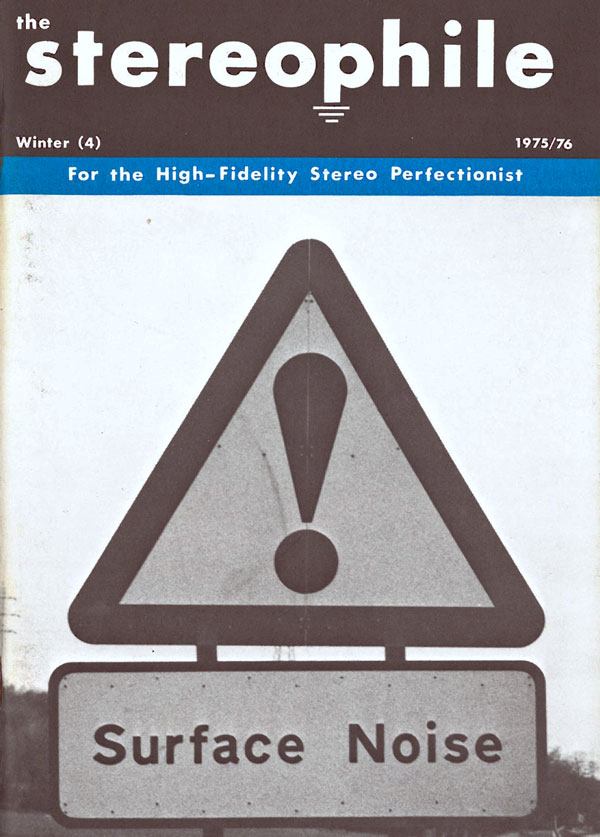
Editor's Note: In Stereophile's second decade of publication, things were starting to unravel, with long gaps between each issue. There were just seven issues published between January 1974 and January 1978. The late Harry Pearson has gone on record that he founded The Absolute Sound in 1973 part because he was tired of waiting for the next issue of Stereophile to reach his mailbox. In this "As We See It" essay from the "Surface Noise" issue in August 1976, founder J. Gordon Holt owns up to it appearing 8 months late!

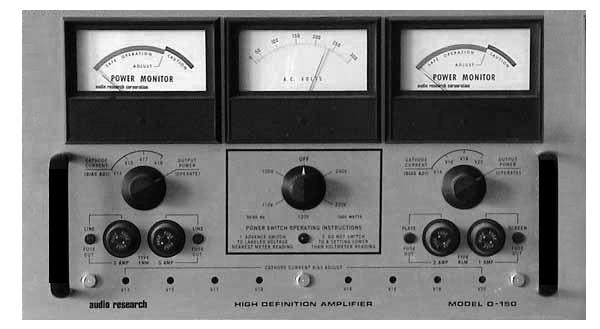
Audio Research Dual 150 power amplifier

We mentioned in the last issue that we were becoming increasingly disturbed by "a certain manic quality that is creeping into this pursuit of sonic perfection." We were referring then to a manufacturer's announcement of the imminent availability of a speaker system weighing over 1000 lb per channel, but we could just as well have been speaking of this behemoth from Audio Research.

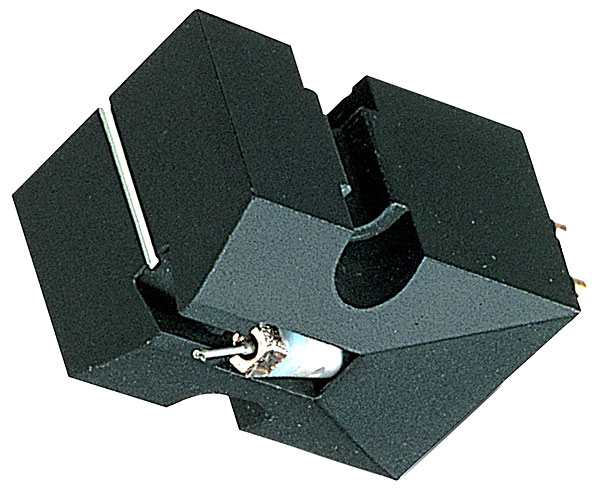
Denon DL-103 phono cartridge

This low-output moving-coil cartridge can be fitted with different styli. The basic DL-103 has a 0.5-mil spherical tip, the DL-103S a Shibata tip. As of the spring of 1975, the '103S is being imported by American Audioport, Inc., in Columbia, MO. the '103 is being brought in directly from Japan by a few dealers. Our '103 was loaned by Music & Sound of California, the '103S came from Audioport.


They are not too similar in sound. The DL-103S is incredibly clean-tracking, with a light, airy high end, a subtle zizz on string tone, and a very slightly withdrawn quality similar to the sound of the Supex 900E, but not as overly rich-sounding as the Supex.

Advertisement
Advertisement
Advertisement