J. Gordon Holt

Sort By: Post DateTitle Publish Date

The Silent Minority

Until about nine months ago, in the fall of 1970, FM radio station WFLN, Philadelphia, was just another one of that dying breed: the classical FM station. Like its counterparts in the few remaining classical-radio cities, it provides the major part of the high-fidelity listener's radio diet, and also like most similar classical stations, its fidelity was nothing to brag about.
The Missing Specification

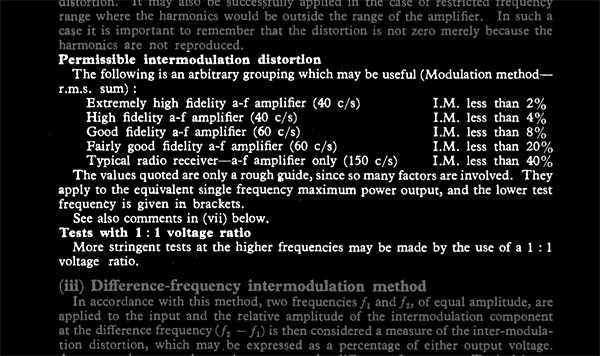
In the 1952 edition of the Radiotron Designer's Handbook, long recognized as the "bible" of the industry, the permissible level of IM distortion for a high-fidelity amplifier was given as 3%, with the alternate figure of 2% being cited as a "rather extreme" specification. We wonder what the author of that statement would think of today's solid-state amplifiers with their measured IM of 0.01% and less. And we wonder what he would think about the fact that these super-amplifiers still have audible distortion.

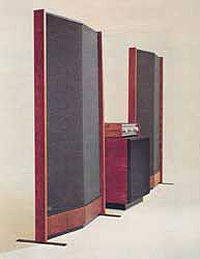
Infinity Servo-Statik 1 loudspeaker

An equipment reviewer for one of the consumer hi-fi magazines once confided to a manufacturer that he found it hard to like electrostatics because of the kind of people who usually like electrostatics. His implication—that certain kinds of people gravitate towards certain kinds of sound—is an interesting thought, and one that might bear some further investigation. But there is no questioning the fact that electrostatic speakers in general do have a particular kind of sound, that might be characterized as "polite."

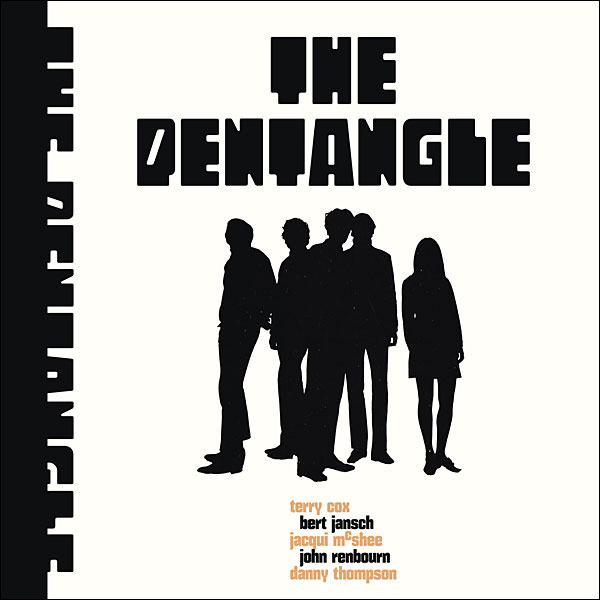
Recording of December 1970: The Pentangle


Pentangle: The Pentangle

Terry Cox (drums), Bert Jansch & John Renbourn (guitars), Jacqui McShee (vocals), Danny Thompson (double bass), Shel Talmy, prod.

Transatlantic TRA162 (English LP), Reprise RSLP63 15 (US LP). TT: 30:52.


The first "pop" recording we've ever reviewed in Stereophile may set a precedent for future reviews if there are others that sound like this. To this untutored ear, the material is rock out of raga, but it is beautifully done and, except for the larger-than-life singer, the sound is almost shockingly good. No filthy fuzzed-up guitars here, and the pickup of the double-bass simply has to be heard to be believed. Get it, at least as a demo.

Universal Components

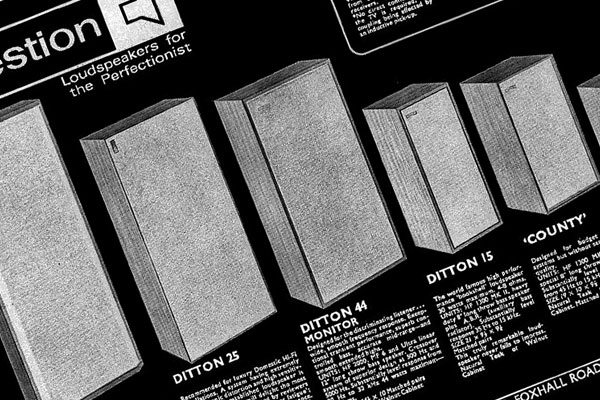
A reader who asked to remain anonymous wrote to tell us the results of some tests he saw conducted on one of our top-rated loudspeaker systems. Frequency-response checks showed that the system had virtually no deep bass, a midbass peak, a midrange slump, and a high-end rise. Further checks had shown gross distortion at input levels of over about 6W, and a definitely limited (although adequate for Row-M listening) maximum output-level capability. Said reader then went on to ask how we could possibly consider such a speaker to be one of the best available.

The Comparable Cassette


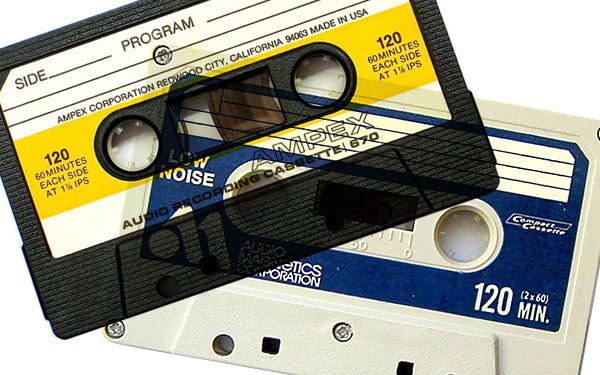
Thanks to two developments and a promise, the compact cassette has finally become, as they say, a force to be reckoned with.


Development one, perhaps the most significant factor in the changing picture, is the ready availability of B-type Dolby devices (which are single-band Dolbys, acting only on hiss frequencies). Advent makes two that can be used with any tape machine, cassette or otherwise, while Fisher, Advent, and Harman-Kardon (as of this moment) are producing cassette recorders with built-in Dolby-B. No doubt there will be others by the time this gets in print.

Outrageous Price?

Editor's Note: Approaching its ninth year of publication in 1970, the advertisement-free Stereophile was failing as a business. There was just one issue published between December 1968 and June 1970, the date when J. Gordon Holt published this plea in response to the reaction to the increased subscription price: first to $4 for four issues, equivalent to $25 in 2016, then to $5 ($31). The response from subscribers to his plea was not positive enough to enable the magazine to continue publishing—Gordon could publish just two more issues in the next two years before Stereophile had to accept advertising, first from dealers in October 1972 and from manufacturers in December 1977.—Ed.


Our recent price increase at the end of 1969 elicited numerous letters telling us the magazine was exhorbitant at $4 a subscription and is outrageous at $5, and supporting their contention with comparisons between the price per page of the Stereophile and one or another of the commercial hi-fi magazines. We will answer this once, here and now, and then let the matter drop.

Advertisement
Advertisement
Advertisement