Solid State Preamp Reviews

Sort By: Post DateTitle Publish Date

Boulder 810 line preamplifier & 860 power amplifier
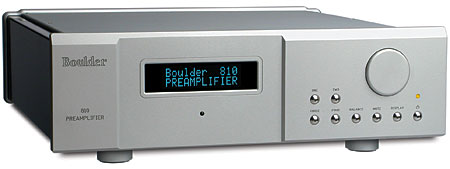
Boulder Amplifiers, named after the Colorado town where the company has resided since its founding 23 years ago, makes some of the most elegant-looking solid-state amps around. Chassis are anodized, aircraft-grade aluminum with rounded edges, machined and finished in-house. The two models reviewed here, the 810 line preamplifier and the 860 power amplifier, each have a sleek, compact build—stacked atop each other, the two stand just over a foot high—owing to extremely efficient packing of the circuitry inside. These are the company's "entry-level" electronics, but there's nothing cheap about them—the preamp retails for $6900, the amp for $8500—and for all their economical size, they look like luxury goods as well.
Placette Active Linestage preamplifier

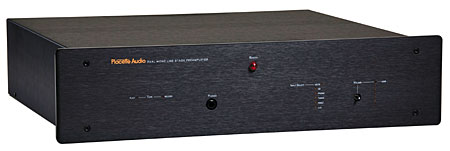
A friend once described my audio ethos as "records, tubes, big amplifiers, and really big speakers"—I always picked warmth and musicality over antiseptic neutrality, even if the former came with a few extra colors in the tonal palette. Had I listed my criteria for an audio component, transparency wouldn't have been near the top, and might not have been listed at all.


darTZeel NHB-18NS preamplifier

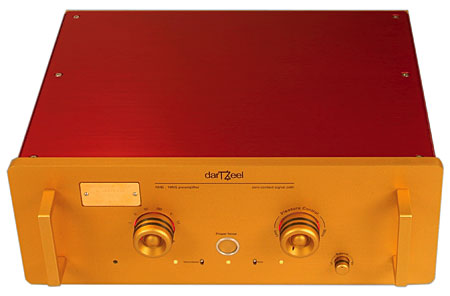
With the introduction of the NHB-108 stereo amplifier, Swiss-based darTZeel quickly established a reputation for pristine, hand-built quality, fanciful industrial design, and elegant circuitry—all accompanied by a healthy jolt of sticker shock. (See John Marks' coverage in his September 2003 "Fifth">http://www.stereophile.com/932">Fifth Element" column, followed by Wes Phillips' full">http://www.stereophile.com/solidpoweramps/405dartzeel">full review in April 2005 .) The 100Wpc (into 8 ohms) NHB-108 costs more than $18,000. A lot of change for not a lot of power, but the reviews were unanimous in praising the amp's exceptional sound quality.


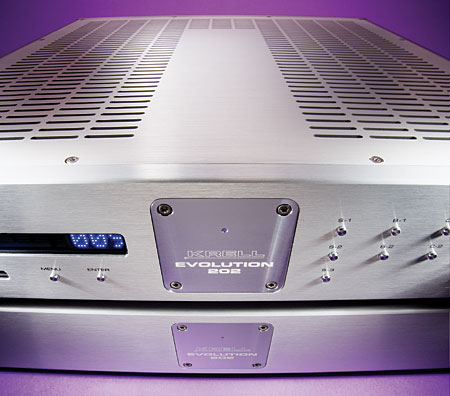
Krell Evolution 202 preamplifier & 600 monoblock power amplifier

Talk about going from the ridiculous to the sublime. One day I'm reviewing the $139 Sonic">http://www.stereophile.com/solidpoweramps/1006sonic">Sonic Impact Super T power amplifier, and the next day Krell Industries delivers their $10,000 Evolution 505 SACD/CD player, $15,000 Evolution 202 preamplifier, and their $30,000/pair Evolution 600 monoblocks.


Simaudio Moon Evolution P-8 preamplifier

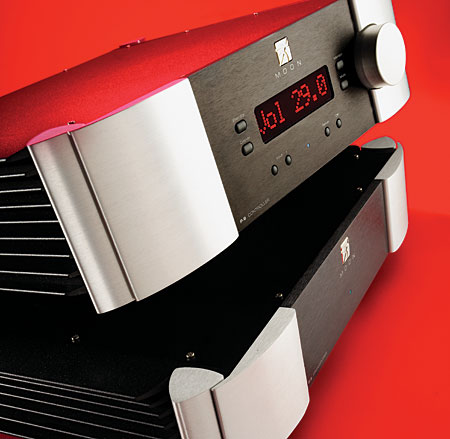
The P-8 ($11,000) is the second of Simaudio's Moon Evolution series that has passed through my system, following on the heels of the Moon Evolution W-8 power amplifier, which I reviewed">http://www.stereophile.com/solidpoweramps/306sim">reviewed in March 2006. Fortunately, the P-8's arrival preceded the W-8's departure, so I was able to use them together as well as with other components.


Music in the Round #20

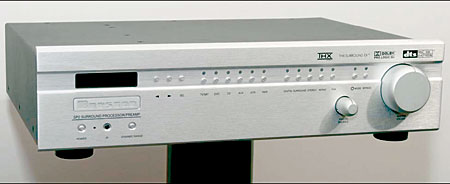
Bryston describes its SP2 multichannel preamplifier-processor ($4995) as consisting of a stereo analog preamp with a volume-controlled 5.1-channel analog pass-through plus a full-featured multichannel digital audio processor, and claims that none of those functions compromises any of the others. The analog preamp is fully equivalent in features and performance to their BP26 preamp. The digital processor includes all the latest Dolby Digital, DTS, and THX modes, and is based on Texas Instruments' powerful Aureus DSP chip, which can be updated via an S/PDIF input. The digital and analog sections have independent power supplies, and there are no video inputs or functions other than a control port for the optional, external SPV-1 video switcher.


McIntosh C1000 preamplifier system

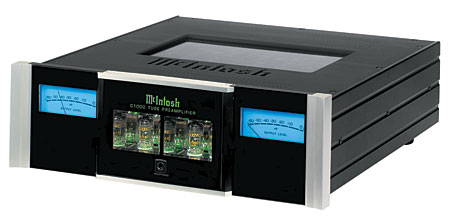
Still burning in my bank of childhood memories are misty images of the glowing green lettering on the McIntosh tube preamps and tuners that populated the windows of the audio stores that once lined lower Manhattan's Cortlandt Street. Leonard's and most of those other retailers are long gone—as are most of the audio brands that shared their windows with McIntosh, and that once symbolized the might of American innovation and manufacturing. Even the World Trade Center, the controversial complex that replaced Cortlandt Street's "Radio Row," where the hi-fi industry was born, is tragically gone.


Sonic Euphoria PLC passive line stage

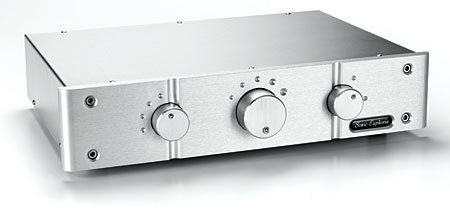
Life used to be simple. A preamp was a phono stage, a line stage, and the controls necessary to manage a system. Sure, there were exceptions, but for the most part you could say "preamp" and everyone knew what you meant. With the rise of the Compact Disc, however, phono stages became standalone components or optional extras, and most manufacturers concentrated on the line stage and controls, pursuing the ideal of "a straight wire with gain."


Mark Levinson No.326S line preamplifier

Conceptually, the preamplifier is the bottleneck in an audio system. All sources pass through it, and it influences every sound you hear. A system comprising great speakers and gutsy amplification will sound uninspired if that's the character of the preamplifier. Conversely, a great preamplifier will allow through so much information, so much of the music, that the listener can forgive the shortcomings of lesser speakers and amplifiers.


Advertisement
Advertisement
Advertisement