Solid State Power Amp Reviews

Sort By: Post DateTitle Publish Date

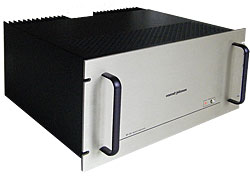
Conrad-Johnson MF-200 power amplifier

Cycles can be seen in the fortunes of companies. Likewise cycles can be seen in the performance of companies' products. A particular range will appear to have got it just right, whatever "it" is. The designer may have hit a winning streak and thus steal a lead over the competition. C-J set a new state-of-the-art preamp standard in the late '80s with their Premier Seven, and some of that expertise and experience are beginning to pay off in the shape of new high-performance preamplifiers at realistic prices. Moreover, the pressure was on to develop better power amplifiers to match. Two important products have emerged from all this in C-J's moderately priced FET range, namely the PF-1 preamplifier and the matching MF-200 power amp. By audiophile standards, these are moderately priced at $1295 and $1995, respectively.

Muse Model 150 monoblock power amplifier

The name Muse Electronics is probably unfamiliar to most audiophiles, requiring some background on the company. Muse is the hi-fi offshoot of a company called Sound Code Systems, a manufacturer of professional sound-reinforcement speaker cabinets and power amplifiers. Founded in 1980, SCS enjoyed some success with its line of MOSFET professional power amplifiers. In 1988, SCS's Michael Goddard and Kevin Halverson, both audiophiles and tube aficionados, redesigned their amplifier for the high-end hi-fi market.


The results are the Model One Hundred (a 100Wpc stereo power amplifier) and the Model One Hundred Fifty ($1900/pair), the 125W monoblock reviewed here. According to Michael Goddard, the primary design goal was to achieve a tube sound with the reliability and ruggedness of transistors. MartinLogan CLS speakers were used extensively during the design/listen/design cycle. As a result of their listening auditions and redesign, many of the changes have now been incorporated into their professional products.

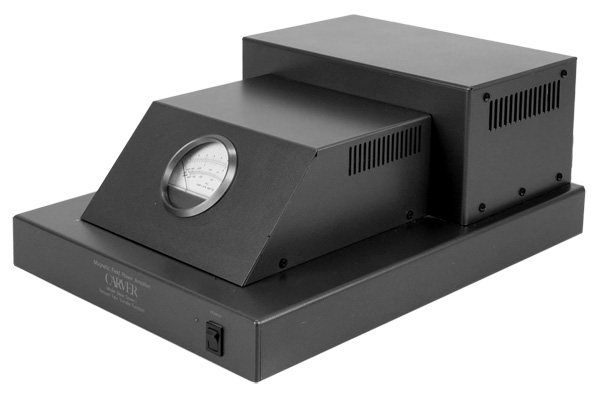
Carver Silver Seven-t monoblock power amplifier

In 1988, Bob Carver set out to design the best amplifier he possibly could, without regard for cost. It was more of an ego exercise than an attempt to build a product with wide commercial appeal. The result was the four-chassis, $17,500 Silver Seven.


Interestingly, Bob Carver chose vacuum tubes to realize his dream of building the ultimate power amplifier. The Silver Seven uses fourteen KT88 output tubes per channel, and puts out 375W into 8 ohms. Bob built three pairs of Silver Sevens, not expecting to sell many at the $17,500 asking price. When those sold quickly, another 10 pairs were manufactured. Now, demand is so great that Silver Sevens are built in groups of 30 pairs.

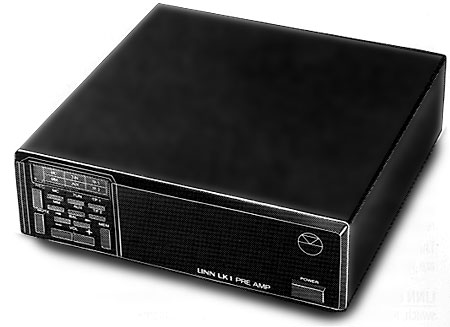
Linn LK1 preamplifier & LK280 power amplifier

This review should have appeared more than a few months ago. When I reviewed Linn's">http://www.stereophile.com/phonocartridges/987linn">Linn's Troika cartridge back in the Fall of 1987, in Vol.10 No.6, Audiophile Systems also supplied me with a sample of the Linn LK1 preamplifier and the LK2 power amplifier, which I had intended to review in the due course of things. As it transpired, however, I was less than impressed with the LK2, finding, as did Alvin Gold back in Vol.9 No.2, that while it had a somewhat laid-back balance, it also suffered a pervasive "gray" coloration, which dried out recorded ambience and obscured fine detail.


Mark Levinson No.26 preamplifier & No.20 monoblock power amplifier

I must admit, right from the outset, that I find reviewing electronic components harder than reviewing loudspeakers; the faults are less immediately obvious. No preamplifier, for example, suffers from the frequency-response problems endemic to even good loudspeakers. And power amplifiers? If you were to believe the older generation of engineers—which includes some quite young people!—then we reached a plateau of perfection in amplifier design some time after the Scopes Monkey Trial but well before embarking on the rich and exciting lifestyles afforded us by Reaganomics. (In the UK, it is generally felt by these people that the date coincided with the introduction of Quad's first current-dumping amplifier, the 405, in 1976.)


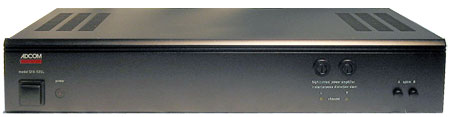
Adcom GFA-535 power amplifier

Sometimes products are too cheap for their own good, and people don't take them seriously: the Superphon Revelation Basic Dual Mono preamp, Rega">http://www.stereophile.com/turntables/184rega">Rega RB300 arm, AR ES-1 turntable, Shure V15-V MR cartridge, and the B&K">http://www.stereophile.com/solidpoweramps/675">B&K ST-140 power amp. They can't be any good because they cost so little, right?


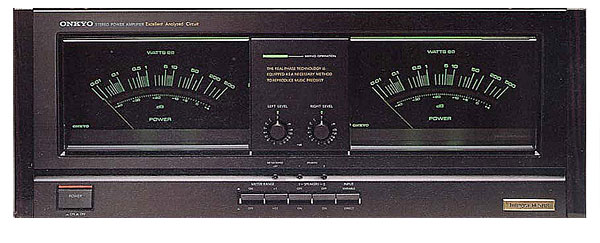
Onkyo Grand Integra M-508 power amplifier

"Grand Integra" is the name Onkyo has given to its line of perfectionist-oriented audio products, and the M-508 is the cheaper of Onkyo's two Grand Integra power amplifiers. (The flagship model is the $4200 M-510, reviewed by Larry Greenhill in Vol.8 No.8, featuring "high current capability," and rated at 300W continuous per channel.)

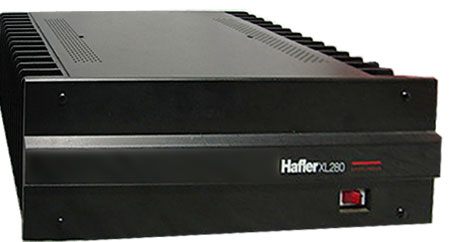
Hafler XL-280 power amplifier

Some time ago in these pages, Anthony H. Cordesman observed rather ungraciously that the whole line of Hafler electronics "could do with reworking." This was interpreted by many readers—including the good people at the David Hafler Company—as meaning that AHC felt the entire Hafler line to be mediocre. In fact, he does not. (He had given a Hafler product a positive review a few issues previously.) Tony's comment, however, did express a sentiment that most of us at Stereophile have shared for some time: a feeling that Hafler products had slipped from the position of sonic preeminence which they enjoyed during the 1960s and '70s to one of mere excellence in a field where only preeminence is acclaimed.


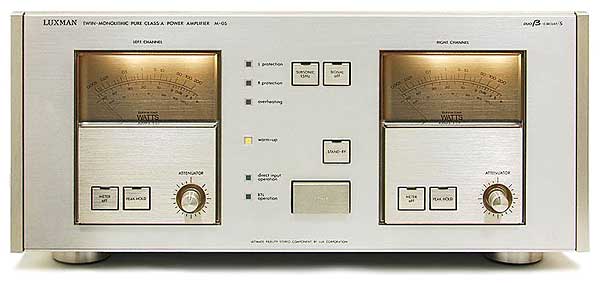
Luxman M-05 power amplifier

Japanese audiophiles venerate American high-end audio components, paying huge sums for vintage Marantz tube amplifiers, racks of Levinson ML-2s, and early Audio Research tube preamplifiers. The balance of trade, at the high end anyway, hasn't been reciprocated: Japanese high-end amplifiers and preamplifiers have not received as positive a reception in the US. Perhaps it was a matter of styling, but the sonics of the Sony Esprit line and the class-A Stax amplifiers did not receive the following they might have, had the products been American.
Advertisement
Advertisement
Advertisement