Solid State Power Amp Reviews

Sort By: Post DateTitle Publish Date

Krell KST-100 power amplifier
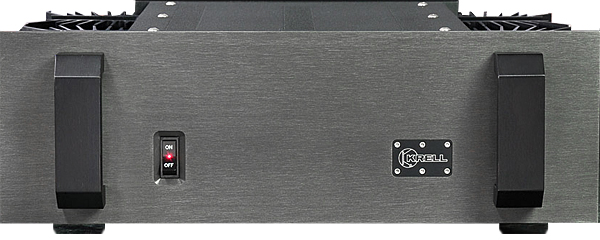
There seems to be an inexhaustible supply of amplifiers; it's hard to choose which ones to review. Big-name operators are difficult to ignore, while smaller outfits often complain of neglect. In the case of a new and moderately priced introduction from Krell there's no need to find excuses: it's available, it's likely to be important judging from this company's track record, and we'd all like to see just how well it performs.


This review features the KST-100 stereo power amplifier. Initially this product was differentiated from the more expensive Krell components by having an all-black livery. However, as customers showed a preference for Krell's traditional anthracite finish, the KS series is now also available in this finish.
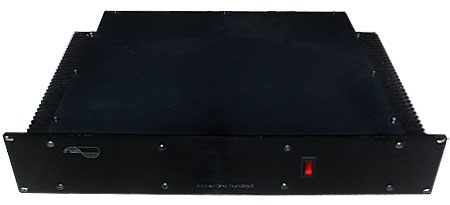
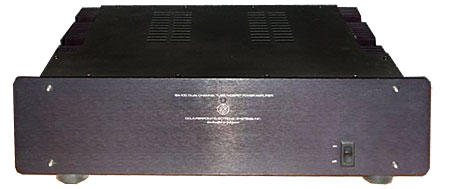
Muse Model One Hundred power amplifier


"I've know I've seen this amp before," I thought to myself when I lifted the $1200 Muse Model One Hundred out of the box, and I wasn't thinking of Robert Harley's review of the identical-looking Muse Model One Hundred Fifty reviewed in January 1990, either. No, I'd seen this amp before, somewhere else, in some other magazine, but with a different manufacturer's name.

Counterpoint SA-100 power amplifier

The $1200 Counterpoint SA-100 amplifier came up to bat fourth in my listening sessions, behind (in order of appearance) the Adcom">http://www.stereophile.com/solidpoweramps/678">Adcom GFA-555 II (not reviewed here, but sent along by JA for comparison purposes), the VTL">http://www.stereophile.com/tubepoweramps/491vtl">VTL Tiny Triode monoblocks, and the Muse">http://www.stereophile.com/solidpoweramps/491muse">Muse Model One Hundred. Thus, my progression went from bipolar solid-state to tube to MOSFET, with a wide spread of sonic characteristics between them: stygian bass from the Adcom; uncanny spatial presentation and vocal reproduction from the VTLs; and an overall superior sound from the Muse. I was therefore eager to see where the tube/MOSFET hybrid Counterpoint would fall in this group of very different-sounding amplifiers.


Jeff Rowland Design Group Model 1 power amplifier

Michael, who might be termed our typical audiophile (if anything in Santa Fe can be termed "typical"), may have found his digital processor, but he's still in a quandary about choosing the right power amp to drive his new loudspeakers. He has listened to a number of them over the past few months, and has been unable to find one which satisfies him in every way. I suspect he has a lot of company. The thorny problems of room acoustics and placement aside, loudspeakers are easier. Their signatures are pronounced and generate strong feelings one way or another; it's usually no problem to narrow down one's choices in this category.
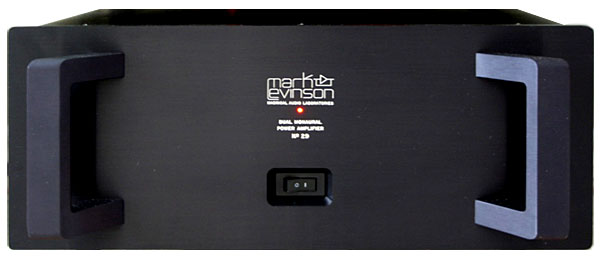
Mark Levinson No.29 power amplifier

I still remember reading about my first Mark Levinson product 14 or 15 years ago. It was a preamp. The model number escapes me, but it sold for over $2000. It was soon followed by the JC-2, designed by John Curl, which was a bit less pricey but still astonishingly expensive for a mid-'70s preamp. We've come a long way since then. The man, Mark Levinson, left the company that bore his name in the early 1980s and founded a new company, Cello. The company Mark Levinson became the core of Madrigal. It is a mark of their continued dedication to uncompromising high-end products that their bread-and-butter line remains the high-priced Mark Levinsons. They no longer have the Rolls-Royce of the audio market to themselves (in their early years, they made the never exactly inexpensive Audio Research products—ARC was certainly a contender for the same title—look like bargains), but they are certainly a leading player.

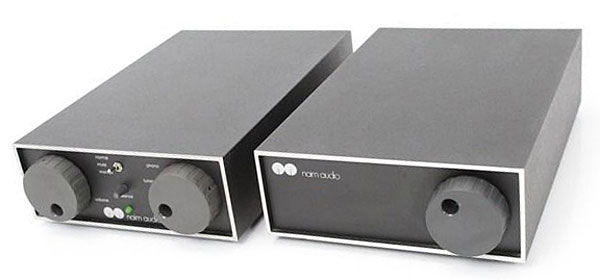
Naim NAC 62 preamplifier & NAP 140 power amplifier

Back in 1970, one Julian Vereker decided to record some musician friends in his house in Salisbury, England. Using standard, off-the-shelf electronics and tape machines, he was startled at how dissimilar the recording was to the sound of live instruments. As a result, he started designing his own recording electronics, including a recording console, of which he sold several to local broadcast facilities.

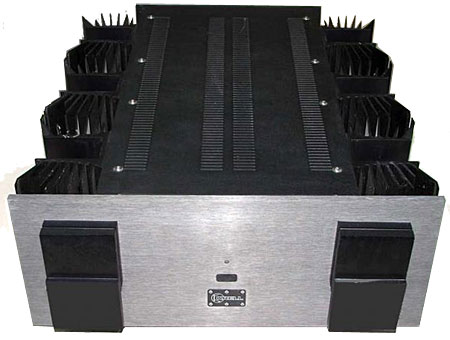
Krell KSA-250 power amplifier

I still have fond memories of my first Krell amplifier, a KSA-50. Back in those days (date purposely omitted), my principal source of audio equipment reviews, aside from Stereophile and The Absolute Sound, was Hi-Fi News & Record Review, which I read voraciously from cover to cover every month. One fateful day while sitting by our community swimming pool, I happened upon an enlightening review of the KSA-50 written by none other than our own John Atkinson, editor of HFN/RR at">http://www.stereophile.com/asweseeit/352">at the time. His words describing "the steamroller-like inevitability of the bass with this amplifier" haunted me for weeks, until I got up the nerve to audition, and ultimately purchase, my first Krell product.


Advertisement
Advertisement
Advertisement