Solid State Power Amp Reviews

Sort By: Post DateTitle Publish Date

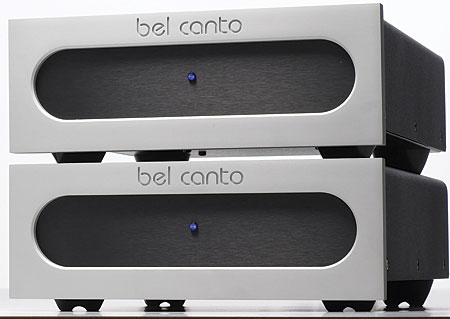
Bel Canto Ref1000M monoblock power amplifier

I've been enthusiastically tracking the development of Bel Canto's class-D amplifiers, from their original TriPath-based">http://www.stereophile.com/amplificationreviews/442">TriPath-based models to their more">http://www.stereophile.com/musicintheround/1106mitr">more recent designs based on Bang & Olufsen's ICEpower modules. With each step, Bel Canto has improved their amps' sound quality and reliability.


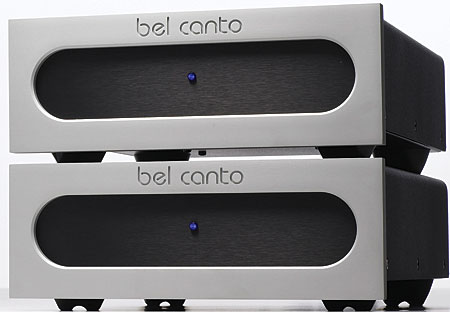
Music in the Round #35

I've been enthusiastically tracking the development of Bel Canto's class-D amplifiers, from their original TriPath-based">http://www.stereophile.com/amplificationreviews/442">TriPath-based models to their more">http://www.stereophile.com/musicintheround/1106mitr">more recent designs based on Bang & Olufsen's ICEpower modules. With each step, Bel Canto has improved their amps' sound quality and reliability.


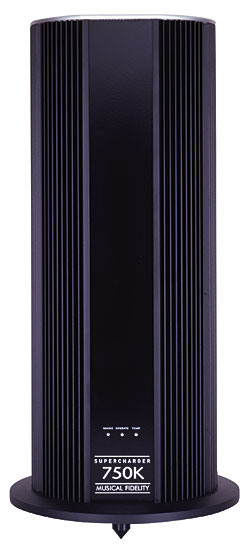
Musical Fidelity 750K Supercharger monoblock power amplifier

Musical Fidelity's "Supercharger" concept is simple, which is perhaps why no one had thought of it before: If you love the sound of your low-powered amplifier but your speakers are insensitive, or you just need more loudness, you insert the high-power Supercharger amplifier between your low-powered amp and speakers. The Supercharger loads the small amplifier with an easy-to-drive 50 ohms, and, in theory, has so little sonic signature itself that it passes on the sonic signature of the small amp unchanged, but louder.

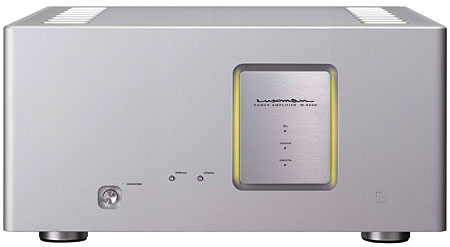
Luxman M-800A power amplifier

Founded in 1925, Luxman has long been one of Japan's most highly regarded audio manufacturers. Throughout the 1970s and into the 1980s, Luxman's tube preamplifiers and power amplifiers occupied the top shelves of high-performance audio retailers, and to many older American audiophiles, the Luxman name is as familiar and esteemed as those of such storied American brands as McIntosh and Marantz. Luxman's combination of rich, warm sound, superb build quality, and indelible industrial design made its products fully competitive with other brands then considered among the world's best.


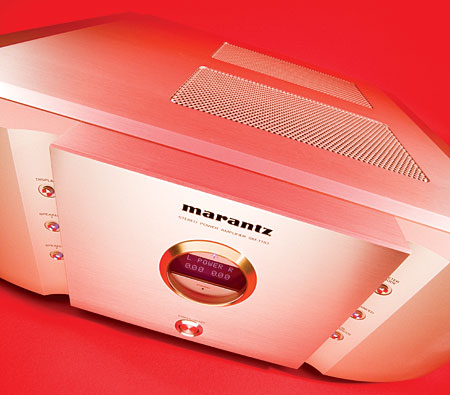
Marantz SM-11S1 Reference power amplifier

Some of the old audio names, such as Eico and Pilot, are gone. Others—Fisher, AR, KLH, H.H. Scott, etc.—have been rendered meaningless by corporate mergers and acquisitions. Yet more than 50 years after their founding, McIntosh and Marantz, arguably the two most prestigious names in American high-quality audio electronics, survive. The products they make today are probably closer in spirit to their original classics of half a century ago than at any time since the early 1970s.


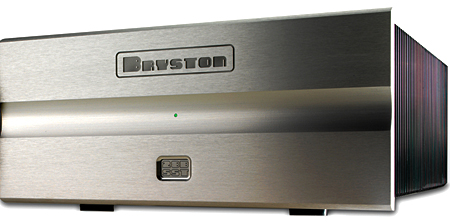
Bryston 28B-SST monoblock power amplifier

It was a hot, humid, New York City evening in early August, and I was thankful to be sitting in the air-conditioned dark of Avery Fisher Hall, up in the Second Tier, for a Mostly Mozart concert. Listening to cello soloist Alisa Weilerstein in Osvaldo Golijov's hypnotic Azul, I was suddenly jolted by an explosive mix of primitive cello sonorities, accordion, and staccato riffs on ethnic percussion instruments. My thoughts turned to the importance in music of both power and delicacy, and of how Bryston Ltd.'s 28B-SST, a 1000W monoblock power amplifier, was designed to address both.

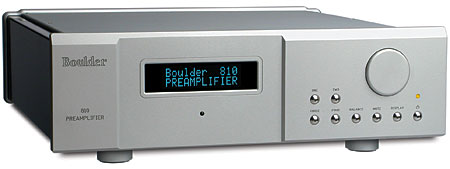
Boulder 810 line preamplifier & 860 power amplifier

Boulder Amplifiers, named after the Colorado town where the company has resided since its founding 23 years ago, makes some of the most elegant-looking solid-state amps around. Chassis are anodized, aircraft-grade aluminum with rounded edges, machined and finished in-house. The two models reviewed here, the 810 line preamplifier and the 860 power amplifier, each have a sleek, compact build—stacked atop each other, the two stand just over a foot high—owing to extremely efficient packing of the circuitry inside. These are the company's "entry-level" electronics, but there's nothing cheap about them—the preamp retails for $6900, the amp for $8500—and for all their economical size, they look like luxury goods as well.


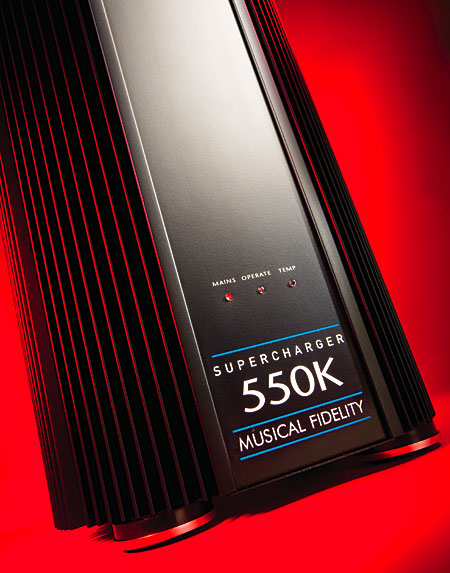
Musical Fidelity 550K Supercharger monoblock power amplifier

How much amplifier power do you need? Most audiophiles figure a maximum of a few hundred watts per channel—beyond that, you're wasting your money or showing off. Others think that anything more than a few watts will mess up an amplifier's musical coherence or "purity," so they stop there and find uncommonly sensitive speakers, usually compression horns with cone woofers.


Music in the Round #24

Good things come in threes, they say. Well, three-channel power amps suit me just fine. My main component rack is at the back of the room, so I split power duties between a two-channel amp under the rack to drive my rear-channel B&W 804S speakers and, way at the front, either three monoblocks or a three-channel amp for the front three B&W">http://www.stereophile.com/floorloudspeakers/1205bw">B&W 802Ds. I do this to ensure that the timbre of the front three channels is consistent. The outstanding performance of the Simaudio">http://www.stereophile.com/solidpoweramps/306sim">Simaudio Moon W-8 dual-mono power amp (Stereophile, March 2006) almost tempted me to go with a stereo amp and a monoblock, but voicing and balancing a multichannel system with equanimity makes me want as much simplicity as possible. I guess manufacturers and users see it the same way; many new three-channel amps are coming on the market.


Advertisement
Advertisement
Advertisement