Solid State Power Amp Reviews

Sort By: Post DateTitle Publish Date

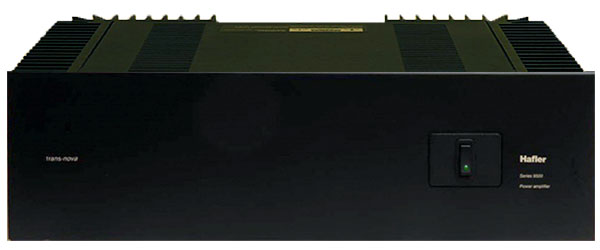
Hafler Transnova 9500 power amplifier
Boy, do we ever get letters. From readers angry that we review too many expensive products. From readers depressed that we review too many affordable products. From readers bemoaning our digital coverage. From readers asking when we're going to get with the 21st century and stop gushing over analog. From readers wanting more coverage of tube products. From readers wanting more coverage of MOSFET amplifiers designed for high voltage gain on the output stage.
Bryston 4B power amplifier

On January 1, 1990, Canadian electronics manufacturer Bryston instituted a remarkable warranty program that covered each of their products for a full 20 years. This warranty includes all audio products ever manufactured and sold under the Bryston name. Besides covering parts and labor costs, the company will also pay shipping costs one way. This is all the more significant for their 4B NRB amplifier, which has been in production since 1976. The amp's $2k price, while not cheap, is at the lower end of what well-heeled audiophiles typically pay for amplifiers.

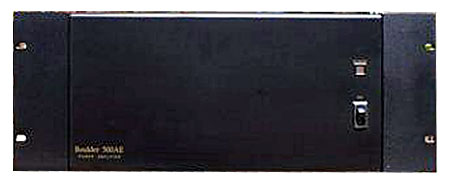
Boulder 500AE power amplifier

To high-end audiophiles, the Boulder 500 amplifier and its less expensive derivative, the 500AE (Audiophile Edition), would not seem to be "high-end" designs. They are designed around op-amps (felt by many to be generally poor-sounding), they have scads of negative feedback (which is perhaps why op-amps sound bad), and they have only a moderately hefty power supply. Why, then, is Stereophile publishing a review of an op-amp–based power amplifier? Read on...


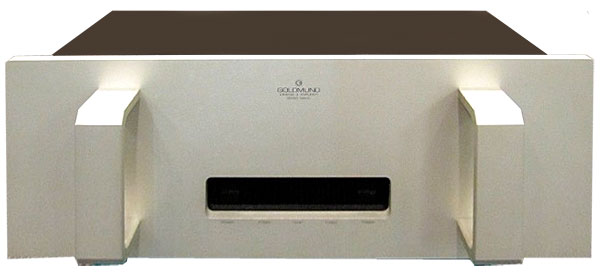
Goldmund Mimesis 8 power amplifier

To judge from the $6400 Mimesis 8, Goldmund walks its own way when it comes to power amplifier design. High-end solid-state amplifiers from US companies like Krell, Mark Levinson, Threshold, and the Jeff Rowland Design Group marry massive power supplies to large numbers of output devices (these often heavily biased to run in class-A), built on chassis of such nonmagnetic materials as aluminum. By contrast, the Mimesis 8 has a magnetic (steel) chassis, and uses a relatively modest power supply, that for each channel based on two main 4700µF reservoir capacitors. The 8 offers just two pairs per channel of complementary output MOSFETs (Hitachi K134/J49). These carry a modest bias current of around 80mA total.

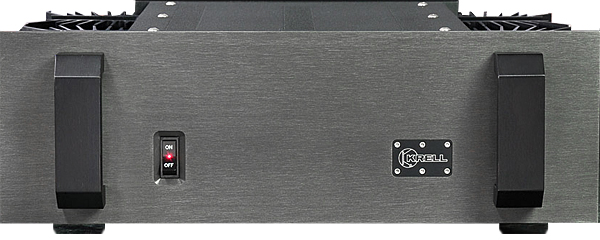
Krell KST-100 power amplifier

There seems to be an inexhaustible supply of amplifiers; it's hard to choose which ones to review. Big-name operators are difficult to ignore, while smaller outfits often complain of neglect. In the case of a new and moderately priced introduction from Krell there's no need to find excuses: it's available, it's likely to be important judging from this company's track record, and we'd all like to see just how well it performs.


This review features the KST-100 stereo power amplifier. Initially this product was differentiated from the more expensive Krell components by having an all-black livery. However, as customers showed a preference for Krell's traditional anthracite finish, the KS series is now also available in this finish.

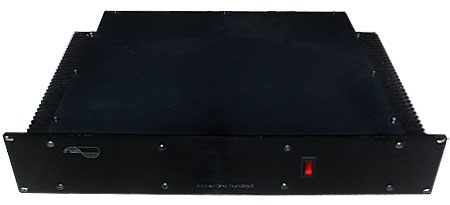
Muse Model One Hundred power amplifier


"I've know I've seen this amp before," I thought to myself when I lifted the $1200 Muse Model One Hundred out of the box, and I wasn't thinking of Robert Harley's review of the identical-looking Muse Model One Hundred Fifty reviewed in January 1990, either. No, I'd seen this amp before, somewhere else, in some other magazine, but with a different manufacturer's name.
Advertisement
Advertisement
Advertisement