Solid State Power Amp Reviews

Sort By: Post DateTitle Publish Date

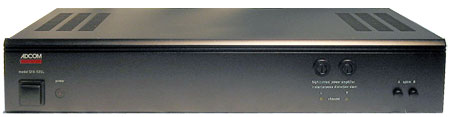
Adcom GFA-535 power amplifier
Sometimes products are too cheap for their own good, and people don't take them seriously: the Superphon Revelation Basic Dual Mono preamp, Rega">http://www.stereophile.com/turntables/184rega">Rega RB300 arm, AR ES-1 turntable, Shure V15-V MR cartridge, and the B&K">http://www.stereophile.com/solidpoweramps/675">B&K ST-140 power amp. They can't be any good because they cost so little, right?
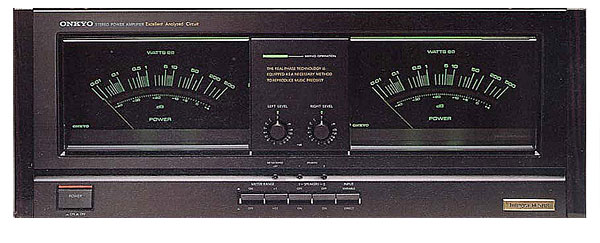
Onkyo Grand Integra M-508 power amplifier

"Grand Integra" is the name Onkyo has given to its line of perfectionist-oriented audio products, and the M-508 is the cheaper of Onkyo's two Grand Integra power amplifiers. (The flagship model is the $4200 M-510, reviewed by Larry Greenhill in Vol.8 No.8, featuring "high current capability," and rated at 300W continuous per channel.)

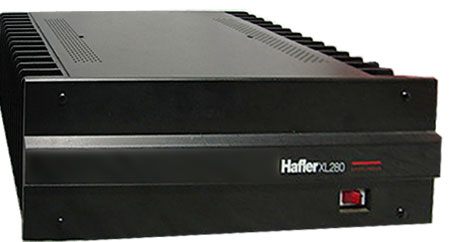
Hafler XL-280 power amplifier

Some time ago in these pages, Anthony H. Cordesman observed rather ungraciously that the whole line of Hafler electronics "could do with reworking." This was interpreted by many readers—including the good people at the David Hafler Company—as meaning that AHC felt the entire Hafler line to be mediocre. In fact, he does not. (He had given a Hafler product a positive review a few issues previously.) Tony's comment, however, did express a sentiment that most of us at Stereophile have shared for some time: a feeling that Hafler products had slipped from the position of sonic preeminence which they enjoyed during the 1960s and '70s to one of mere excellence in a field where only preeminence is acclaimed.


Luxman M-05 power amplifier

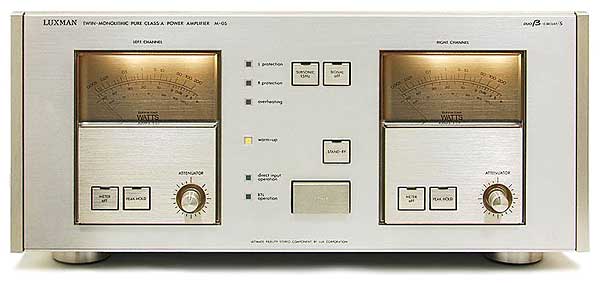
Japanese audiophiles venerate American high-end audio components, paying huge sums for vintage Marantz tube amplifiers, racks of Levinson ML-2s, and early Audio Research tube preamplifiers. The balance of trade, at the high end anyway, hasn't been reciprocated: Japanese high-end amplifiers and preamplifiers have not received as positive a reception in the US. Perhaps it was a matter of styling, but the sonics of the Sony Esprit line and the class-A Stax amplifiers did not receive the following they might have, had the products been American.

Jeff Rowland Design Group Model 7/II power amplifier

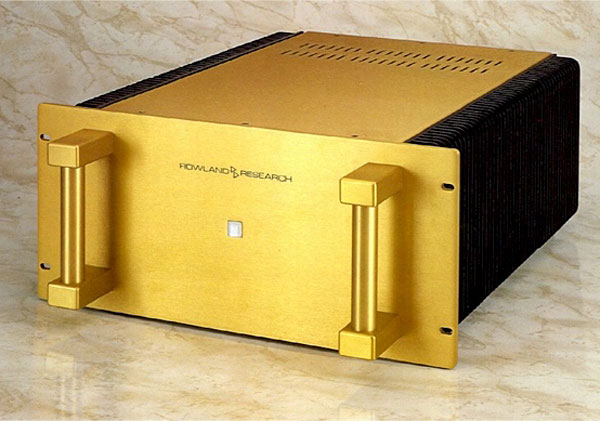
Very few products exude opulence as do the Rowland amplifiers: the massive chassis, the gold finish, those sculpted handles on the front plate. For some strange reason the amp reminds me of Brutus Beefcake, the golden boy of professional wrestling, upon whom I stumbled one night while flipping through the myriad channels of our cable TV. The visual impact is the same: beefy. And then there's the price: also beefy.

Threshold SA-1 monoblock power amplifier

Eleven years ago, Threshold Corporation entered the high-end audio market with the first amplifier ever to use sliding bias (footnote 1) in its output stages. Some 10 years later, Threshold spawned another innovation: their so-called Stasis circuitry, which yielded the S-series amplifiers. The SA-1 and its lower-powered sister SA-2 are the latest from Threshold, and are the first Threshold amps to abandon sliding bias for straight class-A operation. Both use the Stasis circuit.

PS Audio 200C power amplifier

Several issues back, I mentioned a major "new wave" of power amplifiers coming along: the Adcom 555, the New York Audio Labs transistor-tube hybrids, and the latest Krells, for example. They demonstrate that major audible improvements are still possible in something as well-explored as the power amplifier. Not only that, some of these products demonstrate that superior performance can be combined with relatively low price.

Classé Audio DR-3 power amplifier

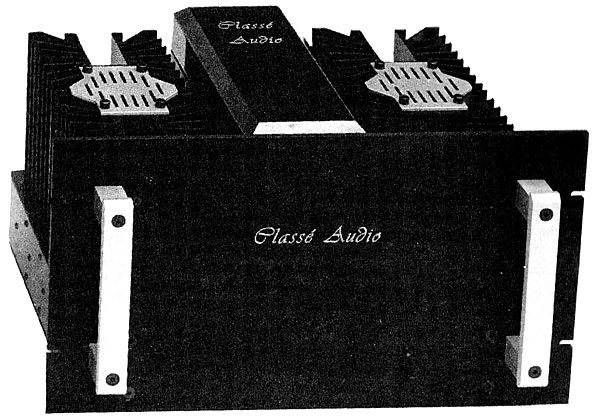
Classé Audio's DR-3 once again brings to the fore the issues of class-A vs class-AB, weighty vs small and efficient, and brute-force expensive vs clever and inexpensive.


A well-worn, if unproven, audiophile rule of thumb says that a small, quick amplifier will sound better than a very powerful one. Among low-powered amps, those that operate in "pure" class-A are thought to be sonically superior. Pure class-A means the amplifier must run a constant high bias (more than one ampere), so the output devices never turn off.

Krell KSA-50 power amplifier

Some readers may feel that it is pushing poetic license beyond reasonable limits to call the Krell KSA-50 a "new-wave" amplifier. It has, after all, been around for several years. The Krell KSA-50 is new-wave enough, however, to be an incredibly stiff class-A design, rather than a pseudo–class-A circuit, and its 50 watts per channel are supported by enough of a power supply to drive an arc welder. You get about 70 watts of RMS power with 8 ohms, 150 watts with 4 ohms, and sufficient watts into 2 ohms to threaten my load resistors. There is almost enough power to drive a pair of Apogee Scintillas at their ohm setting—though I'd prefer at least the Krell KSA-100.
Advertisement
Advertisement
Advertisement