Stand Loudspeaker Reviews

Sort By: Post DateTitle Publish Date

Epos ES 14 loudspeaker
Americans might be forgiven if they haven't heard of Epos. A small, British specialist loudspeaker manufacturer, it was founded in 1983 by its designer, Robin Marshall—an ex-BBC engineer and a onetime consultant to Monitor Audio, according to Roy Hall of Epos's US importer, Music Hall. Their first model, the ES 20, didn't make it to the US, and was apparently a bit too pricey in the UK to make much of a splash there (about £700, $1300 at the current rate of exchange—a mint in a country with the patent on sub-$500/pair (UK prices!) two-ways). In 1986 or thereabouts, the new, smaller ES 14 was introduced, using updated versions of the same drivers in a smaller, ported cabinet. Music Hall only recently began importing the Epos into the US.
Wilson WATT loudspeaker

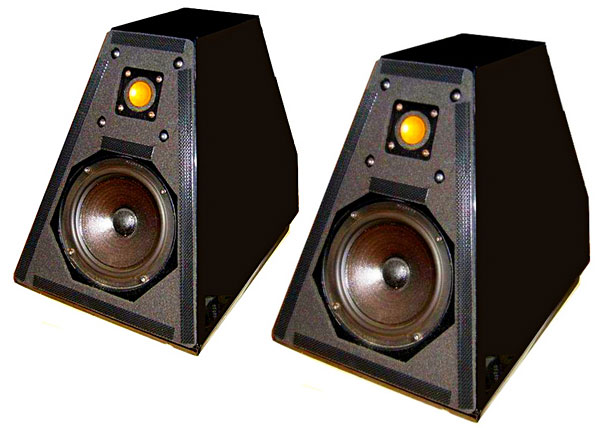
Landmarks in speaker design have been few and far between. There are a few certain contenders: in the UK, the original Quad Electrostatic and the ESL-63 qualify, while the Celestion SL600 scored a big point for all small monitors; the Spendor BC1 changed forever the notion that cone speakers were always colored and that big boxes were essential for good sound. In the States, Apogee has taught us much with their surprising mid-treble ribbon-based designs. Other technologies have shown promise but have not achieved real commercial success.

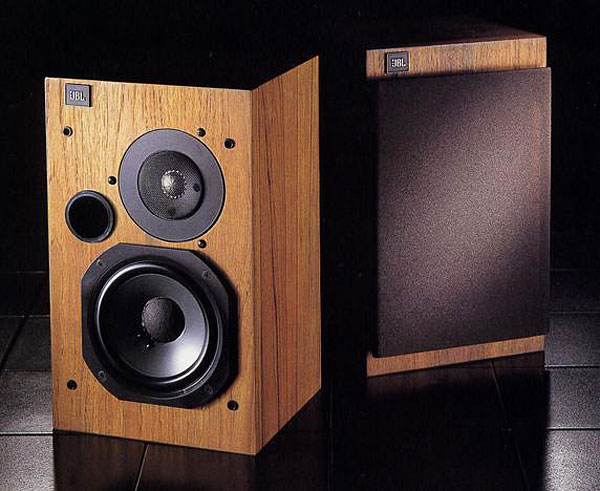
JBL 18Ti loudspeaker

Introduced in 1985 as the smallest model in JBL's "Ti" range, the 18Ti ($590/pair) shares with its larger siblings, like the JBL 250ti (recently reviewed by J. Gordon Holt), a high-tech tweeter that uses a one-piece ribbed titanium-foil dome/surround just 25µm thick. This is both rigid and of very low mass, pushing its first-breakup mode up to the region of 30kHz. The tweeter is mounted above the polypropylene-cone woofer, offset a little to one side to make room for the 45mm diameter port (though the speakers are not supplied as a handed pair). The 10-liter internal volume box is well-constructed from 20mm chipboard, covered in real-wood veneer.

Celestion SL6S loudspeaker

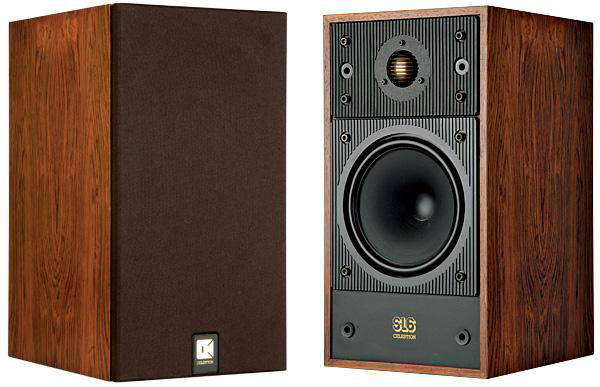
Let me tell you how I spent the month of May 1987: I had been musing about a comment made by J. Gordon Holt following the 1986 Summer CES that it seemed that the loudspeaker High End was populated exclusively by planar models: Apogees, Acoustats, MartinLogans, Magneplanars of various kinds, the Quad ESL-63, and an assorted Infinity or two. The problem is, however, that folks as a rule buy speakers made from boxes; boxes priced a little lower than the esoteric beasts so beloved of reviewers. "OK," said Larry Archibald, "how about reviewing some moving-coil loudspeakers? Tell you what. Let's make it interesting; make them box loudspeakers costing under $1000/pair. It'll give you a feel for the kind of affordable speaker that sells in quantity."

Altec Lansing 301 loudspeaker

One of the oldest names in US audio, Altec Lansing was building speakers for theaters and recording studios long before the introduction of the microgroove LP in 1948 (which date many see as marking the inception of high fidelity). Started in 1931 under the name All-Technical Services ~Corp., the firm later purchased another audio firm called Lansing Engineering, and merged the names. Altec's Model 604, one of the first true coaxial speakers, was adopted for home use by many early hi-fi buffs and, several permutations later, is still widely used for monitoring in disc-cutting rooms.

Dick Olsher Dahlia speaker

Do-It-Yourself (DIY) loudspeaker projects are quite common in the UK, where details about several excellent designs, including a recent one by Martin Colloms, have been published for public domain consumption. Stateside, the situation is rather grim, where only an occasional subwoofer project (always popular) makes it into the commercial magazines.

Gale GS402 loudspeaker

885gale.promo250.jpgThe Gale loudspeaker dates back to the early 1970s. As I understand it, the basic design resulted from a collaboration of Ira Gale and Sao Win, who were college classmates at the time. Their speaker proved very popular in England and was subsequently imported to the USA during the mid-1970s by Audio Technica. Recently, Techport (the folks who import the Perreaux line) has taken over US distribution.
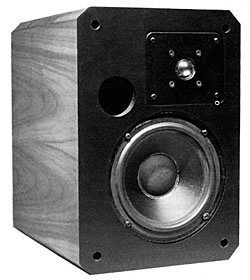

While the Gales have undergone same changes through the years, their distinctive appearance and, according to some, their equally distinctive sonic "flavor," have continued to earn the respect of critical listeners all over the world. Nonetheless, these speakers have also sustained their fair share of criticism; not everybody likes them. This sort of continuing disagreement usually means that what is at issue is a "different" kind of sound—a product that sounds quite unlike others, yet somehow offers a high enough degree of musical satisfaction to appeal to a lot of serious audiophiles. Of such products are cults made.

Siefert Maxim III loudspeaker

While it is not quite accurate to say that $500/pair loudspeakers are a dime a dozen, they are by no means unusual. And since this is a price area where major design compromises are mandatory (footnote 1), the sound of such loudspeakers tends to vary all over the map, from pretty good to godawful—depending on what performance areas the designer chose to compromise and by how much.

I approached this latest half-grander with little enthusiasm, despite Siefert's persuasive literature, I have, after all, been reading such self-congratulatory hype abiout new products for longer than most Stereophile readers have been counting birthdays. This, I must admit, was ho-humsville.

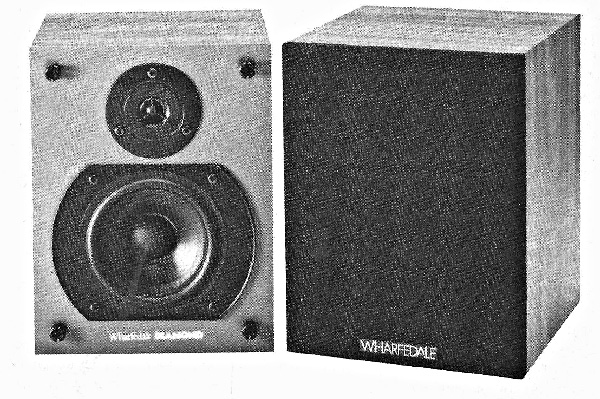
Wharfedale Diamond loudspeaker

It wasn't too many years ago that no audio perfectionist would even consider owning speakers having woofers of less than a 12" diameter. Everyone knew that it took a BIG speaker to reproduce real bass, and pointed at the size of a double bass and an organ bass pipe as proof that there was no way of circumventing that particular law of physics.

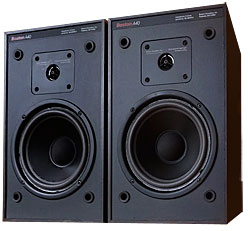
Boston Acoustics A40 loudspeaker

The Boston Acoustics A40 loudspeaker ($150/pair) has become "legendary" (ie, it's stayed around for a while), probably because a pair of them images as well as Rogers LS3/5As. Unfortunately, it is no match for the LS3/5A in terms of smooth midrange response. Of course, at $150/pair, it shouldn't be.


I was originally going to do a review comparing the Spectrum 108A ($200/pair) and the Boston Acoustics A40. On first listen, I was mightily impressed by the A40. But after Stereophile's Larry Archibald schlepped me out a pair of the 108As, I didn't much want to listen to the A40s.

Advertisement
Advertisement
Advertisement