Stand Loudspeaker Reviews

Sort By: Post DateTitle Publish Date

The Fifth Element #77
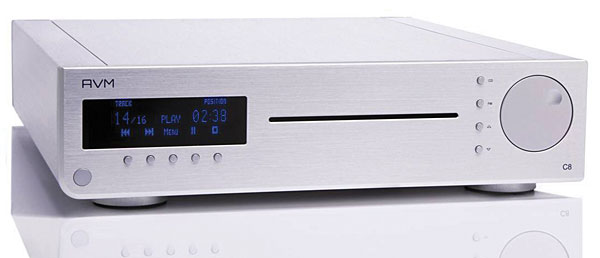
A particular audio interest of mine has long been cost-effective systems that work really well together. I think most of the audio sob stories I've heard can be traced to one or both of two things: mismatched equipment, and inadequate attention paid to room acoustics. I've previously written about systems that range in price from $7500 to under $1500. Here's as minimal and classy a high-performance system as you can ask for: one box for the electronics (including USB connectivity), and two stand-mounted, two-way loudspeakers. The total cost is just under $10,000, but I think the price is justified not only by swank looks, but by the sound.
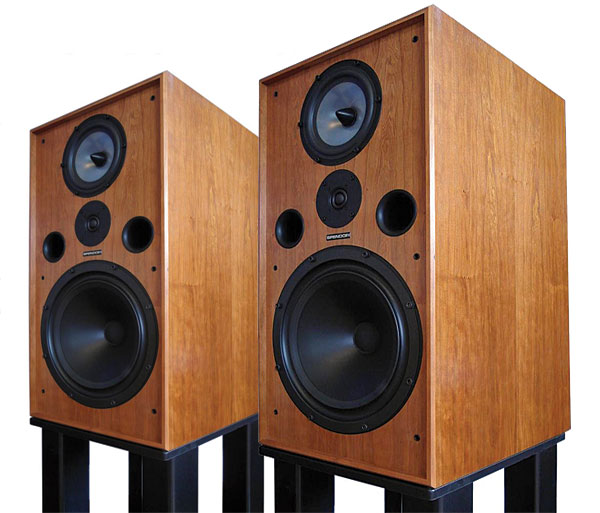
Spendor Classic SP100R2 loudspeaker

In late 1996, as Listener magazine entered its third year of existence, the Spendor SP100 became my reference loudspeaker, and would remain so for a considerable time. My decision to try the SP100 was influenced by John Atkinson's review of its antecedent, the nearly identical Spendor S100, in the December 1991 issue of Stereophile. But my purchase decision came down to two things: The SP100 did virtually everything one could ask a modern loudspeaker to do, requiring in the process far less amplifier power than usual. Just as important at the time, it sold for only $3300/pair—which explains how I could afford them on the spotty salary of a teacher turned fledgling publisher.

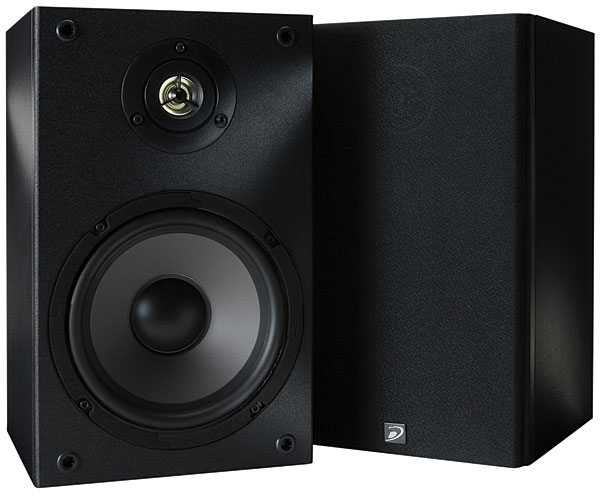
Dayton Audio B652 loudspeaker

I was ready to have some fun with Dayton Audio's B652 loudspeakers—the ones with the outrageously high price of $39.80/pair.


Available from Parts Express (catalog #300-652), the Dayton B652 is a simple two-way, sealed-cabinet design with a 6.5" polypropylene mid/woofer and a ferrofluid-cooled, 5/8" polycarbonate tweeter. The cabinet is clad in black vinyl and has a removable grille of black cloth. The B652s sounded pretty much the same regardless of whether the grilles were in place, but I preferred their looks with the grilles off, so that's how I listened. Better looks often equal better sound—at least in my home.

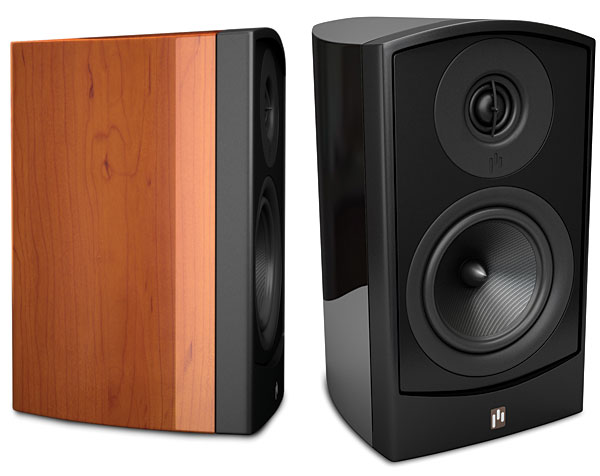
Aperion Verus Grand Bookshelf loudspeaker

I received a call from Aperion Audio, who wanted to know if was interested in reviewing their Verus Grand Bookshelf loudspeaker ($598/pair). I've had good experiences with speakers from this Oregon-based, Internet-only company. I reviewed their Intimus 6T (January 2009) and Intimus 533-T (April 2007), and felt both provided overall good sound and great value for the money. I was also impressed with the speakers' quality of construction and physical appearance. But those models were floorstanders—what excites me more is finding new bookshelf speakers at low prices. I was anxious to hear the Verus Grand.

The Entry Level #24

There are two things that don't have to mean anything; one is music and the other is laughter.—Immanuel Kant


We can dance until we die.—Katy Perry


I'd always figured I'd wind up with a girl who loved the Mets, hated cats, and had grown up on Sonic Youth and the Pixies—a female version of me, more or less. What could be better?


Was my vision misguided? Maybe. Narcissistic? Probably. A symptom of low self-esteem?


Hmm . . .

KEF LS50 Anniversary Model loudspeaker

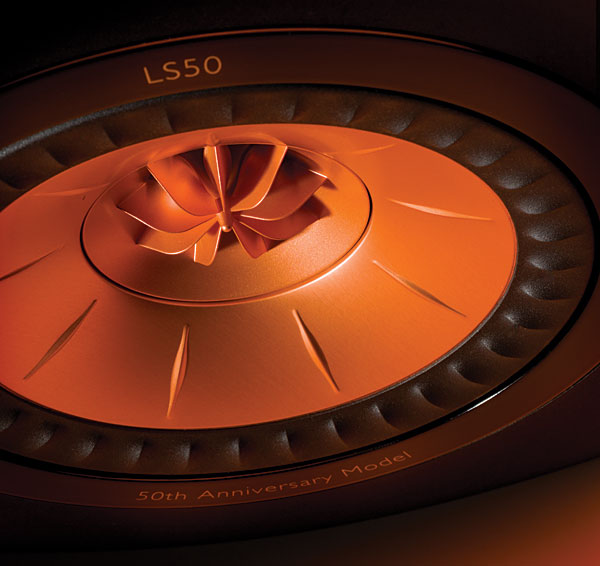
The tale's been told many times: Back in the early 1970s, the British Broadcasting Corporation needed a small nearfield monitor for use in remote-broadcast trucks. A team led by T. Sommerville and D.E. Shorter, both of the BBC's Research Department, developed the two-way, sealed-box LS3/5, based on a small monitor they'd designed for experiments in acoustic scaling. The speaker showed much promise, but problems with the drive-units—a woofer with a doped Bextrene 5" cone and a 1" Mylar-dome tweeter—led to a detailed redesign, the LS3/5a, carried out by Dudley Harwood, also of the Research Department (and later to found Harbeth), and Maurice E. Whatton and R.W. Mills, of the BBC's Designs Department.

Bowers & Wilkins CM5 loudspeaker

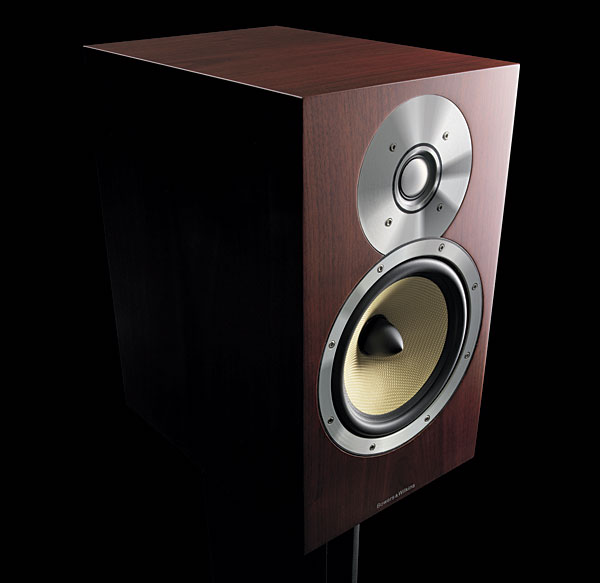
With all the affordable loudspeakers I've written about in recent years, I couldn't remember the last time I reviewed one from the revered British firm Bowers & Wilkins. When I searched www.stereophile.com, I learned that the last time a B&W speaker had graced my listening room's carpet was more than seven years ago: the DM603 S3, reviewed in the August 2005 issue. I thought it was time to revisit the brand, and as the DM603 S3 was a floorstanding speaker, this time a bookshelf model seemed in order.

Definitive Technology StudioMonitor 55 loudspeaker

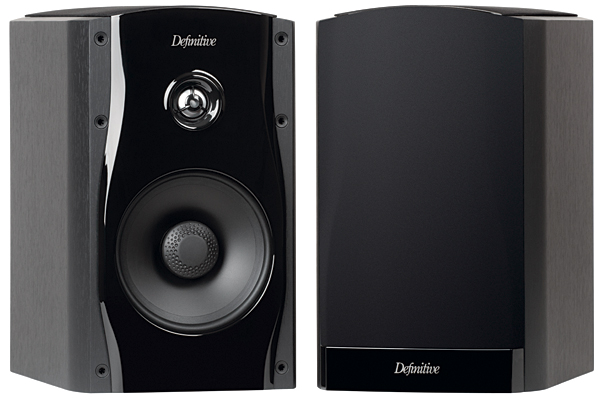
Recently, I thought about all the audio shows I've attended over the last 27 years, looking for any pattern that all of them might have shared. I came up with a handful of audio manufacturers that have earned at shows a reputation for getting, year after year, consistently good sound—rooms in which I could reliably depend on being able to chill out and enjoy music in good, involving sound. Those companies include Audio Research, Music Hall (distributor of Creek and Epos), Vandersteen Audio—and Definitive Technology. Since their founding, in 1990, Maryland-based DefTech has been a major presence at shows, displaying an increasingly wide range of high-value speakers for two-channel and surround-sound systems. But I'd never reviewed one of their models. I thought it was about time.

Tannoy Mercury V1 loudspeaker

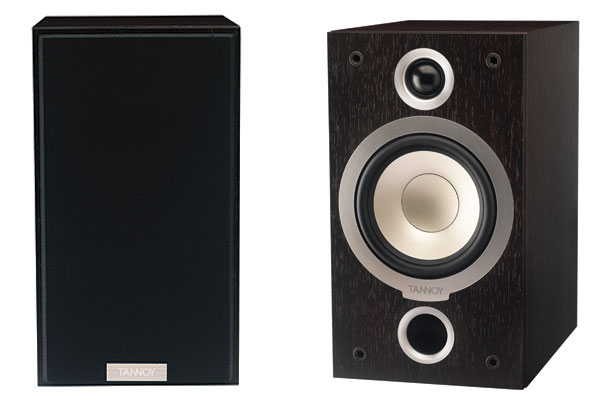
The last few decades have seen dramatic improvements in the art (and science) of loudspeaker design. Tannoy's budget-priced Mercury series is now in its fifth iteration. The two-way, front-ported Mercury V1 ($320/pair) measures 11.8" high by 6.7" wide by 10" deep and weighs 9.9 lbs. My samples came in a very handsome Dark Walnut finish (Sugar Maple is available) with simple black cloth grilles. I left the grilles off to reveal the speakers' attractive front baffles and accentuate their equally attractive high frequencies (more on the latter later).

The Fifth Element #74


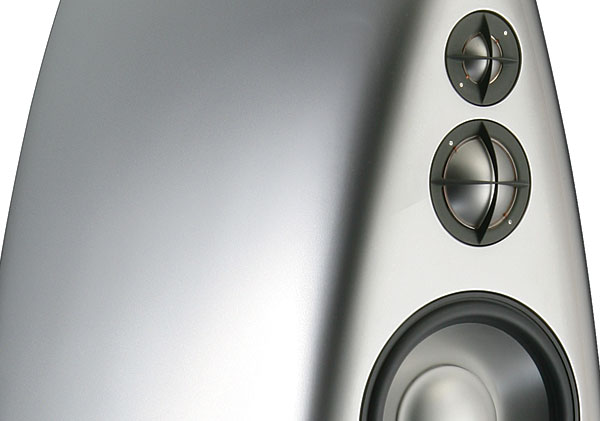
I've had Vivid Audio's Oval K1 loudspeaker here for several months. Over many years, the only other speaker brands I've written about as much as I have Vivid have been Wilson Benesch and Shahinian Acoustics, whose speakers I still revere and can recommend without reservation—to the right listener. But Vivid's high-tech sorcery has raised the bar. The Vivids I've had here are among the best loudspeakers I've ever heard, and that's a consensus that seems headed in the direction of critical mass.
Advertisement
Advertisement
Advertisement