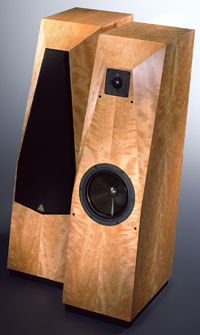
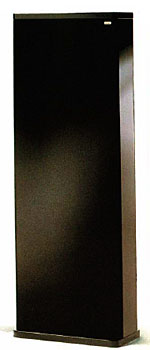
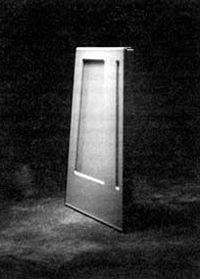
Wilson WATT Series 3-Puppy 2 loudspeaker
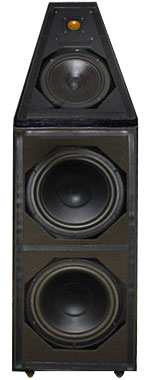 "No pain; no gain." Thus goes the June 1991 offering from the Cliché-of-the-Month Club(800) MOT-JUSTa saying that seems particularly appropriate for audiophiles with aspirations. High-performance loudspeakers fall into two categories. First are those exasperating thoroughbreds requiring endless Tender Loving Care and fussy attention to system detail to work at all. Take the Avalon Eclipse or the Infinity IRS Beta, for example: when everything is just fine, you put on record after record, trying to get through as much music as possible before the system goes off song again. On the other hand, speakers like the Vandersteens, Magnepans, B&W 801 Matrix, and KEF R107/2 appear to sound excellent even as you unpack them, before you've even put them in what you think might be the optimum positions in your listening room.
The question is: Are such unfussy designs really high-end? I mean, if they were truly high-performance speakers, shouldn't the owner have to suffer even just a little to reach musical nirvana? "A little pain; some sonic gain!" goes that other familiar saying.
You all know where you stand on this vitally important question. Me, I prefer to sit and construct the following graphical analogy. Draw a vertical axis and mark it "Absolute Performance." (The units are "gb," footnote 1) Now draw a horizontal axis and label it "Setup." (The units are "dU" for "deci-Ungers," footnote 2) Okay, sketch out an inverted V-shape. This curve, something like an engine's torque vs RPM curve, represents the manner in which a system's or component's performance changes according to how it is set up.
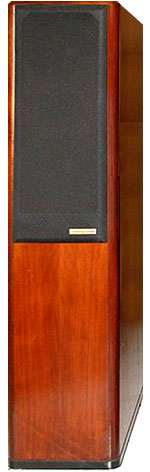 Last July I reviewed the $4850/pair
  The Snell Type C/IV's design has been highly influenced by both the testing methods and philosophy of Canada's National Research Council in Ottawa. Other well-known loudspeakers to have benefited from the NRC's testing facilities include the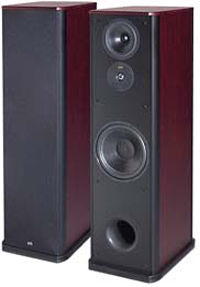
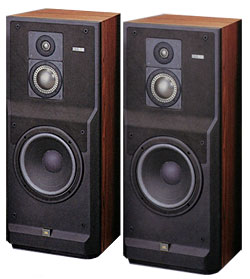 A visiting manufacturer recently told us here at Stereophile of an ongoing informal "survey" he was conducting. He would ask strangers to name three brands of loudspeakers. Their responses were not what I would have expected. They almost invariably named Japanese companiestwo of the most commonly mentioned were Hitachi and Panasonic. Other than my spell-checker insisting that I change "Hitachi" to "hibachi," I have nothing in particular against these two manufacturers; they are well-recognized in many product categories. But loudspeakers? I can only guess that the respondents were dredging up the only consumer electronics companies that came readily to mind.