Floor Loudspeaker Reviews

Sort By: Post DateTitle Publish Date

YG Acoustics Anat Reference II Professional loudspeaker
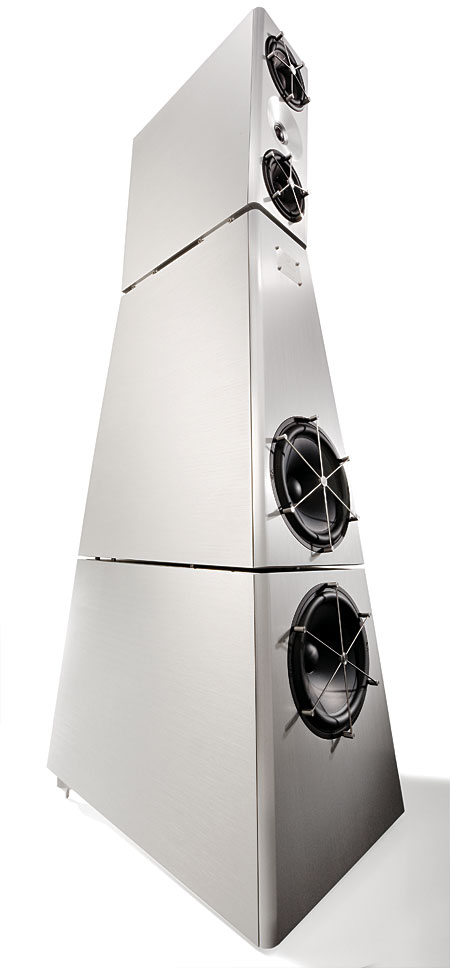
You've seen the ads from YG Acoustics: "The best loudspeaker on Earth. Period." It sounds arrogant. But come on—high-end audio has never been a field of shrinking violets. When Ivor">http://www.stereophile.com/interviews/1101ivor">Ivor Tiefenbrun of Linn announced that the turntable, not the cartridge or loudspeakers, dictated the sound quality of an audio system, that was a man convinced that he was right and taking on the world. And was Krell's Dan">http://www.stereophile.com/interviews/1203dagostino">Dan D'Agostino any less arrogant when, in 1980, he introduced the KSA-100 power amplifier? In a world where small size and high wattage were the norms, didn't it take a pair of big brass 'uns to bring out a honkin' huge slab of metal that put out only 100Wpc?
Jamo Reference R 907 loudspeaker

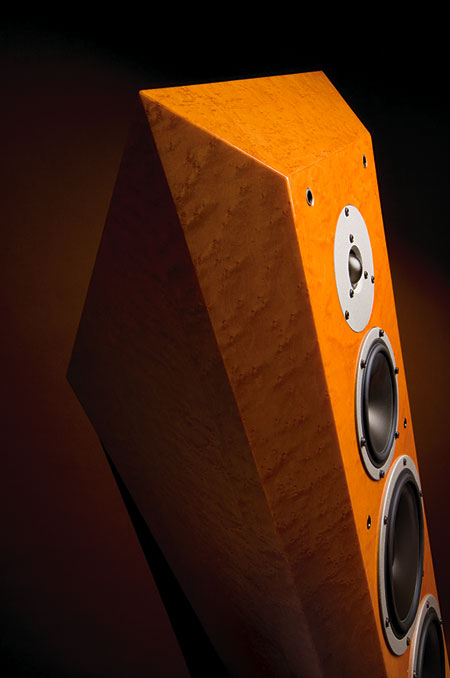
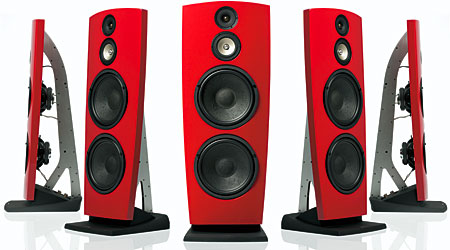
It was love at first sight when I saw a Jamo Reference R 909 loudspeaker in sparkling red lacquer on the floor of the 2007 Consumer Electronics Show. It made no sound, but it was beautiful, and I wanted it. It summoned up all my latent predilections for snazzy colors, striking shapes, and dipole speakers. But, as with many passing encounters in life, nothing came of it.


Burmester B25 loudspeaker

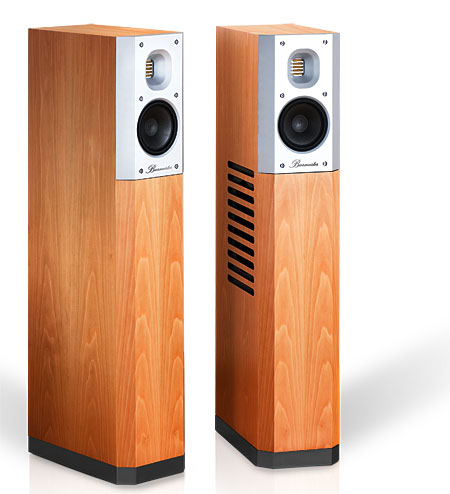
It's always fun to visit the Burmester Audio suite at the annual Consumer Electronic Show. Founder Dieter Burmester and CEO Udo Besser are upbeat, fun-loving personalities who enjoy demonstrating their latest home audio gear—that is, when they're not working on the latest updates to their sound system for the $2.1 million Bugatti Veyron 16.4 supercar. This past year they introduced their new B25 loudspeaker, an 88-lb floorstander. This "baby" Burmester's suggested retail price of $12,000/pair is only one-sixth that of Burmester's flagship speaker, the B100, only one-fourth its weight, and half its height. The design goals for the B25 were a less expensive, lighter speaker that was easier to set up, while retaining Burmester products' high-quality sound and good looks. Playing my own CDs through the B25s at the 2008 CES, I found them notably smooth and detailed; they also imaged well, and were particularly good at reproducing male voices.


Aperion Audio Intimus 6T loudspeaker

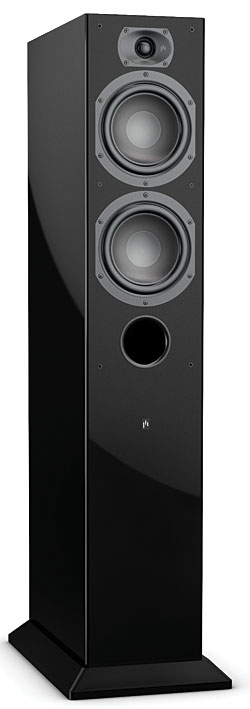
I got a call a while back from Stephen Mejias (Stereophile('s Sancho Panza to John Atkinson's Don Quixote), who informed me that Aperion Audio had redesigned their entire line of loudspeakers, and suggested that I check them out. I had responded very favorably to Aperion's Intimus 533-T, which I reviewedhttp://www.stereophile.com/floorloudspeakers/407ape">reviewed; in the April 2007 issue. I loved the speaker's sound, the sexy appearance, and felt it was good value at $750/pair. And I thought Aperion's 30-day free trial with free shipping each way was a deal that few could resist. So when this factory-direct, Oregon-based company informed me that they'd updated the drivers and crossovers across their entire speaker line, I decided to give a listen to their new flagship, the Intimus 6T ($1390/pair).


Sonics by Joachim Gerhard Allegra loudspeaker

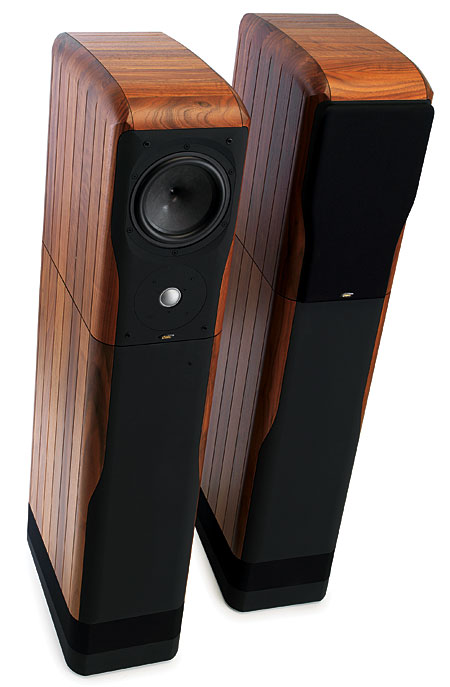
Time thins the ranks of specialist industries. Trends, products, and companies come and go. High-end audio is a poster child for this reality, and most veteran audiophiles have evidence of the casualties—literature or orphaned products, stashed away somewhere. But a small number of true believers remain true to their visions, and persevere to help advance the state of the art.


Dynaudio Sapphire loudspeaker

With hindsight, it should have been obvious at the time that the 1970s witnessed a glorious flowering of high-end audio. Almost all the brands now regarded as leaders had their start in that decade, though with perhaps the exceptions of Audio Research, Linn, Magnepan, and Naim, those of us working at audio magazines missed the significance of the new names. Dynaudio, for example, was founded in 1977, but not until the end of the 1980s did I become fully aware of the ground being broken in drive-unit and overall system design by this Danish loudspeaker manufacturer.


Chario Academy Sovran loudspeaker

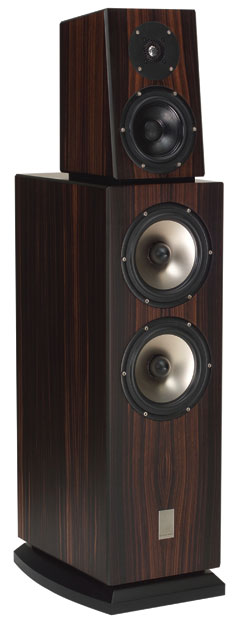
Italian manufacturer Chario Loudspeakers has never had a strong presence in the US. No wonder, then, when confronted by these exquisitely finished beauties of solid hardwood, many American audiophiles think, "Sonus Faber rip-off." Without knowing the musical history of the 1960s, had you heard Badfinger first, you might have thought the same thing when you then heard the Beatles. Similarly, Chario, by far Italy's largest maker of high-performance speakers, was founded in 1975, eight years before Sonus Faber. While SF has its drive-units built to its own specifications by other firms, Chario designs and builds its own.


Snell Illusion loudspeaker

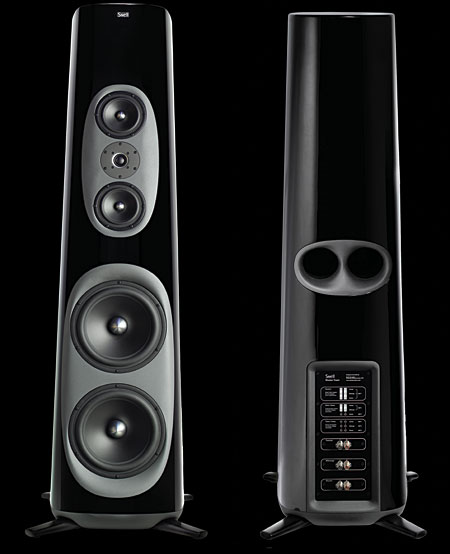
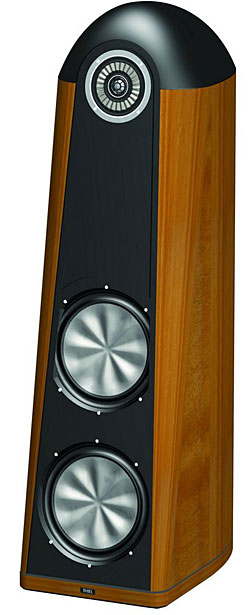
"How do you make an object common as a box iconic?" asked Bob Graffy, Snell's vice president/brand manager. He and Joseph D'Appolito, Snell's chief design engineer, were sitting in my listening room, discussing cabinet designs. Graffy noted that KEF had sought the same in their distinctive, silvery, cylindrical Muon loudspeaker ($150,000/pair). For the flagship model in their Illusion series, Snell commissioned Gerd Schmieta, former designer for Ideo, to integrate D'Appolito's wish list for an ideal enclosure: a narrow, rounded upper baffle for the midrange and tweeter, wider at the base for the woofers, holding a constant cross-sectional area while maximizing cabinet volume, and compliance with a 15° tip test.


Avalon Acoustics Indra loudspeaker

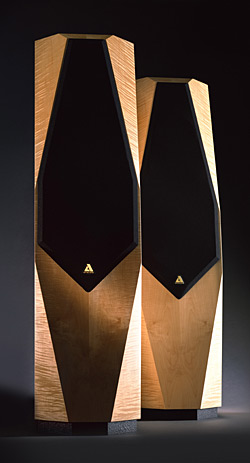
I first encountered Avalon Acoustics' loudspeakers about 20 years ago. The hi-fi shop I worked for sold Jeff Rowland Design Group electronics, and Jeff Rowland insisted that no loudspeaker better showcased his electronics than the Avalons. Rowland sent us a pair of Ascents, and we were startled by their gem-like, faceted cabinets and remarkable soundstaging. As we packed them up to return them to Colorado, I remember thinking, I could live with these speakers.


Advertisement
Advertisement
Advertisement