Floor Loudspeaker Reviews

Sort By: Post DateTitle Publish Date

Focal Aria 936 loudspeaker
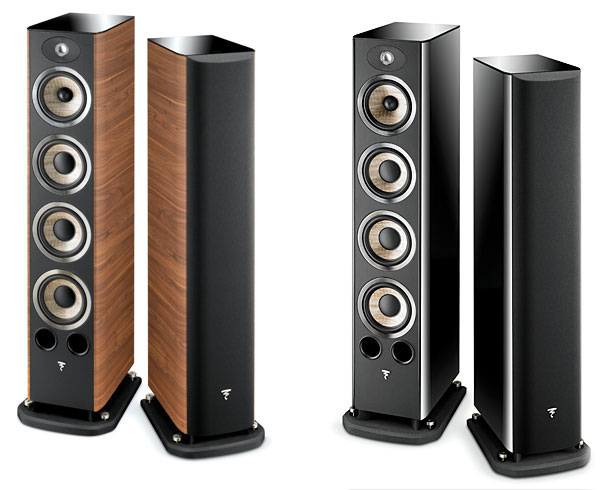
Founded in 1979 by Jacques Mahul, Focal—formerly known as JMlab and as Focal-JMlab—is one of audio's success stories. Beginning with a single speaker model produced in a small workshop in Saint Etienne, France, the company is still headquartered there, but has expanded to employ over 250 workers, making products exported to over 160 countries. All Focal products are engineered in France; only a few lower-priced multimedia models and headphones are assembled in the Far East.
Nola Metro Grand Reference Gold loudspeaker

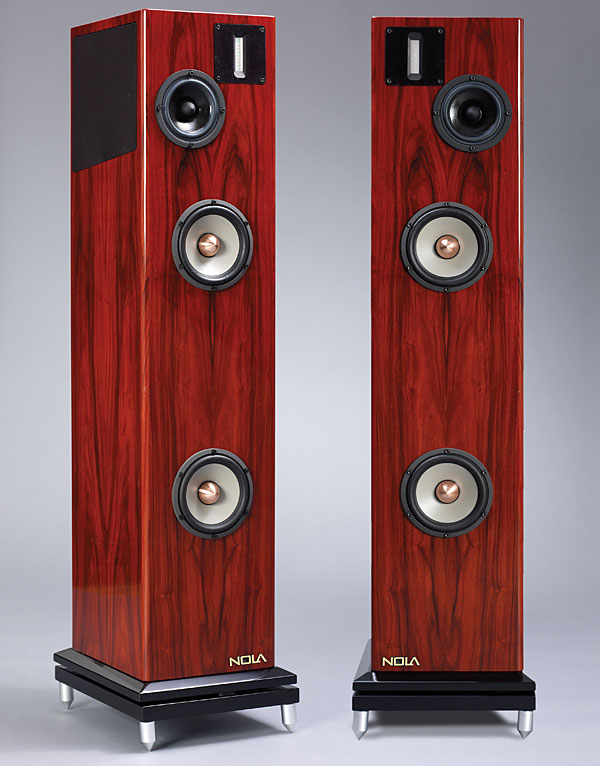
For a reviewer, deciding which products to write about is a tricky business. You want to do a professional job of evaluation, but you also want to be able to wrest maximum enjoyment from your music while you do so. Attending audio shows is where reviewers perform sonic triage, weeding out the products that aren't ready for prime time, and making a note of those they wish to invite home after the show.

KEF R700 loudspeaker

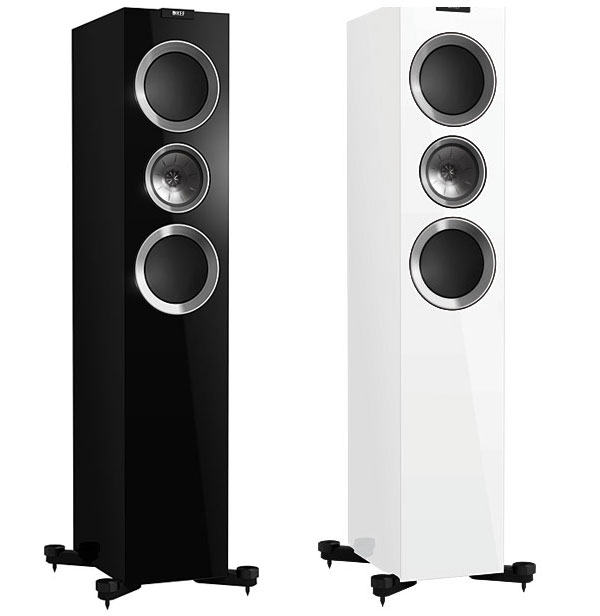
In the late 1980s, KEF, then as now a leader in bringing new technology to loudspeaker design, developed a unique coincident driver that positioned the tweeter in the throat of the midrange/woofer cone. In a flash of inspiration, they dubbed it the Uni-Q, and the driver immediately not only found its way into the company's more upscale speaker designs, but also became a key element in a major European research project on room acoustics. That study's results appear to have been inconclusive, but the Uni-Q lives on as the defining element of KEF loudspeakers.

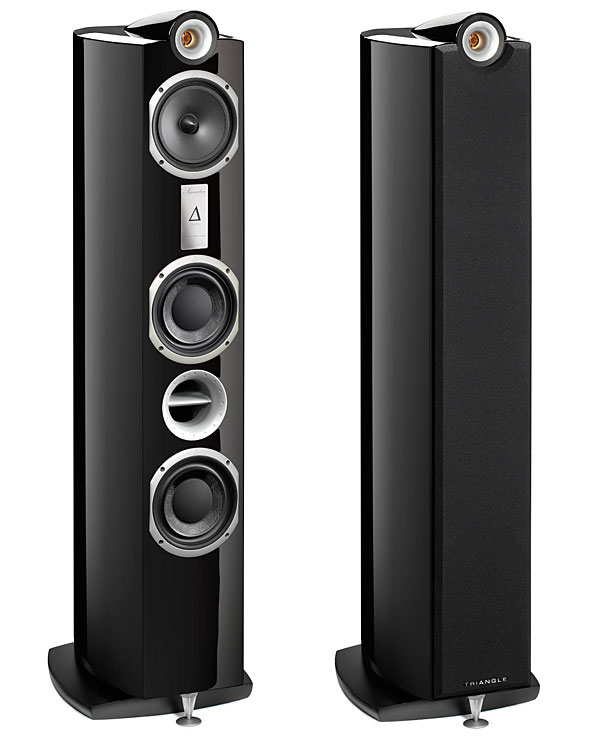
Triangle Signature Delta loudspeaker

The French do things differently. I first heard Triangle loudspeakers at the 1981 Festival du Son, in Paris. That was, of course, after I had obtained admission to the show, in a nonintuitive process in which members of the press obtained their credentials at a booth inside the show. But my experience of the Triangle speaker, a small, three-way floorstander, was positive: It sounded clean and uncolored, and nothing like the BBC-inspired speakers I preferred at that time. The Triangle wasn't as neutral as the English norm, but there was something appealing about its sound—something that, I later learned, Stereophile's founder, J. Gordon Holt, referred to as jump factor.

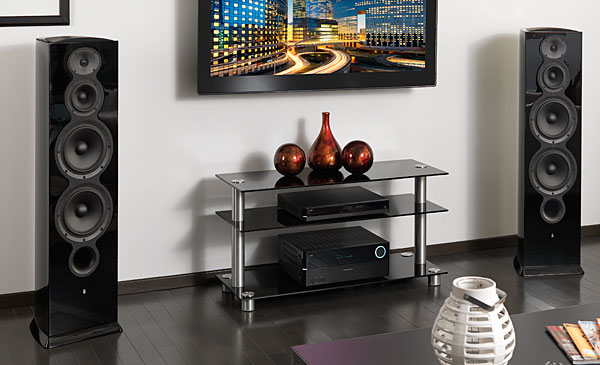
Revel Performa3 F208 loudspeaker

The year: 1999. The city: Minneapolis. While taking a break from partying with Prince like it was, well . . . that year, I wandered into a local audio emporium to see what new and exciting goodies were on display. Set up in a large listening room, attached to the latest Mark Levinson gear, were Revel's original Ultima Studio loudspeakers. I sat down, gave them a listen, and heard the best sound I had yet heard. For the first time, it seemed to me that I was listening to an audio system that played with low distortion and little coloration. Also, the system's wide dispersion threw a huge soundstage, engrossing me in the music in ways other speakers couldn't. I was hooked.

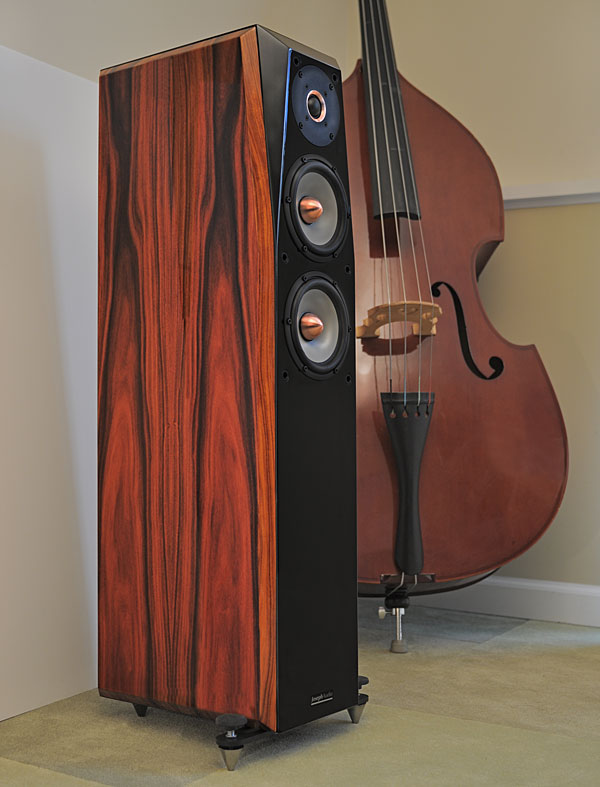
Joseph Audio Perspective loudspeaker

For exhibitors, showing off their products at audio shows is a crap shoot. The vagaries of arbitrarily assigned hotel rooms with unpredictable acoustics can play havoc with the sound of even the best-sounding systems. But over the years I've been attending shows, Joseph Audio's dems have always impressed me with how Jeff Joseph manages to set up his speakers so that they work with instead of against a hotel room's acoustics. Yes, Joseph's setup skills, going back to his days in audio retail, play an important role here. But his speakers, too, need to be of sufficiently high quality to benefit from those skills. And if they can be made to sing in a hotel room, they will also stand a better-than-usual chance of doing so in audiophiles' homes.

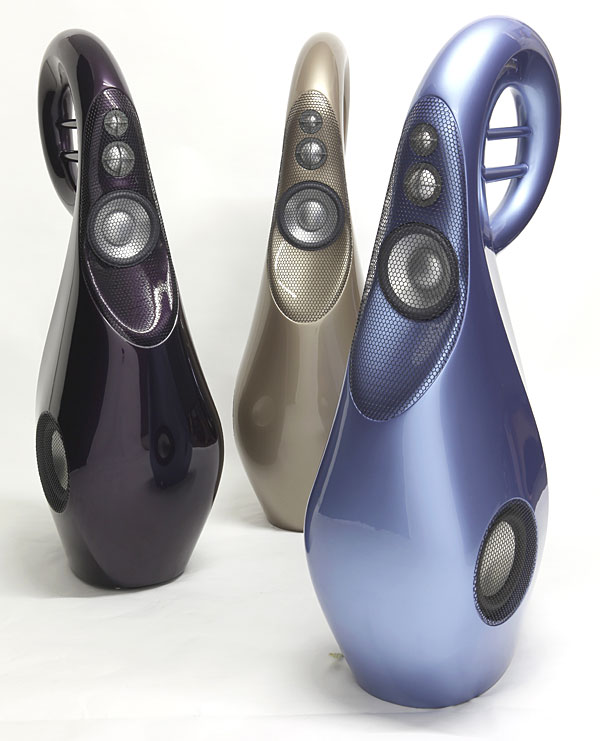
Vivid Audio Giya G3 loudspeaker

In February 2013, I was taking part in a "Music Matters" evening at Seattle retailer Definitive Audio, playing some of my recordings and talking about my audio philosophy. I love taking part in these events—in addition to Definitive's, in recent years I've participated in evenings organized by North Carolina's Audio Advice, Colorado's Listen-Up, and Atlanta's Audio Alternatives—but, as might be obvious, at each one I use a system provided by the retailer. The February 2013 system comprised Classé electronics and, to my surprise, Bowers & Wilkins Nautilus loudspeakers.

DeVore Fidelity Orangutan O/93 loudspeaker

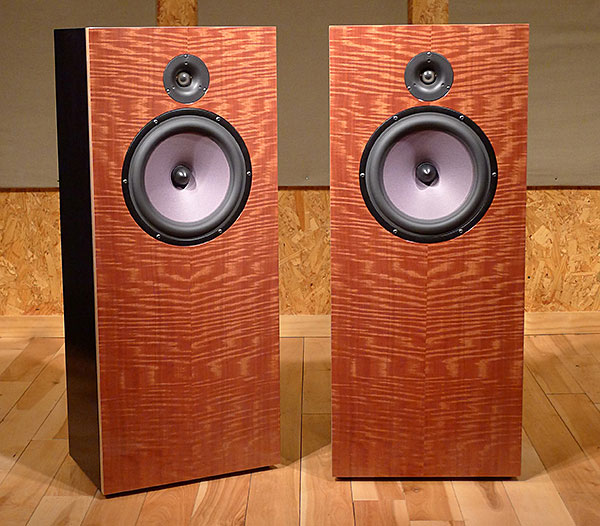
John DeVore names his speakers after primates—apes, to be specific. Something to do with a family member being a zoologist.


John once worked at a hi-fi retailer in lower Manhattan. Now, as president and chief designer of DeVore Fidelity, he manufactures loudspeakers across the bridge, in the former Brooklyn Navy Yard. I talked with John the other day about his new speaker, the Orangutan O/93.


John makes two Orangutans, both floorstanders: the O/96, with a sensitivity specified as 96dB, over which Art Dudley went ape, in the December 2012 issue. Artie has made the O/96 his reference loudspeaker. It goes for $12,000/pair, stands included.


Now there's the new, smaller Orangutan O/93, specified at 93dB. It retails for $8400/pair with a front baffle in fiddleback mahogany veneer (other veneers are available).

Wilson Audio Specialties Alexia loudspeaker

With the help of 20:20 hindsight, it looks as if I made a decision when I joined Stereophile: to review a loudspeaker from Wilson Audio Specialties every 11 years. In June 1991, I reported on Wilson's WATT 3/Puppy 2 combination, which cost $12,740/pair in an automotive gloss-paint finish. This was followed in July 2002 by my review of the Wilson Sophia ($11,700/pair). And now, in December 2013, I am writing about the Wilson Alexia, which costs a not-inconsiderable $48,500/pair.

PSB Imagine T2 Tower loudspeaker


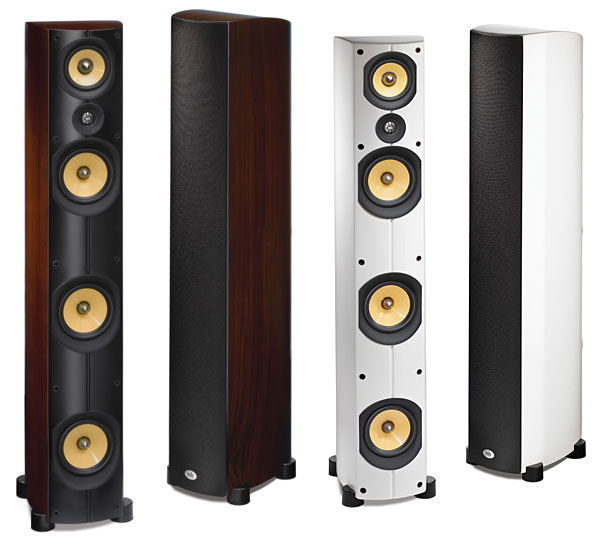
What can you tell about the intrinsic sound quality of a loudspeaker if you've heard it only at an audio show? Arguably, not much. If it sounds bad, there may be a number of reasons for that, only one being the speaker itself. It may be the acoustics of the room, problems with speaker setup, poorly matched associated equipment, insufficient break-in/warm-up, or poor choice of demo recordings.
Advertisement
Advertisement
Advertisement