Floor Loudspeaker Reviews

Sort By: Post DateTitle Publish Date

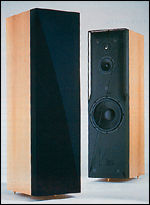
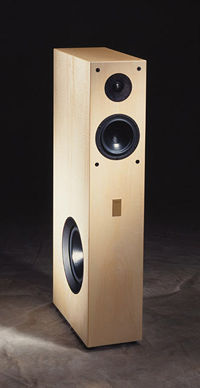
Joseph Audio RM22si Signature loudspeaker

You might recall that ditty from childhood about the little engine that could (I think I can, I think I can, I think I can...). It's an apt metaphor for high-end audio. In traversing the aural sepulchers of last winter's Consumer Electronics Show and the summer's HI-FI Show, I routinely encountered one divine sound system after another. Yet while I never tire of transcendent sonics, eventually I become inured to the procession of celestial, cost-no-object speakers. It's like having a white-light experience, then returning to the gritty reality of life on earth, where for most of us cost is not merely the object, but the determining factor in finding an optimal balance among audio components.
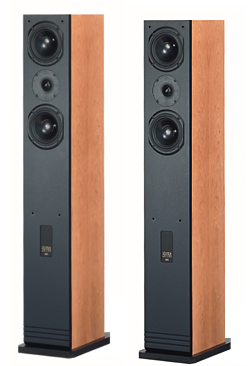
Dynaudio Contour 3.0 loudspeaker

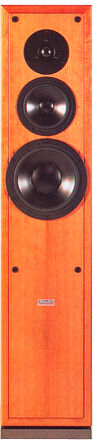
It was one of those uncommonly warm late winter Sundays when you hardly need a coat. The fine weather had set aside any critical listening sessions, the door to the kitchen was open, and I was playing my audio system—then equipped with a pair of Spendor BC-1 loudspeakers—at moderate levels. Playing on the Linn turntable was an LP that the kids loved—"The Magic Garden Song," sung by the two female leads from the children's television show of the same name (footnote 1), My wife doesn't often comment positively on audio equipment, but that day she walked in from the kitchen to say, "Those voices sound real—as if two people just walked in our living room and started singing."


System Audio 1070 loudspeaker

666systemau.1.pngDenmark has probably contributed more to loudspeaker technology than any other country in the world. Vifa, Dynaudio, ScanSpeak, and Peerless drivers—used in a huge variety of speakers—are all Danish. Products from companies such as JBL, Spendor, Linn, B&W, Celestion, KEF, Audio Physic, ProAc, and others are partially or wholly made in the little Scandinavian nation.
System Audio originated in 1984, when guitarist and electronics technician Ole Witthoft grew dissatisfied with the lack of realism he heard from most home audio systems and figured he could do better. He built some speakers for himself and for a few friends, with encouraging results. It's a familiar story: we all know competent hobbyist speaker builders. A few of them gain a bit of local notoriety, but most never venture further than making a few units for friends and relatives.


But Witthoft's reputation grew rapidly, and so did his business. Fourteen years later, his little startup has become a serious player in the loudspeaker market, with annual production in excess of 18,000 units.

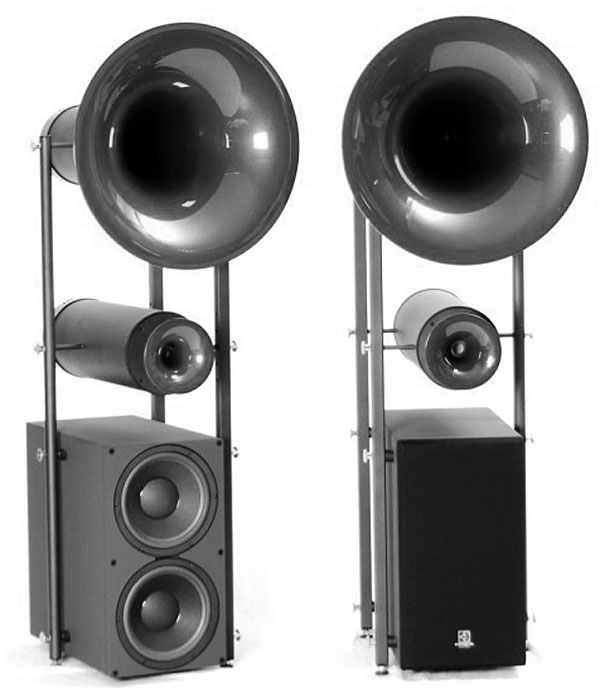
Avantgarde Acoustic Duo loudspeaker

Few designers are drawn to create horn loudspeakers. Most people's experience of horns is based on the resonating, overdriven, often overloaded PA installations heard at rock concerts and similar events. These commonly heard unmusical noises and colorations are ever-present in designers' minds. But good-sounding horns do exist; over the years, some noteworthy commercial examples have appeared, though few have been full-range.

Sonus Faber Concerto Grand Piano loudspeaker

I've never heard a pair of the Italian Sonus Faber speakers I didn't like. What I've never liked was the US price: too high. And then you have to put them on costly stands. Plus, you're paying a premium for the magnificent woodworking and exquisite design—something I wasn't into, since I live with my stereo in a basement office/workshop/listening room some (who shall remain nameless) refer to as the "habitat for inhumanity."


JMlab Utopia loudspeaker

I first met Jacques">http://www.stereophile.com//interviews/274/">Jacques Mahul (the JM in JMlab/Focal) when my wife Kathleen and I traveled to Paris to cover HiFi (Hee-Fee) '96. The sound produced by the JMlab Grand Utopias—on a collection of many-chassis'd YBA electronics—got my enthusiastic vote for best of show (footnote 1). JMlab's large demo room was always packed to the rafters with avid listeners. (As a group, melomanes, as audiophiles are called in France, exactly mirror their stateside brethren in appearance and general demeanor. Yes, they're a raucous and demanding bunch!)


Thiel CS6 Loudspeaker

A reviewer's life is not all fame and fortune. There are downsides, too, one of which is that, while many great-sounding components pass through your listening room, only a few get to stay there on anything like a permanent basis. (And that involves money changing hands, as in [gasp!] "purchase.") Before I bought my long-term reference loudspeakers—a pair of B&W John Bowers Silver Signatures—back in 1994, the speakers that had spent the most time in my 2900-cubic foot listening room were a pair of Thiel CS2 2s. I reviewed the '2 2 in the January 1993 issue of Stereophile (Vol.16 No.1), and although it was relatively affordable ($2250/pair at the time of the review), it did most of what I wanted a speaker to do. Other than a limited dynamic range in the bottom audio octave and a slightly exaggerated top octave, the CS2 2 sounded effortlessly smooth and free from coloration throughout the midrange and treble. It was also a real imaging champ.
Advertisement
Advertisement
Advertisement