Floor Loudspeaker Reviews

Sort By: Post DateTitle Publish Date

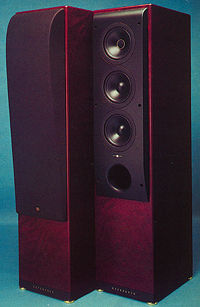
Vienna Acoustics Mozart loudspeaker

Vienna is a beautiful city known for many things, but the design and manufacturing of audio equipment is not one of them. Waltzes and strudel, yes; loudspeakers, no. One exception is Vienna Acoustics, a company that has introduced a line of loudspeakers named after composers: Mozart, Bach, Beethoven, and Haydn. At the 1996 Las Vegas WCES, Sumiko, US distributor of Vienna Acoustics products (footnote 1), demonstrated the second-from-the-top Mozart, and Stereophile reviewers as diverse in their approaches as Jonathan Scull, Tom Norton, and Sam Tellig (as well as yours truly) were unanimous in our admiration of the sound.


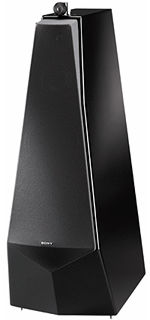
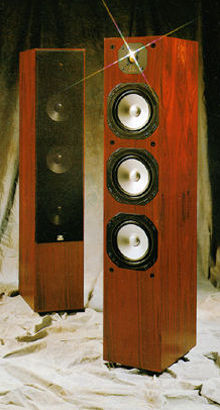
Sony ES SS-M9 loudspeaker

Conventional wisdom has it that large Japanese corporations are insular. But when it comes to audio, Sony bucks the conventional wisdom as much as it does in pretty much everything it does. In Europe, the company has long had an excellent reputation for producing loudspeakers using local design talent, so I wasn't surprised to see Sony launching a line of American-designed and -made speakers at Stereophile's 1994 High-End Hi-Fi Show in Miami. Stereophile writer Barry Willis came away from that Show raving about the Sonys: "What we heard was gorgeous, absolutely beautiful: rich, warm, and deep, with a seductive midrange, a shimmering, delicate, grain-free top-end, and a soundstage to die for," he wrote about the sound of the three-way SS-M7 in Miami (footnote 1), 1 concluding that "WATT/Puppy performance is now available at Vandersteen prices in an American-made loudspeaker sporting a Japanese badge."


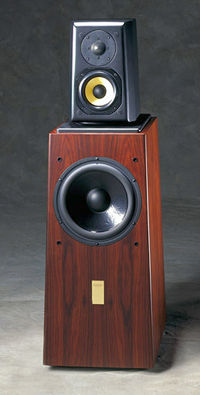
Dunlavy Audio Labs Signature SC-VI loudspeaker

In this age of $70,000-plus "flagship" designs, perhaps $25k is no longer an obscene amount to pay for a pair of loudspeakers. Still, it's mucho dinero. What makes a speaker worth this kind of bread? Does the product's intrinsic value really warrant such a lofty cost, or is it merely a matter of pricing at what the market will bear? The answers to these questions requires careful examination of not only the speaker, but also of the buyer's own soul, priorities, and pocketbook.


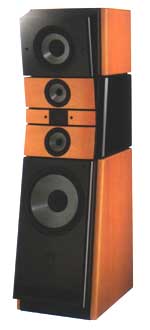
Focal-JMlab Grand Utopia loudspeaker

When you wish upon a star,

Makes no difference who you are;

Anything your heart desires,

Will come to you
.—Jiminy Cricket


12-21-92-17-52-46. Big deal, another $100,000 lottery winner. Where's Jean-Phillipe? Probably off getting us something to drink. Who can blame him? I can't believe people sit around dreaming and waiting to hear all these winning numbers. J-P, you out there?


Young, good-looking, bright—J-P had a lot going for him. He certainly didn't need to sit here listening to winning lottery numbers. Ah, there you are. What are you mumbling about?


"12-21-92-17-52-46. I've won! I've won! I've won!" He shouted over and over, almost crushing me in a bear hug.


My oh my, J-P had really won a big one. And what was it he'd been dreaming about while buying all those tickets every payday for the last three years? Speakers! He'd wanted to own the best loudspeakers in the world, and now he could.

KEF Reference Series Model Four loudspeaker

The Model Four is the largest model in KEF's current Reference series of loudspeakers, discounting the R107/2 Raymond Cooke Special-Edition (reviewed in a follow-up in October '95). It's also the largest KEF model that uses their Uni-Q® loudspeaker configuration. When I visited the KEF factory last October with a group of audio journalists from the US, KEF emphasized the importance of Uni-Q technology to their future plans. They consider it proprietary, and intend to enforce the worldwide patents they hold on the design. One look at KEF's current line will be enough to tell you why they're so serious. Uni-Q drivers may be found not only in most of the Reference series, but in most of their other models as well. The most significant exceptions: the Raymond Cooke series, a few inexpensive models, and their THX-certified loudspeaker system.


Monitor Audio Studio 50 loudspeaker

English loudspeaker manufacturer Monitor Audio has mined a rich vein with their exclusive 6½" metal-cone driver, which covers a range from the bass to the midrange. MA designs using this drive-unit have fared well in these pages, ranging from the Monitor Audio Studio 6 minimonitor (reviewed">http://www.stereophile.com/standloudspeakers/910">reviewed by JA in February '94, Vol.17 No.2) to the floorstanding Studio 20 (reviewed by RH in December '91, Vol.14 No.12, and by ST in April '92, Vol.15 No.4).


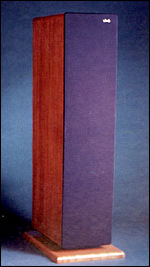
Snell Acoustics Type A Reference loudspeaker

The Type A has served as Snell Acoustics' flagship loudspeaker since 1974. The Type A Reference System reviewed here is the sixth update of the late Peter">http://www.stereophile.com/floorloudspeakers/378snell/index4.html">Peter Snell's original three-way floorstanding design, and is the most radical departure from Snell's">http://www.stereophile.com/floorloudspeakers/378snell">Snell's original. Gone is the pair of "upright bricks of polished wood and stretched cloth" (footnote 1) that delighted decorators because they functioned best against a wall. Today's Type A Reference $18,999 price tag (footnote 2) purchases two tall midrange-tweeter towers, two huge subwoofers, two short but heavy enclosures housing the outboard passive crossover networks, and a small electronic crossover.


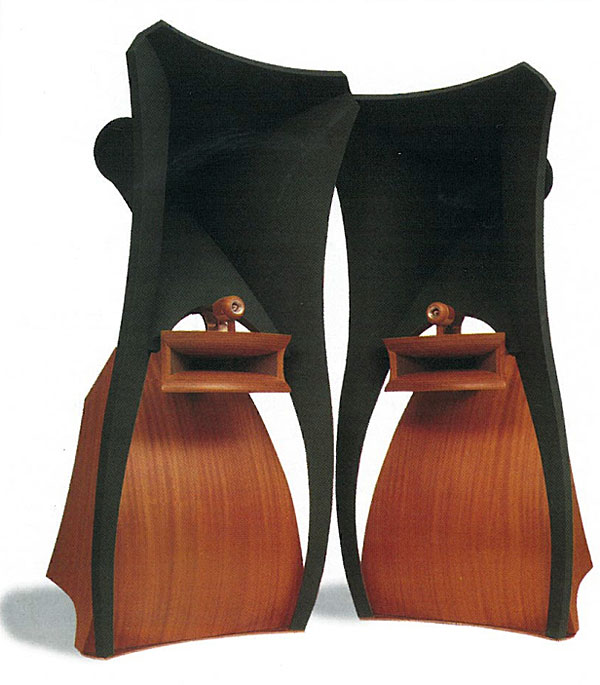
Jadis Eurythmie II loudspeaker

The Jadis Eurythmie speakers ($37,000/pair) arrived in a multitude of oversized boxes. Importer Northstar Leading the Way's Frank Garbie dragged them into our downstairs lobby and broke them open, elevatoring the individual modules up to our door. This happened on one of my office days, but Kathleen pushed me out the door in the morning with a "Don't worry cherie, I can handle it..." She phoned in periodic updates on Garbie's progress. Remember that old Stan Freberg routine? "I got it, I got it...I don't got it!" I arrived home just in time to hook up the amps.
Advertisement
Advertisement
Advertisement