Floor Loudspeaker Reviews

Sort By: Post DateTitle Publish Date

Mordaunt-Short Performance 6 loudspeaker
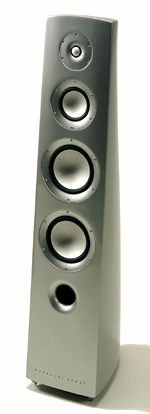
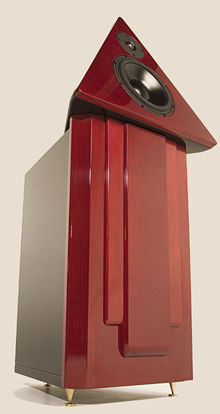
Wood is not an engineering material. It might look pretty, but it's inconsistent and therefore unpredictable. So we smash cheap wood into sawdust and then glue it all together again to create something that can be machined. This is called medium-density fiberboard, or MDF. We then thinly slice some classy hardwood—hopefully harvested from sustainable sources—and use it to cover the ugly MDF. This might have made sense back when Chippendale was making furniture, but it seems strangely old-fashioned in our age of plastics and composites. I haven't seen wood trim on a TV set for more than a decade. Why is it still the norm for loudspeakers?
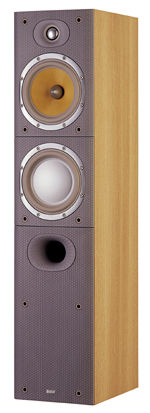
B&W DM603 S3 loudspeaker

It occurred to me recently that, after nearly a decade of specializing in reviewing affordable speakers, and with the exceptions of two entry-level Mission models, I'd never taken a look at recent designs from the large mainstream British speaker manufacturers. So with this review I embark on a Bob Reina "British Invasion" tour to seek out the most innovative and value-conscious designs from companies that have been household names in British stereo shoppes for decades.


Infinity Primus 360 loudspeaker

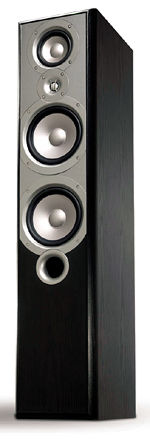
When I reviewed Infinity's">http://www.stereophile.com/loudspeakerreviews/404infinity">Infinity's Primus 150 loudspeaker in the April 2004 Stereophile, I was very impressed with its overall performance. To this day, I continue to be amazed at the level of realism this $198/pair loudspeaker can reproduce, and I've kept the review pair to serve as a benchmark for an entry-level audiophile speaker. When I'd completed that review, my first thought was: Now—what can Infinity do within the affordable Primus series for more money? So I requested a review sample of the Primus series' flagship, the three-way Primus 360 floorstanding speaker. After all, how could I resist listening to a speaker that claims 38Hz bass extension for only $658/pair?


MartinLogan Montage loudspeaker

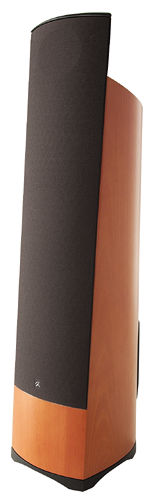
This lapsed fan of electrostatic speakers finds it curious that, while MartinLogan is the predominant representative of this technology in the US, I had never auditioned an ML design in my home. I've enjoyed many Janszen tweeters, a KLH 9, an AcousTech X, Stax ELS-F81s, and I've dallied with Quad">http://www.stereophile.com/loudspeakerreviews/416">Quad ESL-63s. But as dumb luck would have it, the first MartinLogan speaker to reach me, the new Montage, is a hybrid model.


NHT Evolution T6 loudspeaker system

Twelve years ago, loudspeaker manufacturer NHT launched its model 3.3, a floorstanding, full-range design that Corey Greenberg summed up in the March">http://www.stereophile.com/loudspeakerreviews/1293nht/index2.html">March 1994 Stereophile as doing "everything I want a He-Man reference loudspeaker to do...I find myself without a single area of performance I've heard bettered by any other speaker." The NHT">http://www.stereophile.com/loudspeakerreviews/1293nht">NHT 3.3 basically combined a high-performance monitor with a sideways-firing subwoofer in the same enclosure, and when I first saw NHT's Evolution T6 system at the 2002 CEDIA convention, I was reminded of the classic 3.3, but a 3.3 updated for the needs of home theater as well as music. And despite inflation and the incorporation of a line-level crossover and a pair of monoblock amplifiers to drive the subwoofers, a two-channel T6 system costs the same as a pair of 3.3s: $4000.


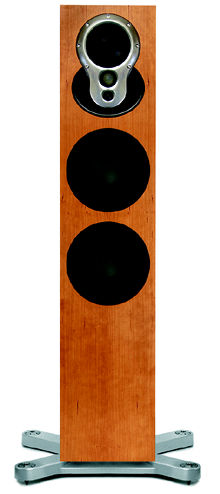
Linn Akurate 242 loudspeaker

In 1985 or so, a middle-aged audiophile who lived in New York City called to invite me to come listen to his stereo: It was, he assured me, the best in the world. All he wanted was the pleasure of my opinion, for which he offered the princely sum of $100. (As I learned in the months and years to come, this same audiophile called virtually every other audio writer in the metropolitan area whose phone number he could get hold of, making the same offer.)


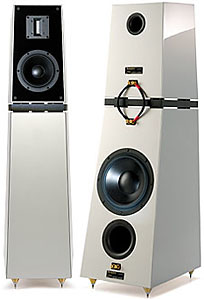
Verity Audio Sarastro loudspeaker

Over the past year or so, a parade of expensive loudspeakers has passed through my listening room (footnote 1), each claimed by its manufacturer to deliver the real musical deal. Like the people who designed them, these speakers have come in all shapes, sizes, and personalities. While the designer of every one of these speakers has claimed "accuracy" and "transparency" as his goal, the truth is, any concoction of pulsing cones, ribbons, sheets of Mylar, or whatever that's bolted into or on top of a box makes music because it is a musical instrument. How could it be otherwise, when all of these accomplished and expensive loudspeakers have sounded very different from one another, and made me feel different while listening to them?


Advertisement
Advertisement
Advertisement