

E.A.R. USA
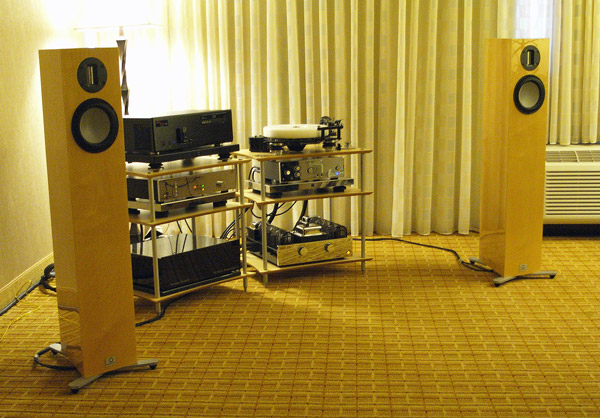
Dan Meinwald of E.A.R. USA explained to me that his goal for RMAF was to put together a system where the individual components each cost $6000 or less. The new Marten FormFloor loudspeakers ($6500/pair) just exceed that limit, but are compensated for by the impressive new 192 DACute D/A processor from E.A.R. ($5700 in black but $6500 in chrome). The DAC was being fed audio data by the latest Diamond version of Neal van der Berg's Music Vault ($4449), which incorporates a Blu-ray drive for ripping discs, a 2TB drive for audio data, a solid-state drive for the operating system, and a Lynx aes16 audio output card.
Ear Molds by Westone

Emotiva’s Danielle Laufman had impressions made of her ear canals at the Westone booth. Both Danielle and her mom, Cathy, would be getting custom ear plugs, while Danielle’s father, Emotiva’s founder Dan Laufman, would be using his ear molds for custom in-ear monitors.
Emotiva
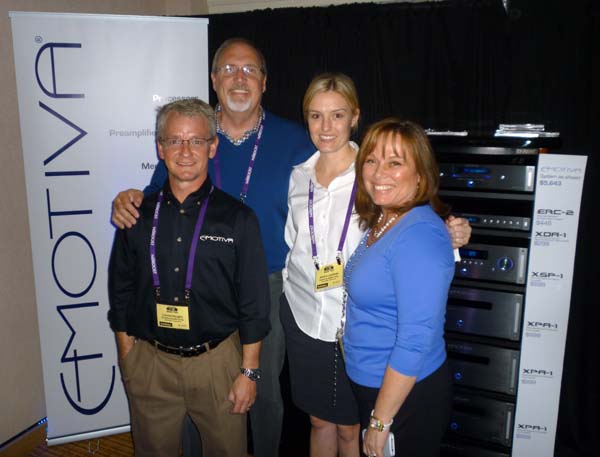
Though there were plenty of new Emotiva components on display—and 27 more in the pipeline!—the story here wasn’t as much about products as it was people. Emotiva’s Dan Laufman has never been happier.
“I spent so much of my life doing things I didn’t want to do. Now that I’m doing what I love, it feels like I’m living a dream.”
Emotiva Pro
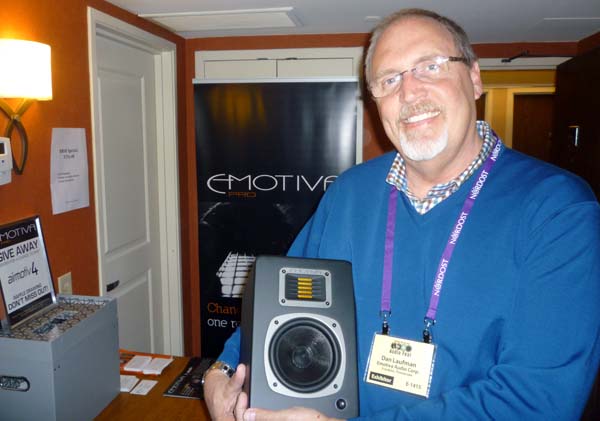
Emotiva introduced their Pro line at RMAF, beginning with three active loudspeakers: the Airmotiv4 ($399/pair), Airmotiv5 ($599/pair), and Airmotiv6 ($799/pair). Microphone preamps, DACs, and high-performance monitors are all in the works.
Dan Laufman explained that his background is in pro audio and most of the people involved with Emotiva have some sort of interest in recording and music production. As a frustrated ex-musician, Laufman longed to again be a part of the creative experience.
Empirical Audio Bronze DAC
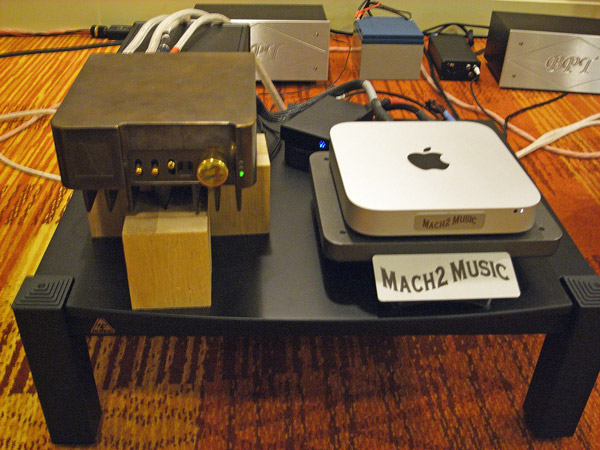
I review Empirical Audio's pricey Off-Ramp 4 asynchronous USBAES/EBU converter with its Monolith 1 battery supply in the forthcoming December issue and was impressed by the quality of its engineering as well as by its sound quality. At RMAF, Empirical's Steve Nugent showed me the Overdrive Ultra D/A converter ($10,000$15,000), housed in a bronze case, which is well-damped. The DAC uses the Off-Ramp 4 circuit as its USB front-end and features just one analog stage following the I/V converter. Unusually, this uses a bipolar emitter follower instead of the common FET buffer. The digital circuitry is powered from the Monolith, feeding 12 Hynes-type regulators, though Steve Nugent feels that the analog stage sounds better when powered from a conventional AC-derived supply. The volume control in the DAC is elegant in that it reduces the reference voltage to the DAC chip, thus maintaining full digital resolution. There are two choices for full-scale output voltage.
Gold Sound Loves You
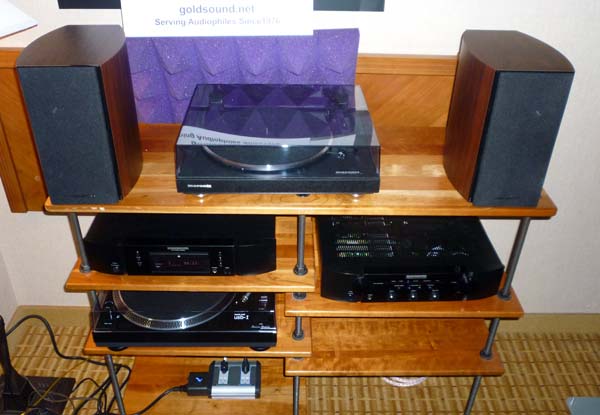
It was around this point of the show that I started to feel weak and dizzy, overwhelmed by the size of RMAF and disappointed by the lack of truly affordable gear. Thank goodness for Gold Sound. The Colorado dealer had pieced together not one, not two, but five affordable, audiophile systems priced under $5000.
GTT Audio: YGA, Tenor, Soulution, Bryston, Kubala-Sosna
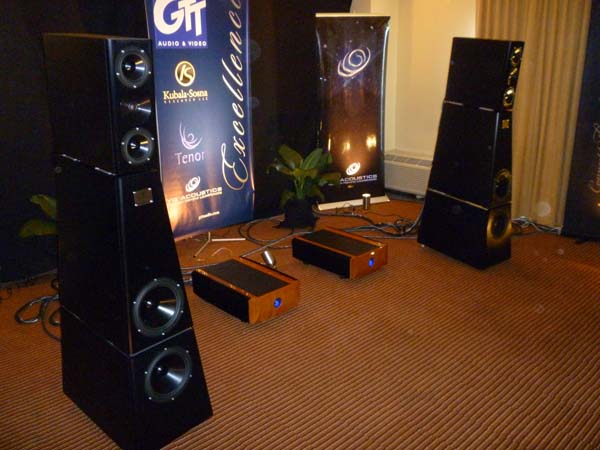
In addition to the Long Valley Pub & Brewery and Valley Shepherd Creamery, here’s one more reason to visit Long Valley, NJ: GTT Audio & Video, carrying YG Acoustics, Tenor Audio, Soulution, Kubala-Sosna, Bryston, and many other respected brands.
GTT Audio & Video built a cost-no-object system:
Harbeth—LFD—Stein!
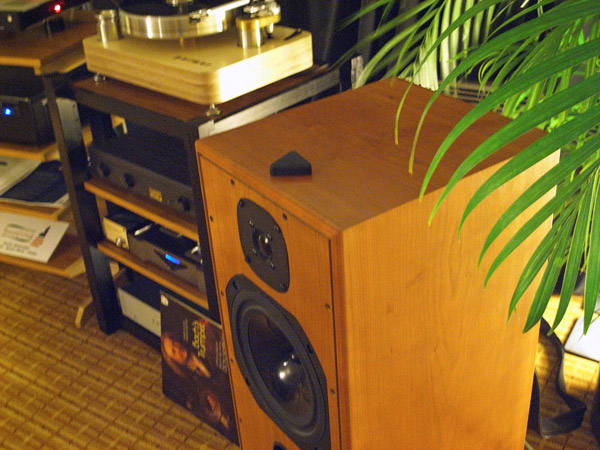
The sound of the Harbeth Compact 7 speakers, driven by an LFD integrated amplifier via TellurideQ cables was as musically communicative as I was expecting. But then I saw the triangular Stein Magic Diamond sitting on top of the speaker cabinet and knew I was in the presence of serious audio strangeness. Sam Tellig wrote about the Stein devices in his September 2011 issue column: "The Harmonizers, Magic Stones, and Magic Diamonds helped make the room boundaries disappear and the venue of each recording matter more. It was as if sound flowed more freely through the air."
Ulp!
But the sound in this room did have some special magic to it.
Hear No Evil: KEF, Kimber, and the Parasound CD 1
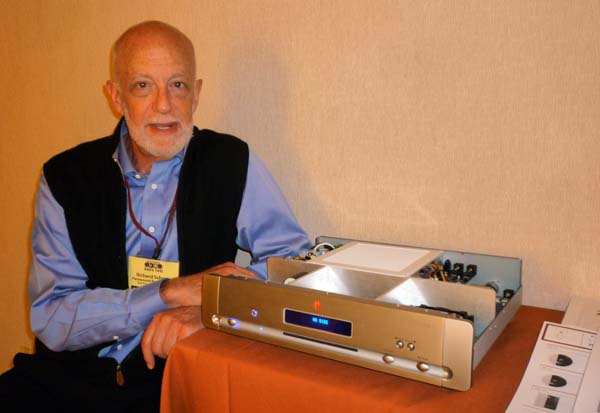
Even as my dear friend Michael Lavorgna lays down the law in the Wild Wild West that is Computer Audio and continues to rid himself of Compact Discs, I find myself more and more attracted to the little silver discs and their associated players. So I was happy to learn about Parasound’s new CD 1, which adds a computer to the conventional CD player.
Hegel DAC
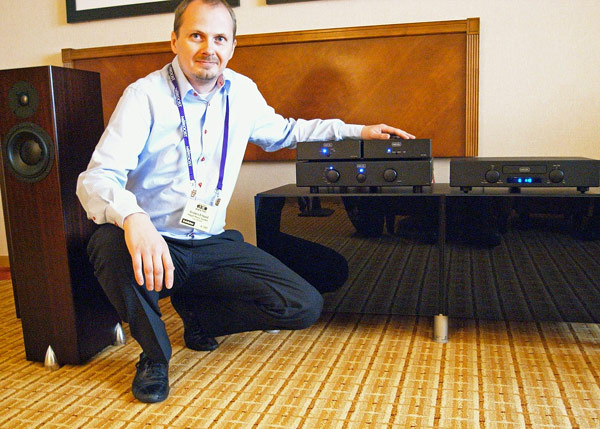
New from the Norwegian Hegel company at RMAF was the HD11 D/A processor ($1200), which features a 32-bit TI DAC but also a unique impedance-optimizing circuit on one of its coaxial S/PDIF inputs. Single-ended digital audio connections are specified to be 75 ohm transmission lines, explained Hegel's Anders Eitzeid, but not all all datalinks conform to that specification. (The RCA plug is a major source of the impedance mismatch even when the cable itself has a characteristic impedance of 75 ohms.) The impedance mismatch creates reflections that corrupt the integrity of the RF datastream, increasing jitter.