

Music Served: Extracting Music from your PC
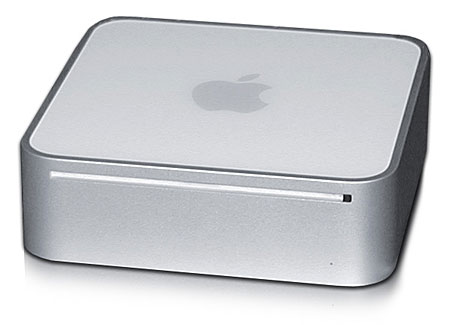
"Physical discs seem so 20th century!" That's how I ended my eNewsletter">http://www.stereophile.com/images/newsletter/406Bstph.html">eNewsletter review of the Logitech (then Slim Devices) Squeezebox WiFi music server in April 2006, and it seems that increasing numbers of Stereophile readers agree with me. In our website">http://cgi.stereophile.com/cgi-bin/showvote.cgi?551">website poll of January 5, 2008, we asked, "Are you ready for an audiophile music server?" The response to that question was the highest we have experienced: 32% of respondents already listen to music via their computer networks, many using home-brewed solutions, and 44% intend to. We've published a lot of material on this subject in the last five years, and it seemed a good idea to sum it up in this article.
Musical Fidelity M1 DAC
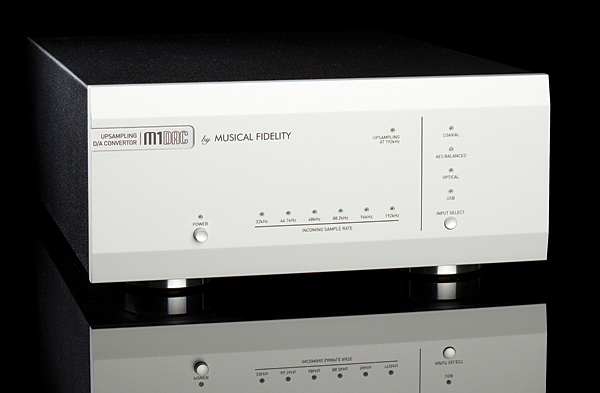
The M1 DAC is by Musical Fidelity. At $699, it's a stunning bargain. Comparing it to $995 for the Digilog in 1989. Meanwhile, the M1 is far more versatile, way better built, and, if memory serves me right, sounds vastly better.
It appears that the way to sell a DAC in 2011 is to almost give it away, in real-dollar terms. Some people pay far more than this for a set of speaker cables, a pair of interconnects, even a power cord. The M1 DAC is a piece of kit that can transform your system. I kid you not.
Musical Fidelity V-DAC D/A processor
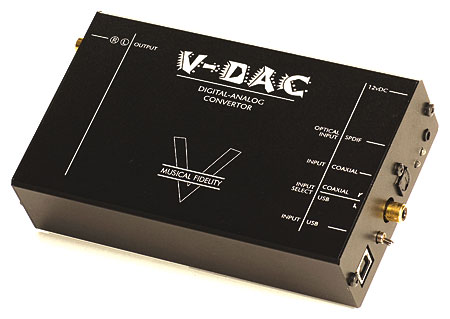
"The victor belongs to the spoils."—F. Scott Fitzgerald, The Beautiful and the Damned, 1922
Musical Fidelity V-DAC II D/A processor
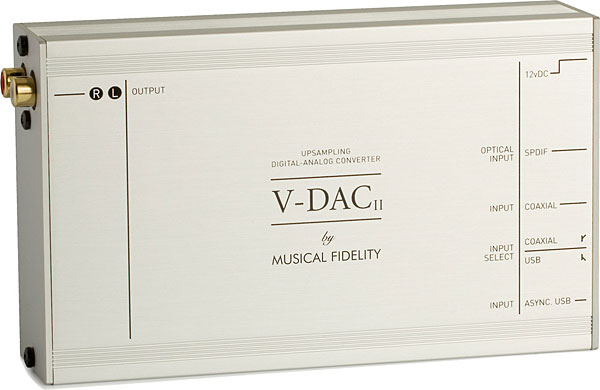
There's so much uncertainty and confusion surrounding computer audio and high-resolution downloads. Which hi-rez formats will win out? How do you store the downloads you've bought? (Easy. Don't buy them.) How do you access them? Will digital rights management (DRM) cramp your style, or data-storage fees for cloud computing crumple your wallet?
Musical Fidelity V-Link USB-S/PDIF converter
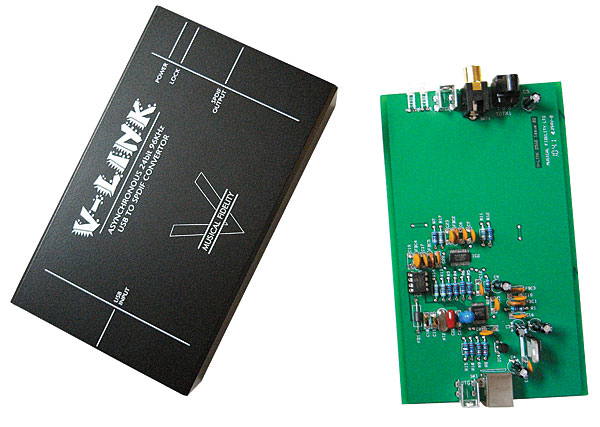
A computer is not optimized for the uninterrupted streaming of audio data. It has rapidly become established wisdom, therefore, that the optimal means of extracting audio data from a computer's USB port is to operate that port in what is called "asynchronous isochronous" mode. This lets the receiving device, such as a digital-to-analog converter (DAC), control the flow of data from the PC. In theory, asynchronous USB operation (not to be confused with the asynchronous sample-rate conversion used in some DACs) reduces jitter to unmeasurable levels, depending on the accuracy of the receiver's fixed-frequency oscillator, which is used to clock the data to the DAC. By contrast, in the alternative and almost ubiquitous USB operating mode, called "adaptive isochronous," while the sample rate of the output data, averaged over a longish period, will indeed be the specified 44.1 or 48kHz, there will be short-term fluctuations, or jitter, due to the oscillator having to change its frequency every millisecond to match the uncertain rate of data flow from the PC.
Musical Fidelity X-DACV8 Digital/Analog Processor
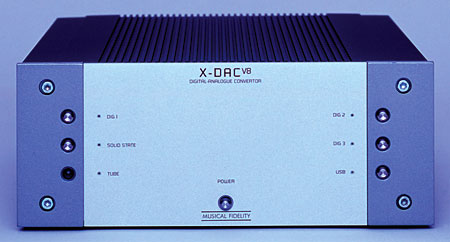
How do I get myself into these things? Knowing that I use a Musical Fidelity X-DACV3 D/A processor in my office system and had just auditioned the Bel Canto e.One DAC3 that he'd reviewed in November, John Atkinson asked me to give Musical Fidelity's X-DACV8 a try. I say "asked," but the man does authorize my paychecks, so I acceded, knowing I was painting a giant bull's-eye on my back.
Mytek Digital Brooklyn Bridge II Roon Core preamplifier
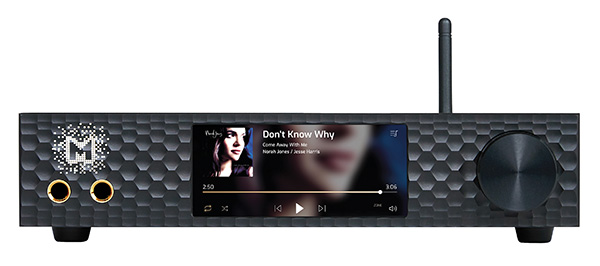
The concept of streaming digital music files over distances great (as with internet-streaming services like Spotify, Qobuz, Tidal, etc.) and small (from a home-PC hard drive, NAS, or networked music server) became mainstream only recently. But it was already brewing during the late 20th century, with people illegally downloading low-bitrate MP3 files made from CD rips and coming close to killing the recorded-music industry.
That wasn't streaming exactly, or not in the current sense, because the files needed to be downloaded, stored locally, then either played out of a computer or loaded onto a portable player, but from that point forward it was a steady march to the streaming-dominated present.
Never mind Napsterthe first subscription audio "streaming" service was one you probably wouldn't think of: Audible, the audio book service now owned by Amazon, which started up in 1995. I did beta testing and editing work for early-days Audible, and around that time, I started loading up home-ripped MP3 files on a pocket-sized Rio MP3 player (which by then had replaced Audible's proprietary player), using it in place of a portable CD player. This led to experiments with a PC music library/player running Linux, controlled by a Handspring PalmOS device connected to the stereo system via a Sound Blaster 16 card.
NAD PP 3 digital phono preamplifier
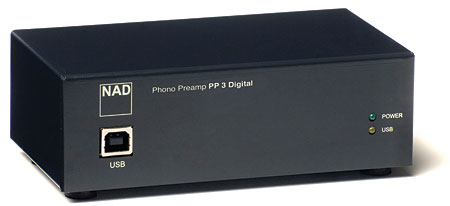
Even Mikey Fremer is surprised at vinyl's current popularity. Some pundits postulate that eventually CDs will die out, and we'll be faced with the choice of LPs or downloads. (I hope not. I'm just getting used to CDs.) With abundant sources of new pop releases and a wide range of reissues on vinyl, and a variety of used LPs, every audiophile should own a turntable. And with the availability of affordable turntables such as the Pro-Ject Debut III, which I reviewedhttp://www.stereophile.com/turntables/pro-ject_debut_iii_record_player"…; in the February 2010 Stereophile, the cost of entry to VinylLand is not very dear. The problem is that so few entry-level integrated amplifiers and receivers available today include phono stages. (The Marantz PM5003, which I reviewedhttp://www.stereophile.com/integratedamps/marantz_pm5003_integrated_amp…; in the January 2010 issue, is a notable exception.)
Peachtree iDac D/A converter
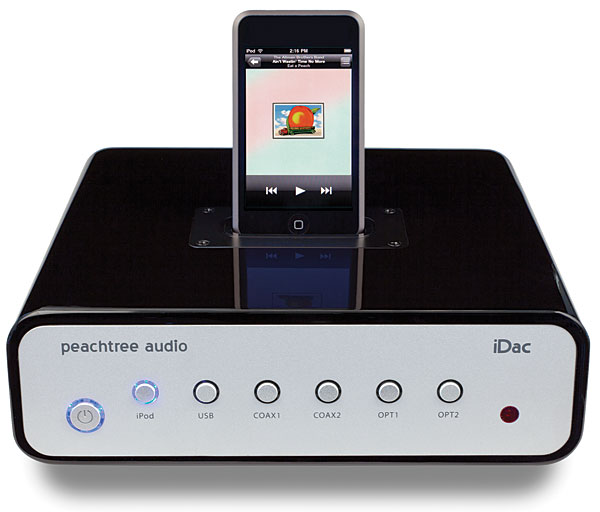
Oh boy, another new DAC review. Some folks think DACs, once you get past the features, all sound pretty much the same. I mean, it's just digital. Well, they're right. Pretty much. Just as two new cars of a particular make, model, color, and options package both look the same, sitting there on the lot.
But if you discover a ding in the door of one of them, where most folks still see only a new car, you now see the ding. It might have been there all along, undetected the first few times you walked around the carmaybe your buddy even had to point it out to you. It's insignificant in the scheme of all that a new car is, but once you've seen it, you always see it. Now you can easily tell the two cars apart, and we both know which one you'll drive home.
Peachtree iDecco D/A integrated amplifier
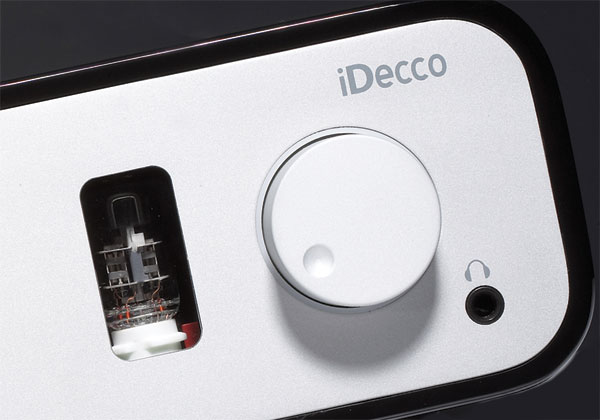
As with so many other things, from cell phones to soy milk, the idea of a portable MP3 player was something I at first disdained, only to later embrace with the fervor of any reformed sinner. But not so the idea of a high-fidelity iPod dock: Given that I now carry around several hundred high-resolution AIFF files on my own Apple iPod Touch, the usefulness of a compatible transport seemed obvious from the start. Look at it this way: In 1970, whenever I bought a music recording, I could enjoy it on any player, in any room in the house. In 2010, why shouldn't I enjoy at least that degree of convenience and flexibilitywithout resorting to a pair of tinny, uncomfortable earbuds?