

Pure Vinyl LP recording & editing software
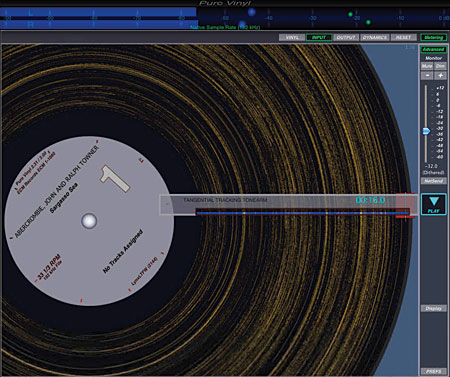
As long as you're spinning an LP for your listening pleasure, and if digitizing it at a resolution of 24-bit/192kHz is transparent to the analog source, why not record and store the LP on your computer at that high sampling rate for future convenient playback via iTunes or for iPod use, or for burning to CD-R? And, while you're at it, why not record the LP unequalized and apply the RIAA curve in the digital domain, where you're not dependent on capacitors and resistors that are imprecise to begin with, and can drift over time? With no drift of phase or value, the virtual filter's results should be better than with any analog filter. And in the digital domain, you can program in any curve known, and select it at the click of a mouse. Aside from the sweat equity invested in programming it in the first place, it wouldn't add a penny to the program's cost.
Questyle Audio QP1R hi-rez portable player
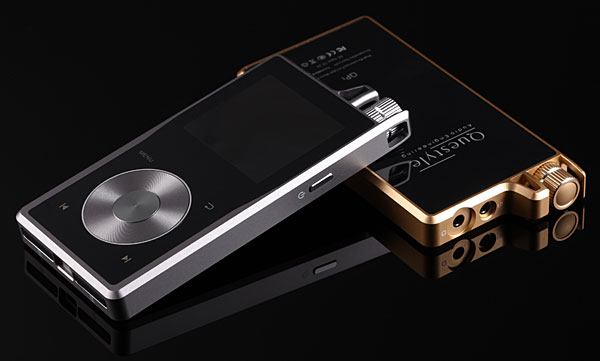
The 2015 T.H.E. Show in Southern California clashed with my having to be in the office to ship our August issue to the printer, so I wasn't able to attend. But in devouring the online coverage on www.stereophile.com and its sister sites, on InnerFidelity.com I found a report by Tyll Hertsens about two new hi-rez portable players that made their debuts at T.H.E. Show: Questyle Audio Technology's QP1 ($599) and QP1R ($899).
Rega DAC D/A processor
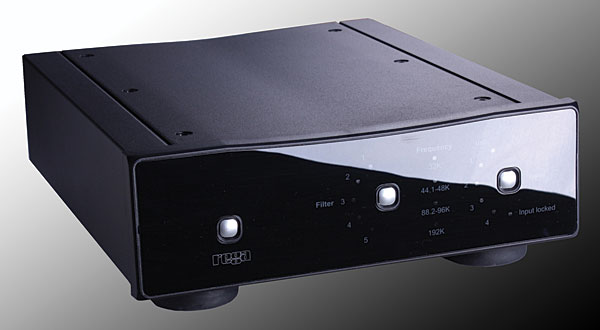
"We like to make things," Roy Gandy, Rega's founder and owner, once told me. "It's what we do." Or maybe it was Rega's chairman and chief engineering honcho, Terry Bateman. Rega products are designed and manufactured in the south of England. So far as I know, no one at the Rega facility, on the Temple Farm Industrial Estate, has committed suicide; the same cannot be said of workers at the factory in China where iPods are made. Al Gore is on the board of Apple. Al, what do you think?
Resolution Audio Cantata Music Center
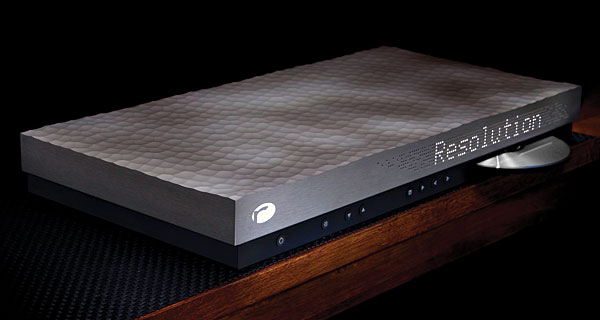
The dual subwoofers were bumping and our pant legs were flapping. Only moments before, we'd been treated to a polite viola da gamba. Not now. Resolution Audio's designer, Jeff Kalt, had brought only two discs with him to ensure that his company's Cantata Music Center was functioning properly in my system: Jordi Savall and Hespérion XXI's Altre Follie, 15001750 (CD, Alia Vox 9844), and Tool's 10,000 Days (CD, Tool Dissectional/Volcano 81991). After changing a few things around with the chamber music, we'd advanced to the hard rock of Tool.
RME Digi96/8 PAD computer soundcard

When I read John Atkinson's reviews of the Digital Audio Labs CardDeluxe (Vol.23 No.9) and RME Digi96/8 Pro (Vol.23 No.11 and Vol.24 No.1), I realized that soundcard technology had matured far faster than I had been aware. For about the price of a mainstream CD player, anyone with a reasonably powerful computer could add multitrack digital recording technology to his bag of tricks.
RME Digi96/8 Pro computer soundcard
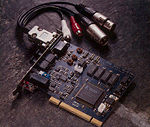
In the early days of digital audio, I remember talking with Dr. Tom Stockham, the developer of the groundbreaking Soundstream system used then by Telarc. As well as using a 50kHz sample rate, the excellent-sounding Soundstream stored its 16-bit data on large drum-shaped Winchester drives connected to a minicomputer. Twenty years later, the advent of ultra-high-density magnetic storage media and fast microprocessor chips has put high-resolution digital audio manipulation and storage within reach of anyone with a modern PC or Mac. And facilitating the transformation of the PC into a high-quality DAW has been a new generation of soundcards, such as the Digital">http://www.stereophile.com//digitalsourcereviews/280/">Digital Audio Labs CardDeluxe I reviewed in September 2000 and the subject of this review, the German RME Digi96/8 Pro.
Roon Labs Roon v.1.0 music-playback app
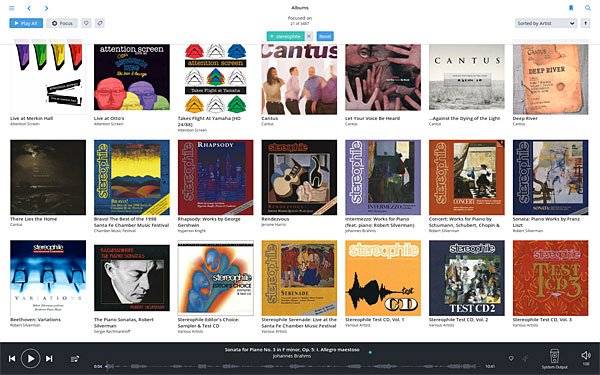
There are dozens of music-playback programs for computers, touchpads, and smartphones, ranging from Amarra, Audirvana, JRiver, Pure Music, and VLC, which manage libraries or work with library software, to programs that are integrated with a specific distribution service: Pandora, Spotify, Tidal, and, of course, iTunes. Still others, such as Sonos, are integrated with a dedicated hardware product.
Slim Devices Squeezebox WiFi D/A processor
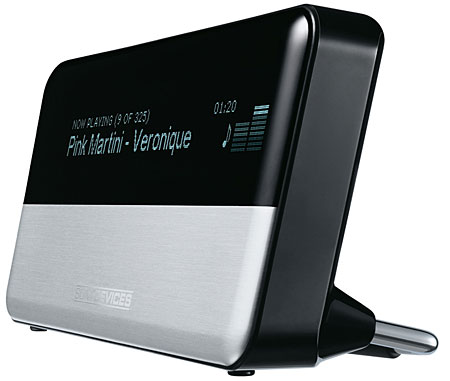
As readers of the Stereophile eNewsletter will be aware, the twin subjects of distributing music around my home and integrating my iTunes library of recordings into my high-end system have occupied much of my attention the past year. I bought an inexpensive Mac mini to use as a music server, using an Airport">http://www.stereophile.com/digitalprocessors/505apple">Airport Express as a WiFi hub, which worked quite well, but my big step forward was getting a Squeezebox. I described this slim device in the mid-Marchhttp://www.stereophile.com/images/newsletter/306Bstph.html">mid-March; and mid-Aprilhttp://www.stereophile.com/images/newsletter/406Bstph.html">mid-April; eNewsletters; I urge readers to read those reports to get the full background on this impressive device. In addition, the forums and Wiki pages on the Slim">http://www.slimdevices.com/dev_overview.html">Slim Devices website offer a wealth of information on getting the most from a Squeezebox.
Slim Devices Transporter network music player
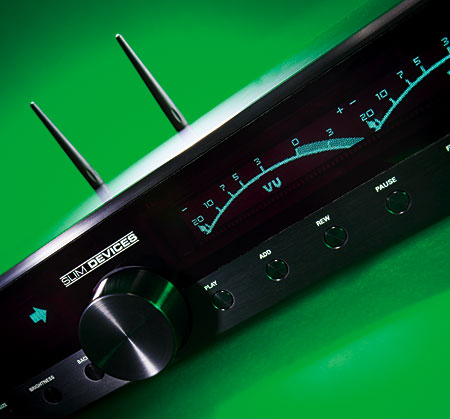
Is a high-end music server the audio equivalent of polishing a turd?
Sonos ZP80 & ZP100 WiFi Music System
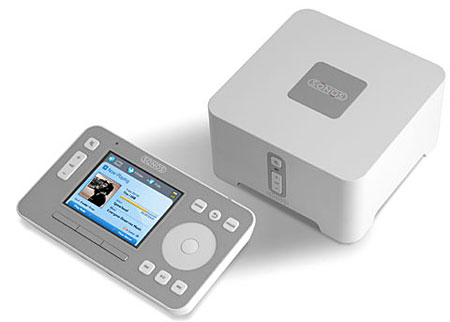
Don't get the wrong idea. I don't watch trash TV. I am not interested in the doings of people who are famous merely for being famous. I was probably the last to realize that Paris Hilton was not the name of a French hotel. But the kitchen TV just happened be tuned to Channel 4 when I switched it on while I was preparing dinner. No, I do not watch NBC's Extra, but as I was reaching for the remote I was stopped in my tracks by what I saw. The show was doing a segment on the new L.A. home of Jessica Aguilera, or Christina Simpson, or . . . well, it doesn't matter. What does matter was the host's mention of all the cool stuff the bimbette had had installed in her new pied-à-terre: "...and a Sonos audio system, of course."