

Spin Doctor #19: An exotic Audio-Technica cartridge and a Vivid flagship speaker
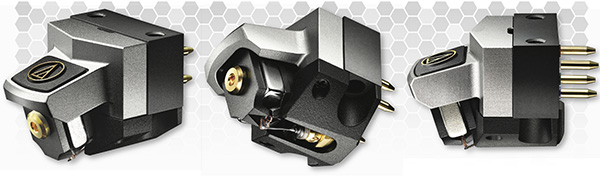
I think of Audio-Technica as the maker of some of the best high-value cartridges out there. From the ubiquitous AT3600L, which can be had for a little more than a Big Mac meal at McDonald's, to the popular OC9 moving coil series, A-T's cartridges have long been easy-to-recommend options that deliver great sound mounted on just about any turntable.
But occasionally, Audio-Technica likes to show off its technological chops by launching a cartridge that breaks new ground. Last year, they celebrated their 60th anniversary by stunning everyone with the AT-MC2022, which uses an outrageous integrated stylus and cantilever fashioned from a single piece of lab-grown diamond. In 2016, they flexed their capabilities with the AT-ART1000, which completely reconfigured how the elements of a moving coil cartridge are arranged, with spectacular results.
Now, eight years after the AT-ART1000 was launched, A-T has introduced the AT-ART1000x, which incorporates several small but important improvements.
Spin Doctor #26: The Sorane TA-1 tonearm and the Ortofon MC 90X phono cartridge
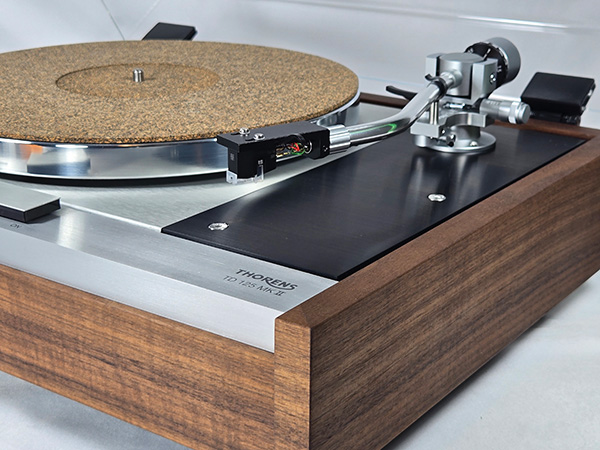
Photo by Dave Archambault@vinylnirvana.com.
A friend who sells high-end audio gear once pointed out that people who shop for separate tonearms are very different from those interested in phono cartridges or turntables in general. If you think about it, this makes sense. Almost everyone buying a new turntable needs a cartridge to go with it, and most turntables come equipped with a tonearm. Tonearm shoppers are more avid enthusiasts than general consumers.
It wasn't always that way. In earlier days of high fidelity, 60 or more years ago, people putting together a cutting-edge phono playback system would typically buy what was known as a motor unit: a Thorens TD 124, Garrard 301, or a few years later the Garrard 401 or Technics SP-10. They would match it up with a tonearm from a company like SME or Ortofon.Spin Doctor #30: The Belleson Radiance & EBI Audio Khumar
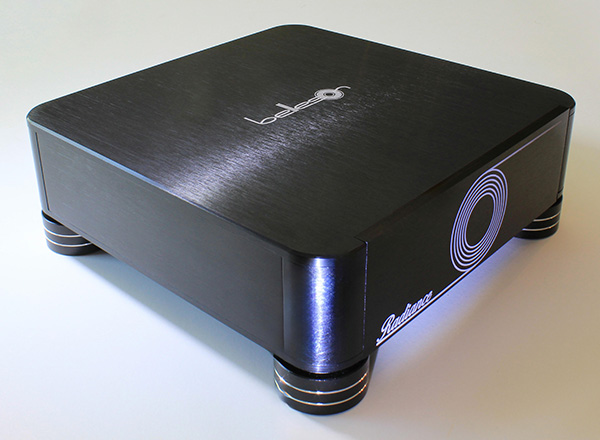
As the Spin Doctor, I tend to lead an analog life. I'm not just talking about my preferred ways of listening to music, but also my approach to other everyday technology. For decades, there has been a push to turn everything we use into a connected, "smart" device. We now have technology that allows us to change the color temperature of the lights in our living room while we sit on the sofa, or to answer our front doorbell from the other side of the world. I prefer an older-school approach.
Spin Doctor #36: Musical Fidelity Nu-Vista Vinyl S phono preamp, Sumiko Oriole phono cartridge
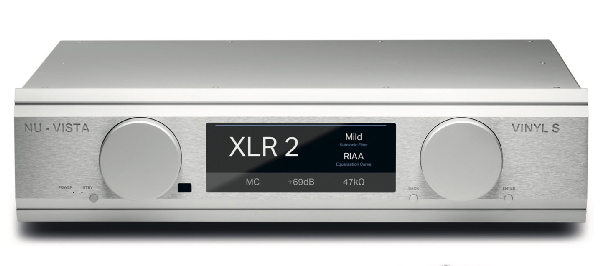
I get nervous when I hear that an audio company I like is suddenly under new ownership. Are the new owners planning to carry forward the legacy of the company's founders, or will they try to move things in a different direction?
Spin Doctor #7: Korf Audio TA-SF9R tonearm, Zu Audio DL-103 Mk.II Rev B phono cartridge, Gates CB100 transcription turntable
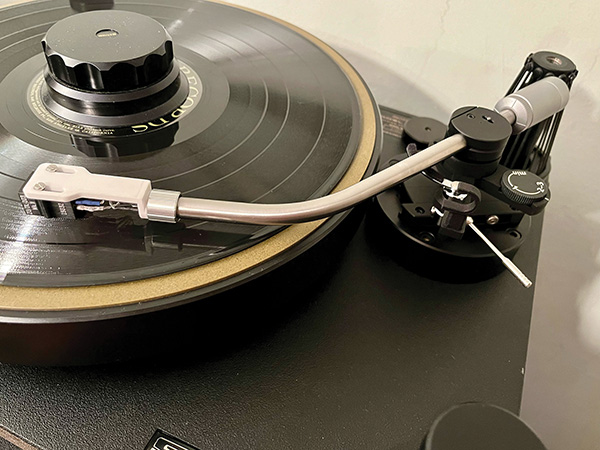
About four years ago, the stand-alone tonearm market went through a bit of a crisis. First, in December 2019, SME announced that it would stop selling tonearms separately, effective immediately. From that point on, SME tonearms would be available only in combination with SME turntables. . .
Five months later, in May 2020, we received the second blow in this double whammy of bad tonearm news. That's when the Ichikawa Jewel Company of Japan, maker of Jelco tonearms, announced without warning that they were shutting down operations, closing their doors for good. They blamed a combination of an aging workforce, worn-out tooling that needed to be replaced, and the coronavirus pandemic. . .
We lost two key players all at once, but it's not as if we suddenly had nowhere to turn for tonearms. Turntable manufacturers like Acoustic Signature, Clearaudio, Origin Live, Pro-Ject, Rega, and VPI all sell their tonearms separately . . . A number of smaller tonearm specialists have popped up in recent decades: Acoustical Systems, Graham, GrooveMaster, Kuzma, Reed, Schick, Schröder, and at the ultrahigh end, Swedish Analog Technologies. Now we can add Korf Audio to the list.
Spin Doctor #9: Soviet-era Hi-Fi & 2 Aidas phono cartridges
In 1985, I visited what was then known as Soviet Estonia with my family. My paternal grandparents, Mimi and Pop, had emigrated to the US from this small Baltic country in 1929. Fifty-six years later, after more than a decade of rejection, the family was granted permission by the Soviet authorities to visit our ancestral homeland, and the whole family, including Mimi, made the trek. (Pop died in 1962.)
Once we were there, we were more or less free to move around in the capital city Tallinn, but leaving the city was strictly forbidden, except as part of a planned group excursion with our KGB minderser, "Intourist guides."
Stanton 681EE & 681A phono cartridges
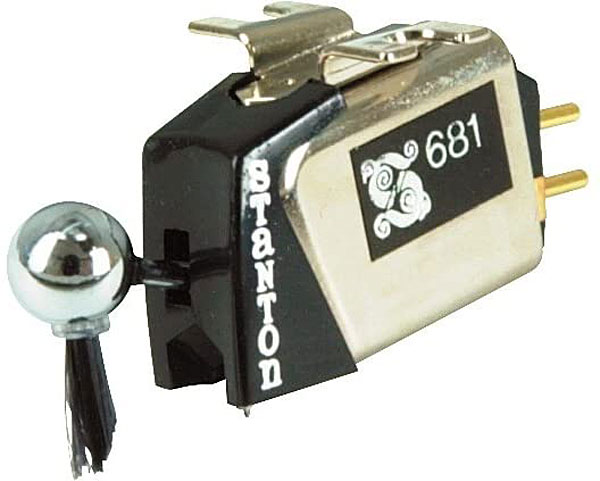
Superb tracking ability, very good imaging and extremely smooth frequency response, plus unusual freedom from mounting problems make this one of the best pickups available and, quite possibly, the best all-around performer we have encountered.
Sumiko Blue Point & Blue Point Special phono cartridges
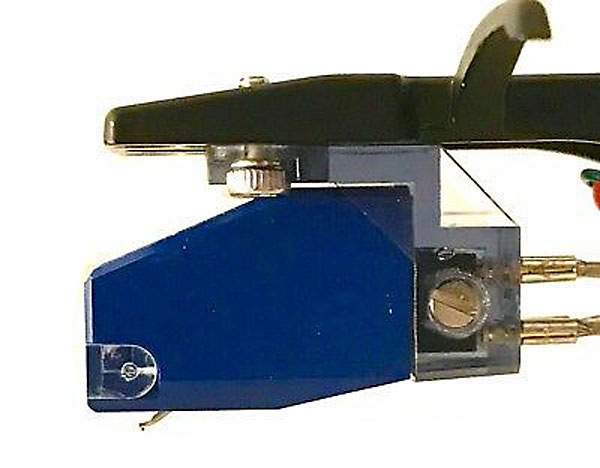
In these waning days of Analog's Last Stand, it might seem absurd to review midpriced phono cartridges when this space could be given instead to the gear Stereophile usually coverslike $3000 OTL tube amps built by guys like that "Rainbow Man" lone nut who used to dance in the stands at Super Bowls before he took hostages in a hotel room with a .45 screaming, "MIT CAPACITORS!!! MIT CAPACITORS!!!"
Talisman S MC phono cartridge
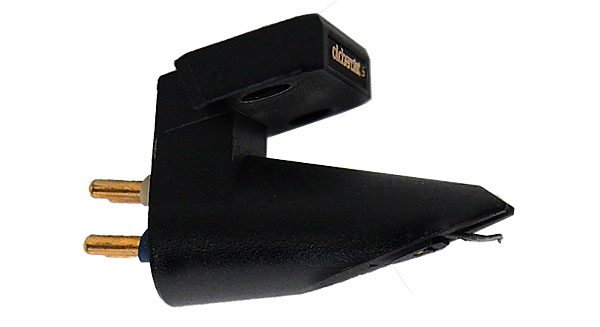
The Talisman S represented, ca 1983, the top of Sumiko's moving-coil cartridge line and shared its design philosophy and external appearance with the Talisman A and B, the remaining two cartridges in the Talisman family before the introduction of the Virtuoso line. The three differed only in cantilever material and stylus shape. The A, the least expensive, had an aluminum alloy cantilever and an elliptical diamond stylus.
The Entry Level #23
It was around 7pm on Tuesday evening when I bumped into Nicole and Ms. Little on Newark Avenue, in downtown Jersey City. The girls were on their way to Kristen's shop, Kanibal Home, for their weekly book-club meeting. (Or was it Writing Club? Knitting? Screen printing? Butterfly pinning? I can never keep track.) I was on my way home, not to read, write, or listen to music, but . . .
"Hi, honey," Ms. Little said. "Going home to play with your cartridge?"
I made a face, nodded, sighed. Sensing some sharp-witted remark forming in Nicole's filthy mind, I beat her to the punch: "Yup, that's what I call it."