

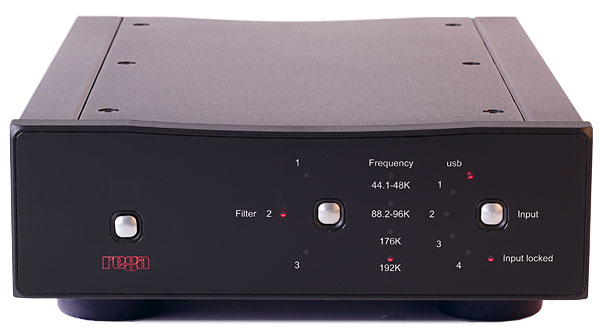
Rega Research DAC-R D/A processor
I've spent the last month recording songs for a pal's upcoming album. His act consists of powerful female and male singers, acoustic and electric bass, and acoustic guitars and mandolin. Jay-Z is funding the project, which is destined to transform the entire hip-hop/rap beat-driven pop landscape into an acoustic-music wonderland.
Okay, I jest about that last part.
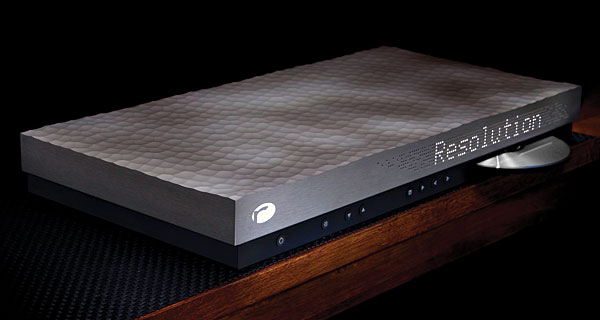
Resolution Audio Cantata Music Center
The dual subwoofers were bumping and our pant legs were flapping. Only moments before, we'd been treated to a polite viola da gamba. Not now. Resolution Audio's designer, Jeff Kalt, had brought only two discs with him to ensure that his company's Cantata Music Center was functioning properly in my system: Jordi Savall and Hespérion XXI's Altre Follie, 15001750 (CD, Alia Vox 9844), and Tool's 10,000 Days (CD, Tool Dissectional/Volcano 81991). After changing a few things around with the chamber music, we'd advanced to the hard rock of Tool.
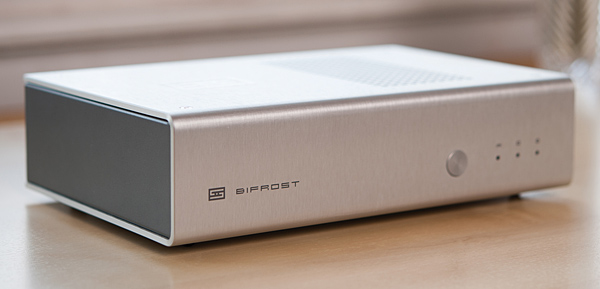
Schiit Audio Bifrost D/A processor
Late last year came an epic audiophile moment: I slapped a final length of tape on the box of the awesome-sounding MSB Diamond DAC (Stereophile, October 2012), in final preparation for its trek to John Atkinson's testing lab, in Brooklyn. Next up was the Bifrost DAC from Schiit Audio. I popped it into my system, where, moments before, the MSB had held court.
From $43,325 to $449. Yowseh!!the MSB costs almost 100 times as much as the Schiit! Was this even fair?
Schiit Audio Yggdrasil D/A processor

Right now, I swear, Schiit Audio's Mike Moffat and Jason Stoddard are sitting there in California, smugly smirking at me and John Atkinson. While JA was struggling to properly measure Schiit's Ragnarok (Fate of the Gods) integrated amplifier for my review in the May 2016 issue, I sent Moffat an e-mail: "Are you smiling?"
"Yup," he replied. He'd known in advance that the Ragnarok wouldn't look good on standard tests. But he hadn't warned us: The Ragnarok's output-stage bias program responds to music sources, not signal generators.
SigTech TF 1120 Time Field Acoustic Correction System
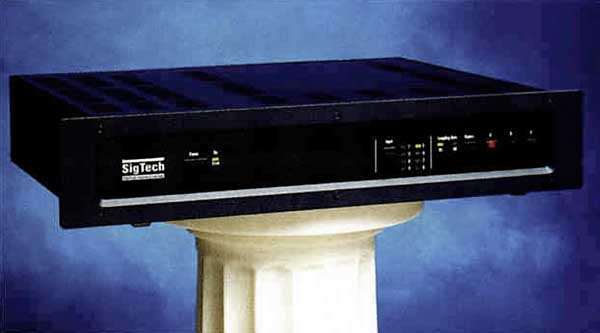
Imagine an electronic magic wand you could wave at your listening room's acoustical problems to make them disappear. The Cambridge Signal Technologies SigTech TF 1120 may be just such an alchemical device. Its efficacy depends on the nature of the acoustical warts in your listening environment. Operating solely within the digital domain, the SigTech device can perform both drastic and subtle frequency-response and time-domain corrections that are beyond the scope of analog-based units. While the TF 1120 is expensive, in some situations it may still be the most cost-effective way of coping with acoustical gremlins. Is it the solution to your problems? Perhaps.
Slim Devices Squeezebox WiFi D/A processor
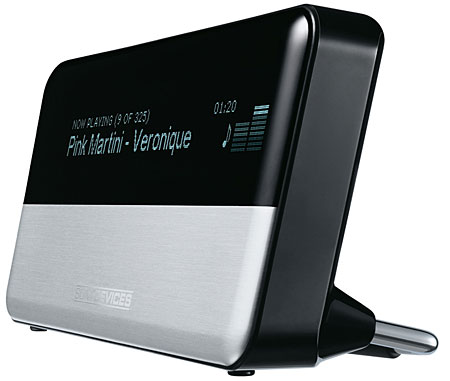
As readers of the Stereophile eNewsletter will be aware, the twin subjects of distributing music around my home and integrating my iTunes library of recordings into my high-end system have occupied much of my attention the past year. I bought an inexpensive Mac mini to use as a music server, using an Airport">http://www.stereophile.com/digitalprocessors/505apple">Airport Express as a WiFi hub, which worked quite well, but my big step forward was getting a Squeezebox. I described this slim device in the mid-Marchhttp://www.stereophile.com/images/newsletter/306Bstph.html">mid-March; and mid-Aprilhttp://www.stereophile.com/images/newsletter/406Bstph.html">mid-April; eNewsletters; I urge readers to read those reports to get the full background on this impressive device. In addition, the forums and Wiki pages on the Slim">http://www.slimdevices.com/dev_overview.html">Slim Devices website offer a wealth of information on getting the most from a Squeezebox.
Sonic Frontiers SFD-2 D/A processor
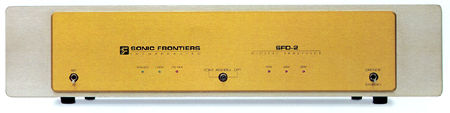
I feel privileged to have followed the remarkable evolution of digital processors over the past four-and-a-half years. Since my first digital review—a survey of three modified CD players back in August 1989—I've been fascinated by the developments that have inexorably improved the quality of digitally reproduced music.
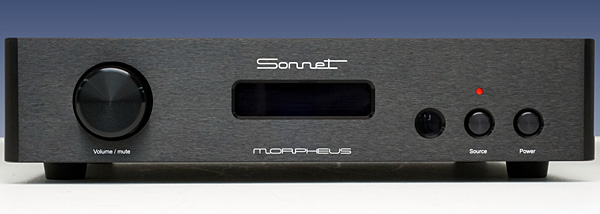
Sonnet Morpheus D/A processor
Playlists embody who we are. We use musical affinities to understand (or at least categorize) others, not only as evidence of their aesthetic discernment but also of their emotional and political affiliations, which amount to an entire worldview. In other words, the database of favorite music that we carry around in our brains is no laughing matter. So, one of the most unexpectedand rewardingthings that can happen in music fandom is a complete and sudden inversion of one's beliefs. Which brings me to the perennially touchy subject of Steely Dan, a band that cleaves the ranks of listeners like a gold-plated katana.
Sony DTC-1000ES R-DAT recorder & Sony PCM-1630 A/D converter
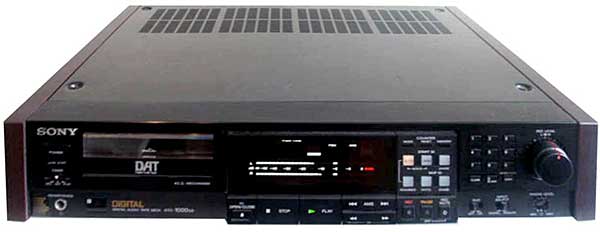
With the furor over the launch of DAT (digital audio tape), it is worth remembering that commercial digital recorders have been with us for some time now: it is now nearly a decade since studio PCM converters were first successfully used for audio recording in conjunction with a VCR (which uses a helical spiral recording via a spinning drum to achieve the high writing speed).
Sony PCM F1 Digital Audio Converter
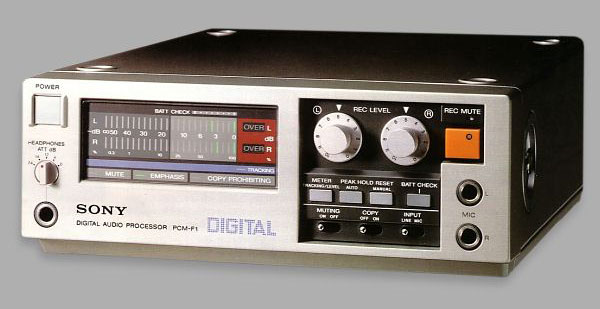
In 1978, when I reviewed Sony's first audiophile-type PCM-1 converter, I earned the undying scorn of a large segment of audiophilia by reporting that, on the basis of a rather short testing period (which did however include some live recording), I was unable to hear anything the matter with its sound. Four years later, but after substantially more testing, I am obliged to report the same thing about the PCM-l's son, the PCM-Fl.