

Sentec EQ11 phono preamplifier

With quiet elegance, the Sentec EQ11 phono stage and equalizer entered my expanding world of gramophone dreams. The EQ11 ($2500) is a modestly sized, tubed phono stage with the industry-standard RIAA phono equalization and five other EQ curves. These additional curves are for records pressed by companies that did not fully or promptly comply with the new, supposedly global industry standard introduced by the Recording Industry Association of America (RIAA) in 1954.
Seta Model L phono preamplifier
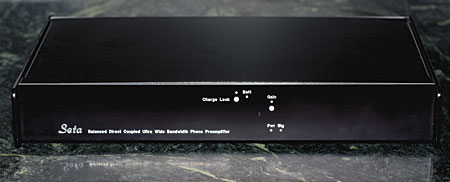
The minuscule electrical output of an analog signal from a moving-coil cartridge needs to be boosted before it can be converted to digital and equalized in the digital domain. Of course, you could use your current phono preamplifier and record an equalized signal to hard disk, but then you wouldn't get to experience Pure Vinyl's digital RIAA correction—nor would you be able to avail yourself of all the equalization curves provide by Pure">http://www.stereophile.com/computeraudio/pure_vinyl_lp_recording_amp_ed… Vinyl, of which there are almost too many to count.
Seta Nano phono preamplifier
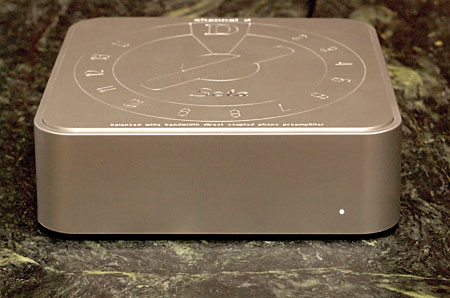
The minuscule electrical output of an analog signal from a moving-coil cartridge needs to be boosted before it can be converted to digital and equalized in the digital domain. Of course, you could use your current phono preamplifier and record an equalized signal to hard disk, but then you wouldn't get to experience Pure">http://www.stereophile.com/computeraudio/pure_vinyl_lp_recording_amp_ed… Vinyl's digital RIAA correction—nor would you be able to avail yourself of all the equalization curves provide by Pure Vinyl, of which there are almost too many to count.
Shindo Aurieges Equalizer Amplifier
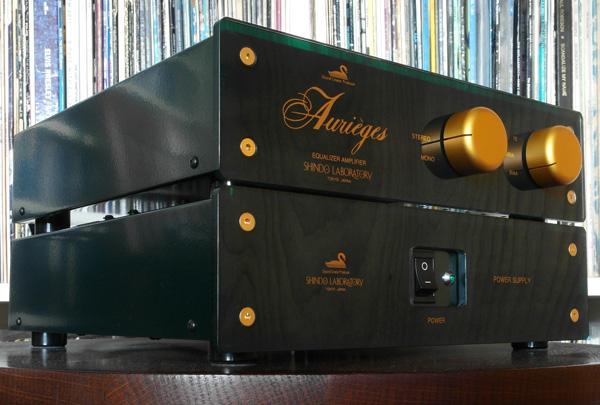
At some point within the last few years of his life, the late Ken Shindo designed an outboard phono preamplifiera decision perhaps made inevitable by his earlier decision to answer popular demand with line-only versions of the Aurieges and the more upmarket Vosne-Romanee preamps...
Simaudio Moon LP5.3 phono preamplifier
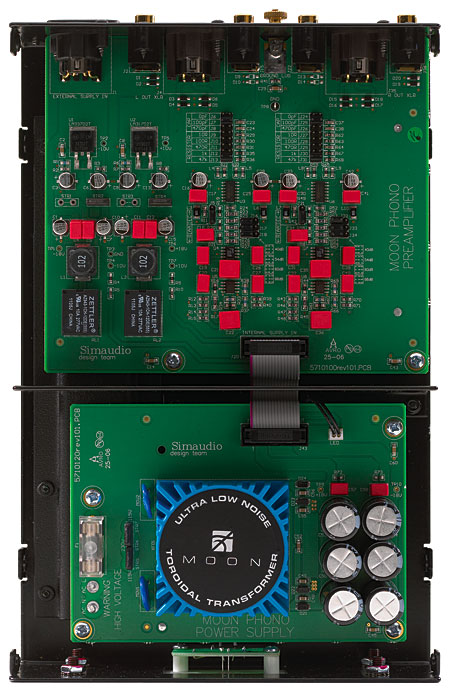
Simaudio's Moon LP5.3 MM/MC phono preamplifier ($1400) is silly good! It has single-ended RCA inputs and both single-ended and true balanced-differential outputs. It also offers a wide range of adjustments for gain (54, 60, and 66dB), resistive loading (10, 100, 470, 1k, and 47k ohms), and capacitive loading (0, 100, and 470pF), all accomplished via a series of internally mounted jumper banks. You can even choose RIAA or IEC equalization. Removing the top plate to get to the adjustments reveals boards filled with high-quality parts for the well-isolated power-supply and signal-handling circuits.
Sonic Frontiers Phono One phono preamplifier
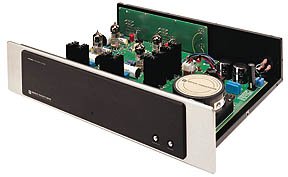
I've been in love with British sports cars ever since a visiting highway engineer brought a green MGB-GT to my tiny Nebraska town 30 years ago. Since then, there's been a steady stream of ferocious little cars in my life. Triumphs, MGs, Healeys, you name it—right up to my current crop, a Triumph TR6 and roughly two-and-a-half Jensen-Healeys.
Spin Doctor #10: Tone Controls, Vinyl EQ Curves, and the Mola Mola Lupe
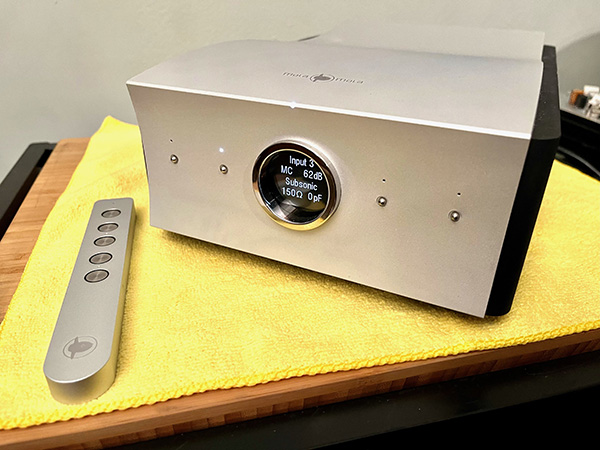
Twice in the last month I have been at someone's house, servicing their turntable, when they asked whether they should be considering a new phono preamp that offers additional playback equalization curves besides the standard RIAA. My usual reaction is to thumb through their record collection, where, more often than not, I find that they don't own a single record that was cut using a curve other than RIAA.
Phono playback EQ is one of those audiophile topics that stokes some people's passions, with plenty of disagreements about how important it is. I have seen grown men get into heated discussions about the history of record EQ curves, but in truth, the subject is only likely to matter if you listen to a lot of 78s or original mono LPs pressed between the late 1940s and the mid-1950s.
Spin Doctor #12: EMM Labs DS-EQ1, The Wand 14-4 Turntable, M•A Inner Sleeves
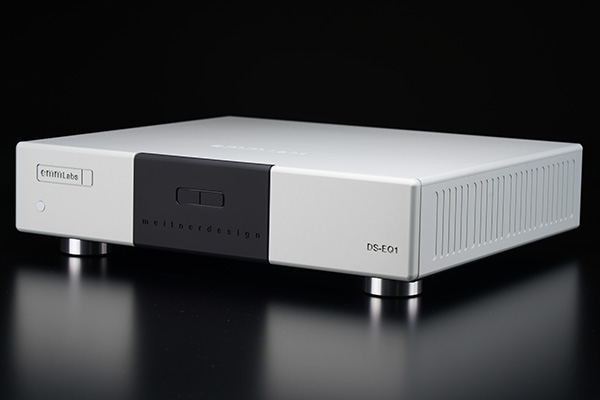
"I think both moving coil and moving magnet cartridges are terrible." That's what legendary Canadian audio designer Ed Meitner told me when I asked about the pioneering transimpedance current drive phono stage he created for his Meitner PA6 preamp some 40 years ago.
Meitner has been designing innovative hi-fi gear for the pro and consumer audio markets for more than 50 years, but for most of the last 30, he has been best known for his work with high-resolution digital audio and DSD recording. Despite this focus on digitaland despite that comment about the two leading phono cartridge technologiesdeep in his heart, Ed still loves analog and has fond memories of the Kenwood optical cartridges from the 1970s, which I discussed in last month's Spin Doctor column. So when Ed read that a company in Japan called DS Audio was bringing back an improved version of the optical cartridge using modern materials, he contacted designer Tetsuaki Aoyagi to learn more.
Spin Doctor #15: Austin AudioWorks Black Swan phono preamplifier
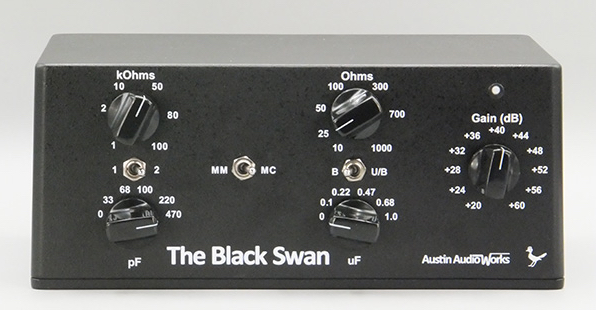
Forty years ago, as I was starting out on my audio journey, I railed against the flashy mainstream audio gear of the day. To me less was more, and I tried to convince my friends that my small, austere British-made audio rig, including what my friends jokingly called my Lynn Swanndek turntable (after the Steelers wide receiver), really did sound much better than their big silvery Japanese stacks loaded up with shiny knobs, switches, and meters. Audio was all about the sound after all, and I wasn't interested in some dazzling visual display that had nothing to do with what I was hearing. I gravitated toward gear that wasn't flashy or fancy looking, feeling that meant that the effort and expense to create it went where it counted most, to the parts that made it sound great.
Spin Doctor #16: Sutherland Dos Locos Phono Preamp, Dynavector XX-2A Phono Cartridge
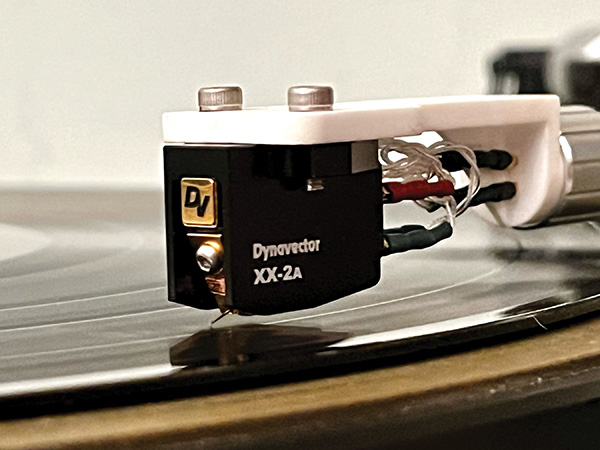
Ron Sutherland makes a strong case for being crowned the king of all phono preamps, though I expect he would blush at any such suggestion. In 1979, with degrees in physics and electronic engineering (where his final project involved designing and building a digital logiccontrolled preamp), he teamed up with Gayle Sanders to found electrostatic speaker company MartinLogan. ("Martin" and "Logan" are Sanders' and Sutherland's middle names, respectively.) But after a few years, he found the increasingly corporate mindset at M-L a bit stifling, so he decided to go his own way. Ron wanted to build gear he thought was cool and fun while not being directed solely by its commercial potential. He joined up with his brother to start Sutherland Engineering, creating hi-fi equipment that piqued his own interest and hopefully that of a bunch of customers.
At first, Sutherland made a wide range of components, including preamps, power amps, and DACs, but gradually he focused more and more on phono preamps. Today that's the only thing he makes...