

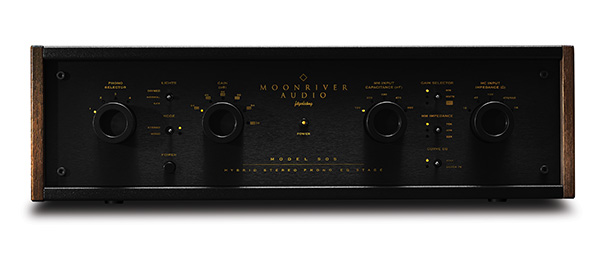
Spin Doctor #18: Moonriver 505 Phono Stage, DS Audio E3 Optical Phono Cartridge System
I spent the second three-and-a-half years of my life living with my family in Sweden. Our home was on an island just outside of Stockholm called Lidingö, which locals tell me today is like the Beverly Hills of Stockholm, a fancy place where the rich and famous live. Fifty-nine years ago, it wasn't quite so fancy; it just seemed like a cool place for a little kid from New York City to grow up.
I can't honestly say I remember many details about my life between the ages of three and a half and seven, yet apparently some of that Swedish way of thinking ended up influencing my life view, specifically, how Swedes approach consumer goods and purchasing decisions.
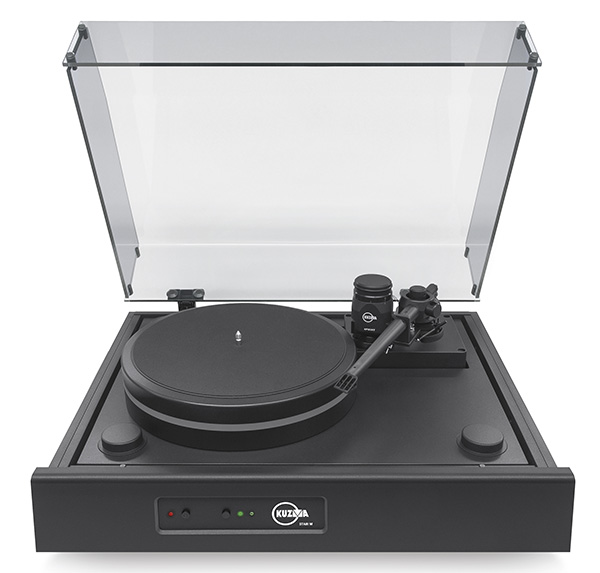
Spin Doctor #28: Kuzma and Westminster Lab
Forty years ago, when I was a much younger man, I was a strong dude. I recall one day in 1986, soon after I started working at Sound by Singer, when Krell cofounder Dan D'Agostino drove down from his factory in Connecticut to deliver a load of amplifiers and preamps for us to sell. As the new guy, I was expected to do the grunt work.
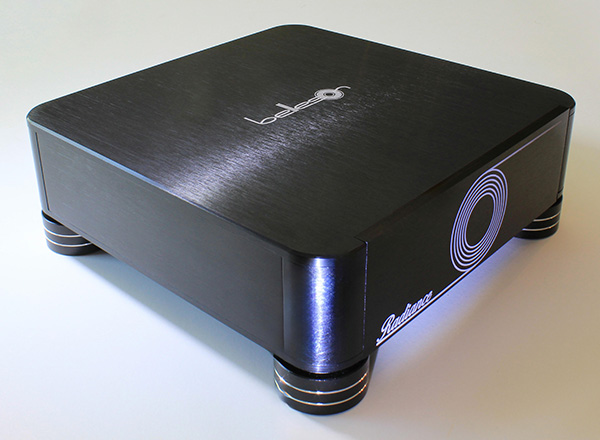
Spin Doctor #30: The Belleson Radiance & EBI Audio Khumar
As the Spin Doctor, I tend to lead an analog life. I'm not just talking about my preferred ways of listening to music, but also my approach to other everyday technology. For decades, there has been a push to turn everything we use into a connected, "smart" device. We now have technology that allows us to change the color temperature of the lights in our living room while we sit on the sofa, or to answer our front doorbell from the other side of the world. I prefer an older-school approach.
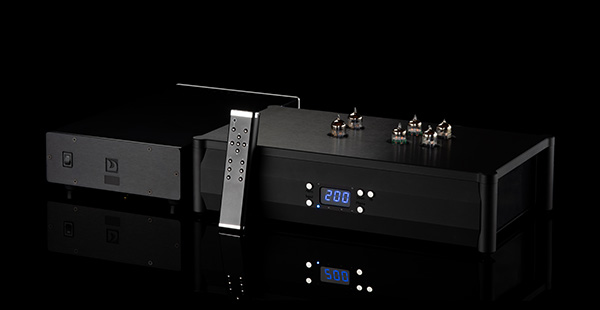
Spin Doctor #33: Hi-Fi Shows, the 2025 Capitol Audiofest, and the Doshi Evolution Phono Preamplifier
I was heading back home to New York in my old Mercedes diesel on a Sunday evening, having just attended the annual Capital Audiofest near Washington, DC. Riding shotgun was fellow Stereophile scribbler Ken Micallef, and as we puttered along the straight, featureless lower half of the New Jersey Turnpike, we started to reminisce about our audio show experiences.
Spin Doctor #36: Musical Fidelity Nu-Vista Vinyl S phono preamp, Sumiko Oriole phono cartridge
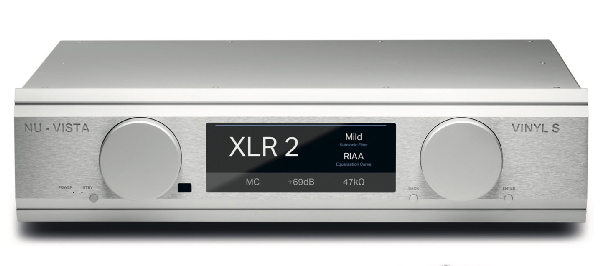
I get nervous when I hear that an audio company I like is suddenly under new ownership. Are the new owners planning to carry forward the legacy of the company's founders, or will they try to move things in a different direction?
Spin Doctor #38: the Sorane ZA-12 tonearm and Parks Audio Waxwing phono preamp
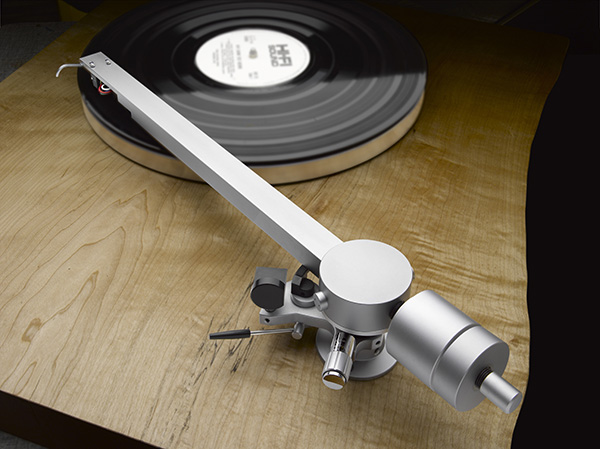
In 1936, the great blues pioneer Robert Johnson recorded his song "Cross Road Blues," which many interpret as his telling the story of how he went to a crossroads and fell to his knees to make a deal with the devil, selling his soul in exchange for musical genius.
Spin Doctor 2: CH Precision P1 phono preamplifier
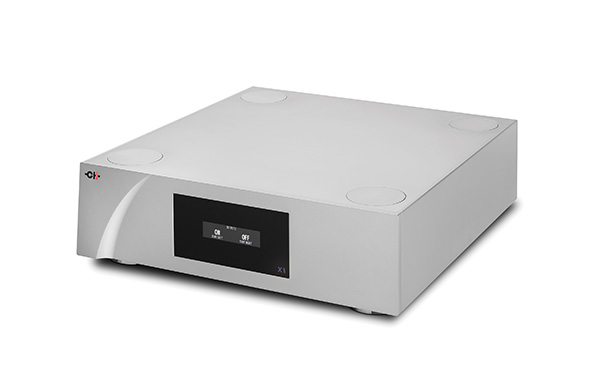
In 1928, Swiss engineer and inventor Jean-Léon Reutter created a clock that could run for years without human interaction or any type of external power source. The Atmos Clock required no AC power, batteries, solar panels, or hand-winding. It was able to wind itself by leveraging subtle changes in atmospheric pressure and temperature.
The design was so energy efficient that a single degree of temperature change provided enough power for two days of operation; it would take an incredible 60 million Atmos clocks to equal the power demands of a single 15W light bulb. 95 years later, the Atmos Clock is still being manufactured in Switzerland by Jaeger-LeCoultre, but like most high-precision, Swiss-made instruments, it isn't cheap. Prices start around $7500.
Sutherland Engineering 20/20 phono preamplifier
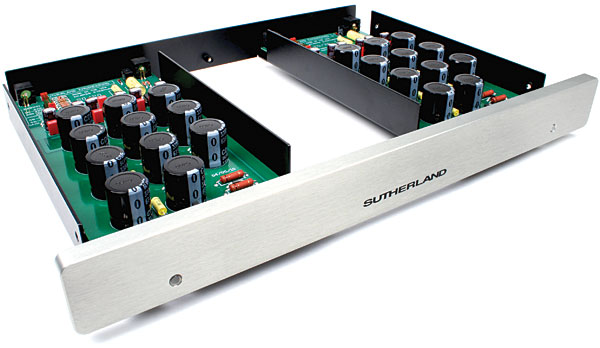
Why no batteries?
It seemed a simple and obvious question, but I couldn't get an answer out of Ron Sutherland. Why did his new 20/20 phono preamp use an AC power supply instead of batteries? I asked directly, I asked repeatedly, I tried framing the question in different ways, all to no avail. Did the AC supply make it sound better? Was it less expensive to build? Were potential customers turned off by having to replace batteries once every year or two?
Sutherland Engineering Duo phono preamplifier
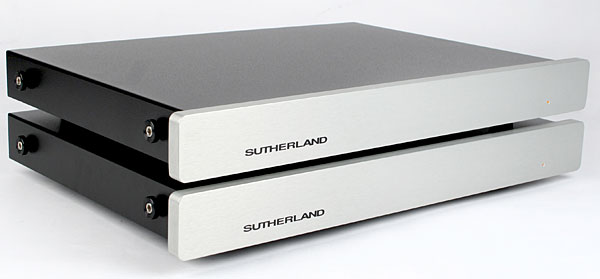
"Saying that Sutherland Engineering builds a nice line of phono stages is like saying that the Porsche 911 Carrera is a nice line of sports cars." So began my review of Sutherland's PhonoBlock in the January 2012 issue. I went on to note that similar philosophies underpin both product lines, and to link the cost-no-object PhonoBlock ($10,000/pair) with the GT2 RS ($245,000), then the pinnacle of Porsche's 911 family. It's now 2017, and though Sutherland and Porsche have both gone through a complete development cycle and replaced their flagship models, the analogy still holds true.
Sutherland Engineering Little Loco phono preamplifier

Descriptions of the sounds of products from Sutherland Engineering nearly always include "refined." While that word is certainly justified, it would be more apt to use it as a verb: Ron Sutherland spends more time than any audio designer I've known studying and fine-tuning and refining every detail of his work. I have the impression he knows those products so well that when he decides to design a less expensive version of his newest and best models, he knows exactly what to do.