

Nagra VPS phono preamplifier
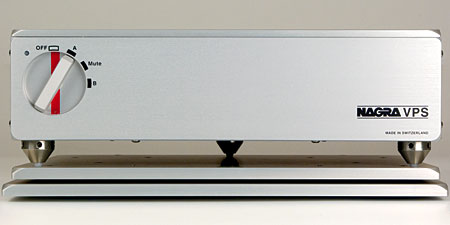
Not that many years ago, it seems, every sound crew in Hollywood and around the world recorded production sound using a compact, open-reel analog tape recorder made by Nagra. The first iteration of the Swiss-made machine appeared in the early 1950s. Shortly thereafter, with the addition of an inaudible recorded tone that allowed easy syncing to picture, the Nagra recorder became the industry standard, and remained so through the 1980s. To this day, Nagra's line of audio products retains the look of those early recorders.
New York Audio Labs "SuperIt" phono preamplifier
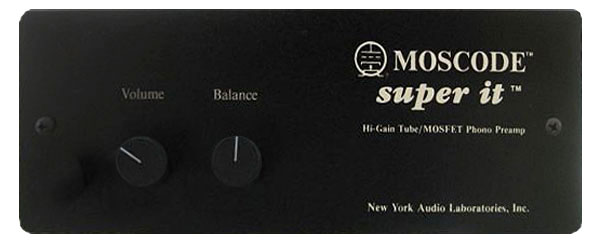
Basically, I have to admit that I am a Valvophobe. I would give you the dictionary definition of that word, but it has been sealed in a mayonnaise jar on Funk and Wagnall's porch since . . . Anyway, you get the idea. A Valvophobe is someone who doesn't like tubes in their 1986 stereo systems.
Parasound Halo JC 3 phono preamplifier
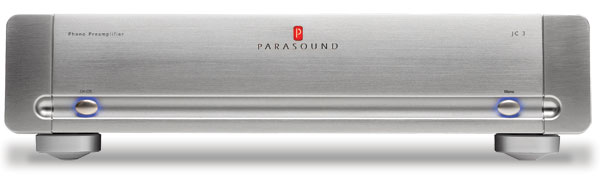
According to Parasound's founder and CEO, Richard Schram, the Halo JC 3 began as a phono-preamp retrofit for the JC 2 line stage, with separate small circuit boards for each channel. The smaller the board, the better, Schram says, so as to attract less noise than do larger boards, whose many copper traces can act as antennas.
Pass Aleph Ono phono preamplifier
If compact discs are so damned dynamic and vinyl is so dynamically limited, why do they sound just the opposite? Why do LPs sound so "live," so explosive, so "there," and CDs so dead? Even the best CDs usually sink to second-rate when you switch to their vinyl versions. I've heard it, you've heard it. Only those in deep denial, those who refuse to listen, don't. They'd rather read the published specs and consider the actual listening some kind of mass delusion among Luddite LP fans.
Pass Labs XP-27 phono preamplifier
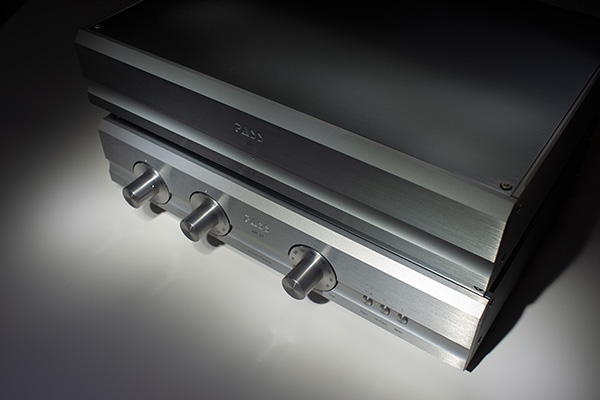
One of the pleasures of reviewingand also usingproducts from Pass Laboratories is an encounter with Nelson Pass's writing, which can usually be found in the owner's manual and is always competent, insightful, and sometimes funny. How often do you get real pleasure and insight from reading an owner's manual?
Pass Labs has a lot of owner's manuals online. Reading through one, I encountered the following passage; you'll find the same or similar language in other manuals and on the Pass Labs website. I present it not only because I admire it and agree with the philosophy it expresses but also because it captures the spirit of the product under reviewthe XP-27 phono preamplifier ($12,075 in silver)at least as I've experienced it during an extended review period. Here it is, quoted at length with some slight adjustments to make it consistent with Stereophile's editorial style...
Plinius M14 phono preamplifier
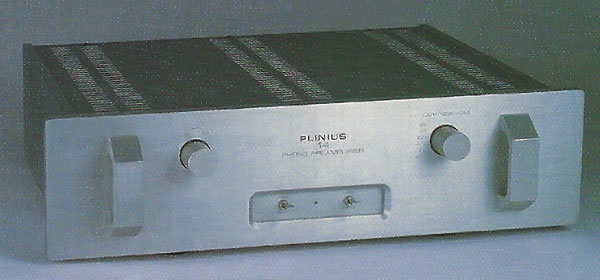
You think Watergate was a momentous break-in? You should hear what a good electronic Rolfing does to the sound of this meticulously built, full-sized, full-featured, and full-priced ($3495) phono section imported from New Zealand by Fanfare International. Out of the box, the Plinius M14 sounds like what it looks like: all silvery, hard, and steely. Just leaving it powered up doesn't do the trick, nor does playing music through itunless you're prepared for endless hours of truly bad sound before the sonic clouds begin to break.
Precision Transducer Engineering MMMC Phono Preamplifier
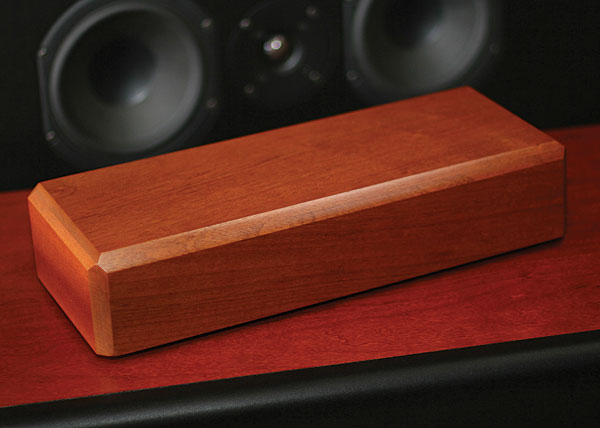
The phono preamplifiers reviewed this month are both affordable ($400$1960) and highly accomplished, and the most expensive of them offers versatility that's unprecedented in my experience. Three of them are designed to be used only with moving-magnet, moving-iron, and high-output moving-coil cartridges, so I installed Shure's V15VxMR cartridge in VPI's Classic 3 turntable and listened in MM mode to all of them, beginning with the least expensive.
Pro-Ject Phono Box RS2 phono preamplifier
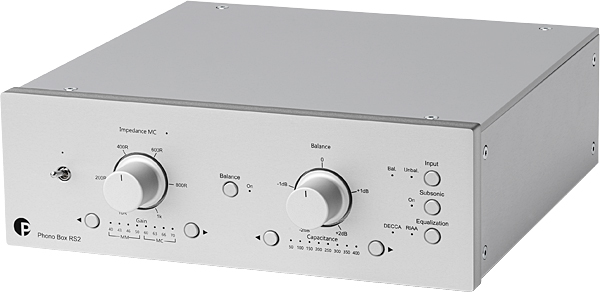
Phono preamplifiers could be compared to children as viewed by a previous generation of adults: They are expected to be small in stature, and they should stay out of the way, seen but not heard and maybe not even seen. With the simpler models typically encountered at lower price points, there's little to do except "set it and forget it."
PS Audio GCPH phono preamplifier
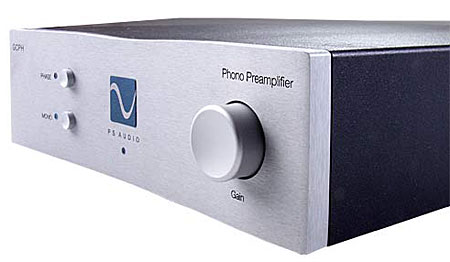
PS Audio's first product, back in 1973, was a standalone phono stage; more recently, their PCA-2 preamp had an optional phono board. The GCC-100http://www.stereophile.com/solidpoweramps/106ps">GCC-100; integrated amplifier that I review this month has no room inside for a phono board, so they've gone back to producing a separate phono stage: the GCPH ($995). Like the other products in PS Audio's current line, this one is based on the Gain Cell, one module on the input side connecting to the cartridge, followed by a passive RIAA curve (with a claimed accuracy of 0.1dB over the 40dB range of the curve), and another Gain Cell on the output side.
PS Audio Stellar Phono phono preamplifier
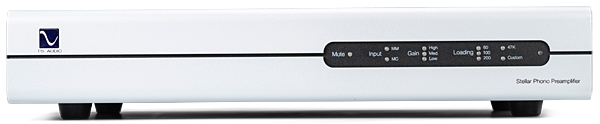
We usually save the question of value for the end of a review, but this time it's worth mentioning up front, if only because PS Audio has been in the news lately. Late last August, the company announced they were switching from a traditional dealer network to a factory-direct sales model. So, to some readers, it might seem fair to judge the brand-new, full-featured Stellar Phono Preamplifier ($2500) against ones selling in stores for $5000.