

Clearaudio Champion 2 turntable & Unify tonearm with Benz Micro L2 phono cartridge
Turntables are intrinsically cool. Maybe it's that I am of the pre-CD generation, for which the acquisition of one's first really good turntable marked an audiophile's coming of age. Just as turntable technology has progressed to such awe-inspiring pieces as the SME">http://www.stereophile.com//analogsourcereviews/796/">SME 30/2 and Rockport">http://www.stereophile.com//analogsourcereviews/258/">Rockport Technologies Sirius III, less stratospherically priced 'tables now offer levels of performance that, if not revelatory, show why so many audiophiles (including yours truly) continue to love their LPs with something just short of fanaticism.
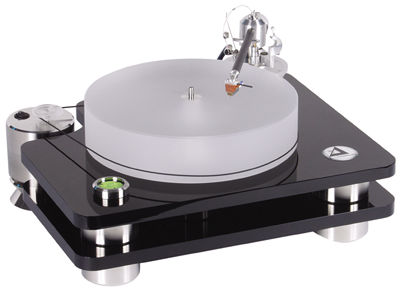
Clearaudio Ovation & Clarify turntable & tonearm

Like many audiophiles, I cohabit with someone who understands my audio obsession but has no desire to share it. That someone is my wife. Since I began writing for Stereophile, Ashley has helped me carry amplifiers, tape up boxes for shipping, and found room in our house for all the extra components and their boxeswhich sometimes make the place look like a scene from an episode of Hoarders. She's a peach. Every time new gear comes to the house or to my studio, my wife has calmly helped me move stuff around while I dance around like a six-year-old on Christmas morning.
Clearaudio Signature turntable & Tracer tonearm
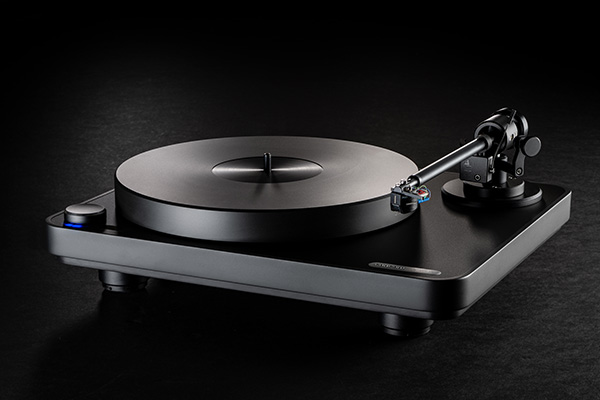
In midsummer 2022, I reviewed the German-made Clearaudio Reference Jubilee turntable, a $30,000 vinyl virtuoso that played music with clear-headed realism, brain-opening transparency, and lifelike speed and dynamics. Its performance was nothing short of exhilarating. It was one of the top three turntables I had ever laid my ears upon.
Clearaudio's house sound, whether from the affordable to the mortgage-busting, is one of refinement, lucidity, clarity, precision, and quietness. Which brings us to the Clearaudio Signature turntable, a joint offering from Clearaudio GmbH and its US distributor, Musical Surroundings.
Continuum Audio Labs Caliburn turntable & Cobra tonearm
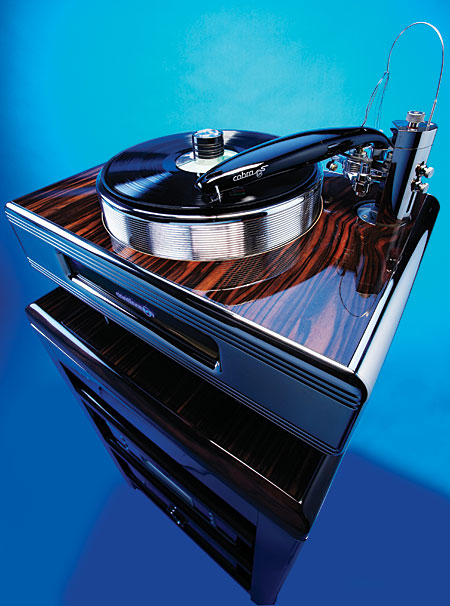
Part New Jersey diner, part Wurlitzer jukebox, with a snakelike tonearm that at certain angles looks vaguely lewd, this boxy, man-sized creation from Australia seems to have been built around its distinctive looks rather than for any functional purpose. Combine that with its sky-high price—itself almost obscene—and the result is apparently the sort of product that envious, cynical, self-loathing audiophiles love to hate, and reviewers love to write about.
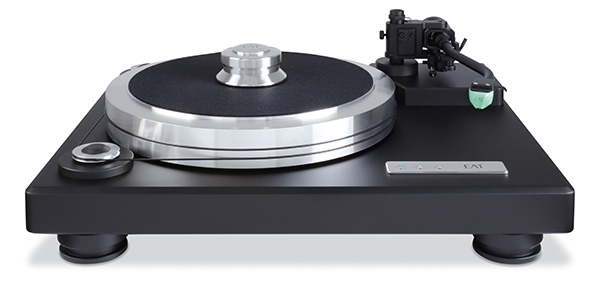
EAT F-Dur Turntable & F-Note Tonearm
In the high-end audio industry, the representation of women in professional roles is strikingly low. Yet these women are integral to every facet of the industry, from engineering and design to leadership, proving that their contributions are vital.
Eminent Technology Two tonearm
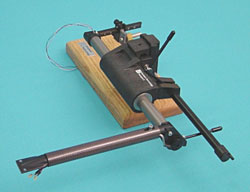 If analog disc is fading, it is a twilight of the gods. Tonearms, cartridges, and turntables get steadily better; the overall quality of the best analog disc systems today is far better than it was two years ago. Bruce Thigpen and Edison Price's new Eminent Technology Two tonearm is a case in point. It has evolved from a highly specialized product for only the bravest of audiophiles to a reference quality arm that any dealer can install, and any audiophile can safely use. More importantly, it may have no sonic equal at any price.
EMT 928 II record player
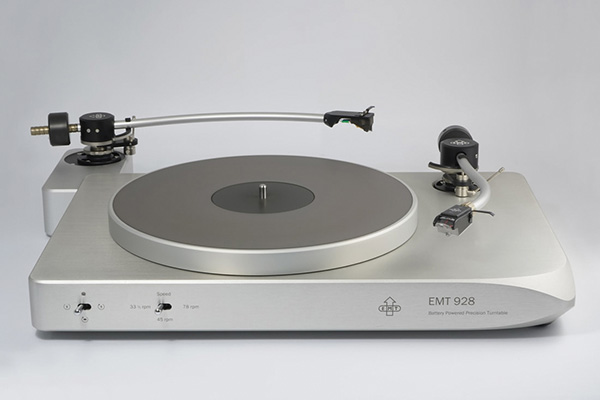
Modern turntables are a paradox. The ever-evolving technology beneath their sleek exteriors fascinates me. The high-end turntable market these days can feel less like a haven for music lovers and more like a brutalist arms race in pursuit of maximum audio extraction.
Yet, it's not all about performance. Many new 'tables are adorned with outlandish, purely cosmetic flourishes that cause me to chuckle. Some super-bling record players, with their jutting angles and industrial menace, evoke the chrome carcass of the Battlestar Galactica, a testament to mechanical might. Others are even more menacing, channeling the mirror-finish abyss of Darth Vader's helmet, gleaming with a promise of sonic dominationbut is that an invitation or a threat?
Setting aside those cosmetic affectations, it's a war, and the enemywell, the main enemy anywayis vibrations, which may seem strange considering that vibrations are the whole point of the endeavor.
Formula 4 tonearm
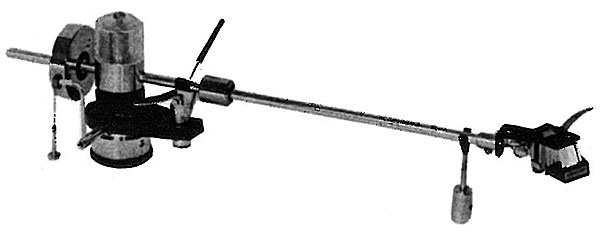
Not the easiest tonearm to set up (let your dealer do it if you aren't overly skilled at such things), this English-designed and Japanese-made device is the best pivoted tonearm we have tested to date, and at a very reasonable price at that. Polk Audio is importing them and distributing to dealers, most of whom sell them for around $130 to $140, and some buyers have managed to purchase them directly from stores in England for as little as $80. We received two samples of this for testing, one directly from the US distributor, Polk Audio, the other from Natural Sound, a Nebraska dealer and (naturally) one of our advertisers. Suffice it to say that both samples were identical in every perceptible manner.
Graham Engineering Phantom B-44 tonearm
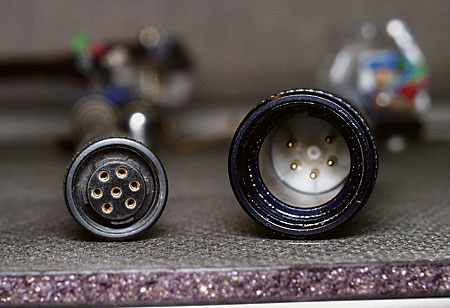
The Graham">http://www.stereophile.com/tonearms/400">Graham Engineering 1.5 tonearm, originally introduced in 1990, was a thoughtfully executed design that logically addressed all of the basics of good tonearm performance—geometry, resonance control, rigidity, dynamic stability—with effective, sometimes ingenious ideas, while providing exceptional ease and flexibility of setup. Over time, designer Bob Graham came up with ways to significantly improve the 1.5's performance, including the replacement of its brass side weights with heavier ones of tungsten, an improved bearing with a more massive cap, various changes in internal wiring, a far more rigid and better-grounded mounting platform, and a new, sophisticated ceramic armwand. (The original wand had hardly been an afterthought: its heat-bonded, constrained-layer-damped design consisted of an inner tube of stainless steel and an outer tube of aluminum.) The arm's name changed from the 1.5 to the 1.5t (tungsten), then the 1.5t/c (ceramic), and on to the 2.0http://www.stereophile.com/tonearms/401">2.0;, 2.1, and 2.2http://www.stereophile.com/tonearms/401/index7.html">2.2;.
Graham Model 1.5 tonearm
Frankly, I'm fed up with the prophets of doom, those false seers who forecast vinyl's imminent demise. Some claim to have seen the writing on the wall as far back as ten years ago, sensing that the advent of the CD would perforce relegate the stylus-in-groove method of transduction to the trashpile of history. First of all, most of the music I enjoy happens to be on LP. And I'm sure I speak for many audiophiles who have also spent a lifetime building up a vinyl collection when I say we're not about to throw away our cherished treasuries of music. These LPs I expect to enjoy until the end of my time. Thus, I welcome any phono-system technological advance that will recover more information from the groove.