

Analog Corner #295: Rega Planar 10 turntable, RB3000 tonearm, Apheta 3 phono cartridge
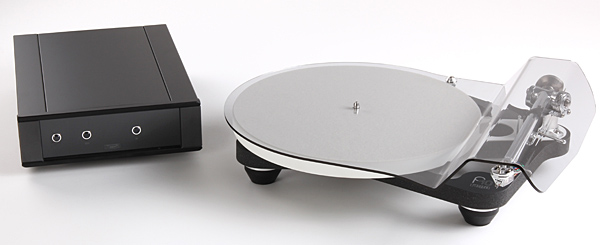
Lately it seems that the more Rega charges for one of its turntables, the less you getand from Rega's performance perspective that's a good thing.
While some turntable designs pile on the mass, hoping to tame resonances and better isolate the record from the outside world, Rega has long advocated ultralow-mass designs. What's up with that?
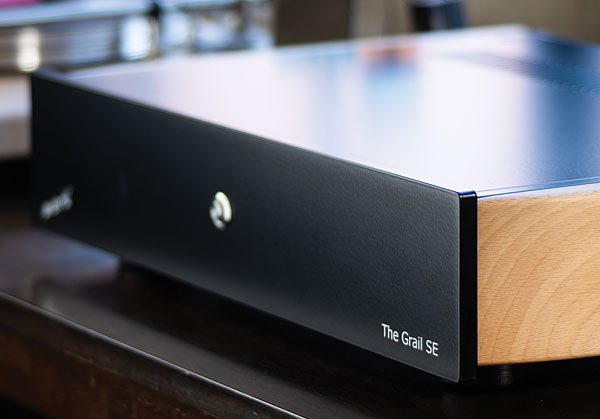
Analog Corner #297: van den Hul The Grail SE+ phono preamplifier & SAEC WE-4700 tonearm
The catastrophic February 6 fire at the factory where Apollo Masters produced LP-mastering lacquersflat aluminum discs covered with nitrocellulose lacquerwill be old news by the time this column gets to you, but the repercussions of the loss will be ongoing for at least the next year and probably beyond.
Analog Corner #298: Reed Muse 1C turntable and 5T tonearm
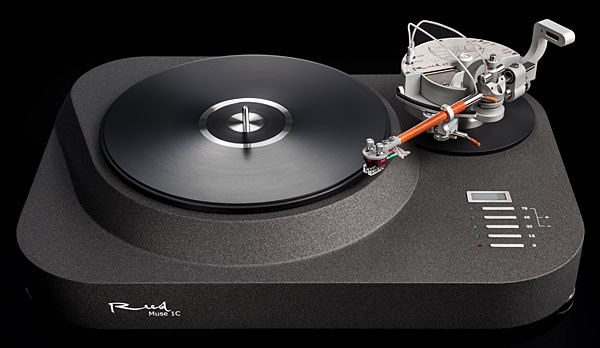
At the 2017 Hong Kong High End Audio/Video Show, I found myself sitting next to a turntable manufacturer who shall remain anonymous. A Reed Muse 3C turntable ($20,000) with 3P tonearm sat on a display table across from us.
Analog Corner #314: OMA K3 turntable & Schröder tonearm
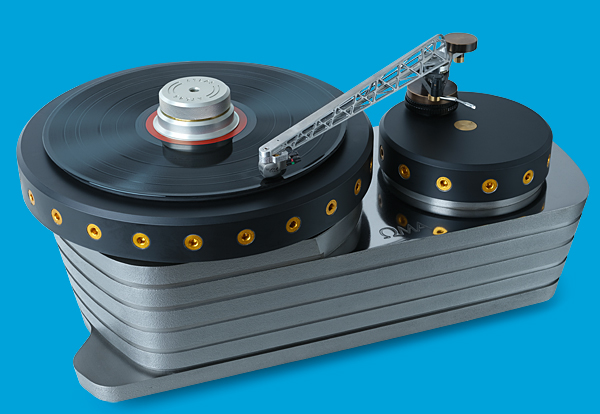
If you're going to spend a year-plus in COVID lockdown, it doesn't hurt to have a million dollars' worth of turntables keeping you company, right? That's been my good fortune. Sounds like a roomful, but it's only three: the SAT XD1, the TechDAS Air Force Zero, and the OMA K3 ($360,000, footnote 1).
You'll find this issue's cover girl either strikingly beautiful or homely. Visitor reactions fall strongly into one of those two camps, with nothing in between. I love the looks. Whatever your opinion, the K3's visual distinctiveness cannot be denied. The innards are equally unique.
Analog Corner #323: J.Sikora Reference turntable and KV12 VTA tonearm
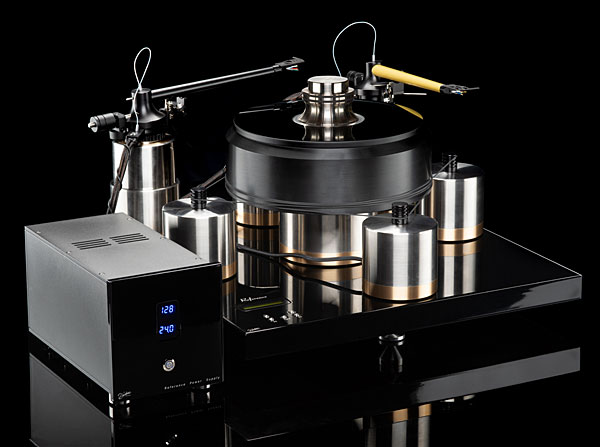
Lublin, Poland, is about 130 miles from Lviv, Ukraine, a town that has been in the news lately. That's about the same distance as Hershey, Pennsylvania, is from my desk in northern New Jersey, where I'm writing this. They are close. Russian missiles struck Lviv on March 18, 2022, and as I write these words Lviv is preparing for more intense bombardment.
Analog Corner #325: Acoustical Systems AXIOM Reference tonearm & AudioQuest Dragon Cables
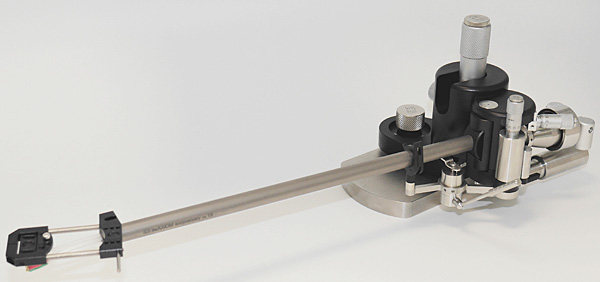
The AXIOM tonearm from acoustical systems (footnote 1)the company prefers lowercasehas been on my To-Review list since I spotted it at Munich High End more than a few years ago, but for one reason or another, that never happened. Until now.
Arc Angles: Optimizing Tonearm Geometry

As Chester Rice, co-inventor of the moving-coil loudspeaker, once ruefully observed: "The ancients have stolen our inventions." So often, what is painted as new and innovative turns out to be something someone thought of long before. We have a habit of forgetting, and that applies not only to inventions, but to knowledge of other kinds as well.
Audio & Design M9BA tonearm
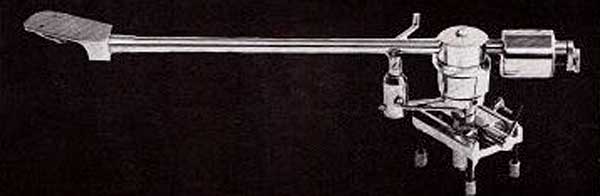
Back in the days of pre-stereo high fidelity, when a 6-gram phono pickup was considered to be "featherweight," the best universal-type tonearm we knew of was a bulky, very professional-looking device made by Gray Labs and designated the Model 108. One unusual thing about it was that, instead of using sleeve or cone-face bearings, it had a single up-ended needlea so-called unipivotfor both the vertical and lateral modes of motion. The other unusual thing about it was that the pivot system was viscous-damped, and it was this, we suspect, that was largely responsible for the arm's ability to make any pickup sound somehow sweeter and cleaner than it did in any other arm.
Brilliant Corners #15: Well Tempered Lab Amadeus 254 GT turntable
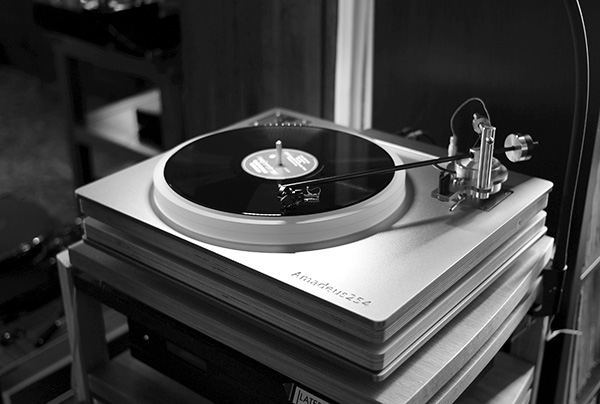
Photo by Michael Stephens
Last May, during a visit to High End Munich, I was ushered into an exhibitor's room with much ceremony. Other showgoers had been shooed out so that I, a reviewer at an important magazine, could listen to the hi-fi undisturbed. The room featured obelisk-shaped "statement" speakers, monoblocks with enough tubes to light a cafeteria, and a wedding cakesized turntable, all connected with python-thick cables. The whole thing cost as much as a starter house in coastal Connecticut.
The room's proprietor asked me to choose from a small stack of LPs. I went for Cannonball Adderley's Somethin' Else, a wonderful Miles Davis record in all but name. I know it as well as any other piece of recorded music. When the system began to play, it was doing all the audiophile things expected of an expensive hi-fi. But while I recognized the notes, I struggled to recognize the music. Something was clearly, obviously amiss. The rhythmic emphases and stresses that convey music's meaning and emotion were landing in the wrong places.Brinkmann 9.6 tonearm
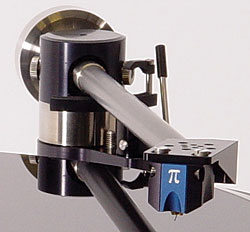 Brinkmann's 9.6 tonearm ($3990) resembles the German company's longer, more expensive 10.5 and 12.1 arms, which in turn resemble the legendary Breuer. The new arm includes the same headshell, armtube, mounting socket, and cueing device used in the other arms. The bearing system differs, though the Swiss-made ball bearings are identical.
While the more expensive arms use traditional fixed-gimbal bearings, the 9.6 has a unipivot-like construction for the horizontal bearing. The weighted arm housing sits on a small ball that rests on a pivot, also as in a typical unipivot design. A second ball at the bottom of the housing prevents "arm lean," but since the arm's weight rests on the top ball, the lower one isn't critical, and I could feel some play when I handled the arm. Vertical arm motion is effected via a second pair of captured bearings. This arrangement allowed the use of less costly parts and kept the price down, Brinkmann says. The arm's effective length is 248mm (231.5 from pivot to spindle, plus 16.5mm of overhang), while its effective mass, referenced to the center position of the headshell slot, is 12gm.
Brinkmann's 9.6 tonearm ($3990) resembles the German company's longer, more expensive 10.5 and 12.1 arms, which in turn resemble the legendary Breuer. The new arm includes the same headshell, armtube, mounting socket, and cueing device used in the other arms. The bearing system differs, though the Swiss-made ball bearings are identical.
While the more expensive arms use traditional fixed-gimbal bearings, the 9.6 has a unipivot-like construction for the horizontal bearing. The weighted arm housing sits on a small ball that rests on a pivot, also as in a typical unipivot design. A second ball at the bottom of the housing prevents "arm lean," but since the arm's weight rests on the top ball, the lower one isn't critical, and I could feel some play when I handled the arm. Vertical arm motion is effected via a second pair of captured bearings. This arrangement allowed the use of less costly parts and kept the price down, Brinkmann says. The arm's effective length is 248mm (231.5 from pivot to spindle, plus 16.5mm of overhang), while its effective mass, referenced to the center position of the headshell slot, is 12gm.