

Luxman PD-151 MARK II Record Player
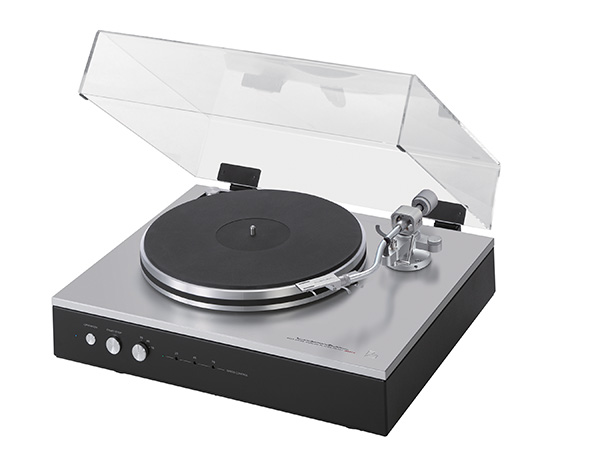
Luxman occupies an unusual place in the hi-fi world. While many of the brands chasing ultimate performance will battle it out in the bleeding-edge design stakes, Luxman makes what I like to call luxury equipment. Everything they produce is beautiful, not just to the ear, but also to the eye and hand. Their design aesthetic keeps one foot firmly planted in the style of classic audio equipment from decades pastfor example, many of their amplifiers have tone controls and big power meters, features reminiscent of topflight gear from 40 years agowhile the other foot is up to date with the latest technology...
The PD-151 MkII record player ($5695) is an excellent example.
Luxman PD-171 record player
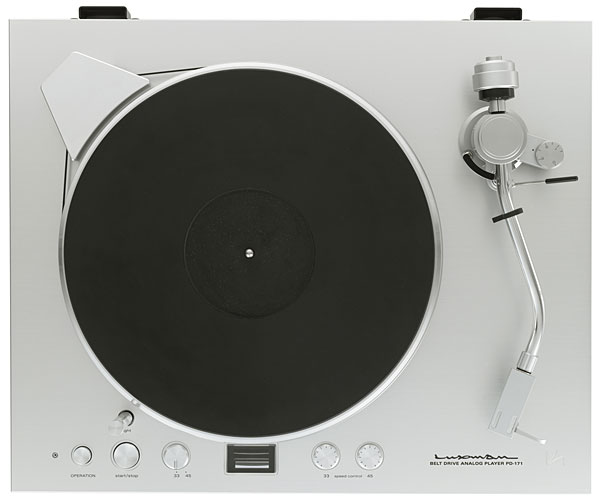
Much ink has been spilled, and rightly so, on the topic of the LP's recent and apparently durable resurrection as a playback medium. The corpse may not be quite as lively after death as before, but it is nonetheless arguably more Lazarus than Lavoisier (the latter having managed nothing more than to wink at the crowd following his time on the guillotineas he boasted, in life, that he would do).
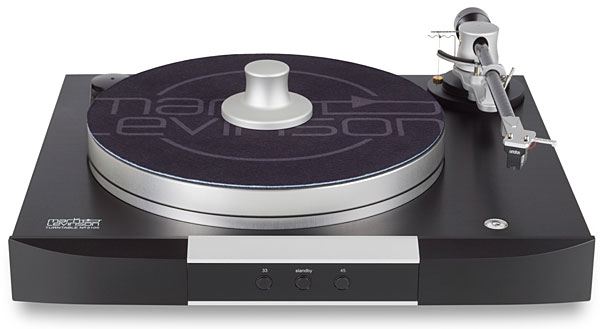
Mark Levinson No.5105 turntable
Before returning home from the EISA convention in Antwerp two years ago, I spent a quiet, relaxing afternoon in The Loft, a luxurious shared space reserved for first- and business-class travelers, presented by Lexus and Brussels Airlines.
In addition to surprisingly good food and free-flowing alcoholic beverages, some airport lounges contain some really useful traveler amenities, like private showers and beds. The Brussels/Lexus space went above and beyond. I thought I'd had too much to drink (which I had) when I peered into the room and saw a Mark Levinson audio system featuring the No.515 turntable that Harman introduced in 2017. It was Mark Levinson's first turntable ever, and it cost $10,000 without cartridge. It is still in production.
Merrill-Williams R.E.A.L. 101.3 turntable
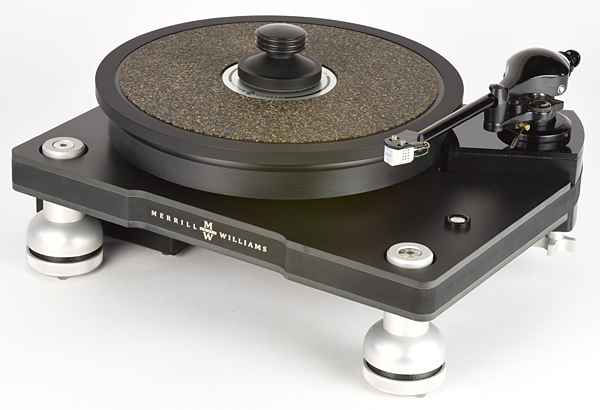
Record players and the average consumer enjoy an on-again/off-again relationshiphappily, at this moment in time, it is very much onbut to high-end audio enthusiasts, the turntable has endured as an object of near-talismanic importance. I think that's not only because the turntable continues to give us so much pleasure, but also because it seems so understandableat its simplest, it's just a motor and a rotatable platter, attached to a board that also has some provisions for fastening a tonearm. End of story. Who among us has not, at one time or another, considered the lot of the turntable designer and thought, I could do that?
MoFi Electronics MasterDeck turntable
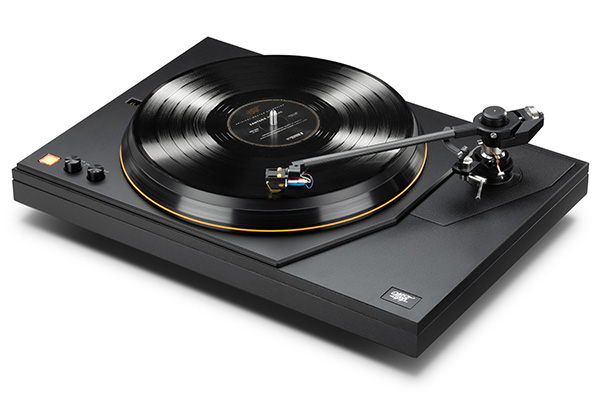
Perhaps the most intriguing aspect of the MoFi Electronics MasterDeck turntable ($5995), as the brainchild of Allen Perkins in his role as MoFi's Chief Analog Designer, lies in the question of how his background as a jazz drummer has shaped his approach to turn table design. How does the rhythmic sensibility of a percussionist translate into the meticulous engineering of a turntable?
"It's a little complicated," Perkins wrote over email. "Being a drummer, I am sensitive to timing in music, so it makes me sensitive to problems. However, it does not provide any direction for solutions. It could be seen as an annoying awareness as a listener, like perfect pitch. In my case, it is an advantage because I love to solve problems, in general, so I persevere and have a built-in sense to assess what I've done."
Music Hall Audio MMF-7.3 turntable
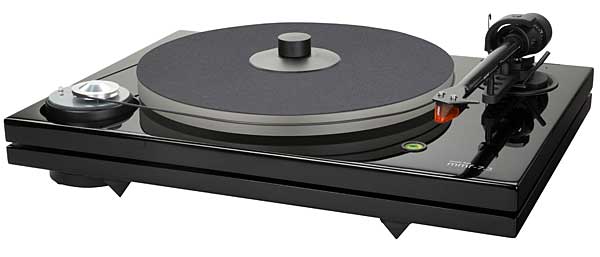
Stereophile and Music Hall Audio share a long mutual history. Like most relationships, it's had its ups and downs; unlike most relationships, this one is well documentedin retired writer Sam Tellig's much-loved "Audio Cheapskate" and "Sam's Space" columns, and Music Hall Audio proprietor Roy Hall's responses in "Manufacturers' Comments." I always found Sam and Roy's gentlemanly brawling to be good, clean, if occasionally uncomfortable funlike the touchy rapport between a gregarious dog and a rascally cat forced to live under the same roof: A truce may have been called, but don't expect them to make nice.
Music Hall Ikura LP player & Ortofon 2M Blue phono cartridge
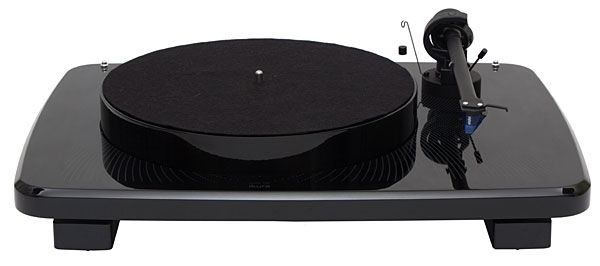
The call I received from Music Hall's Leland Leard surprised me: "Hey, Bob, I think you'd be the perfect guy to review our new Ikura turntable!"
Hmm. It had been four years since I'd reviewed a record player: Pro-Ject's Debut III, in the February 2010 issue. And with the surging popularity of vinylhell, Rough Trade NYC's enormous new record store, in the Williamsburg section of Brooklyn, even sells turntablesthe thought of a plug-and-play turntable-tonearm-cartridge combination for $1200 intrigued me. Sure, Lelandsend it on.
Music Hall Stealth record player
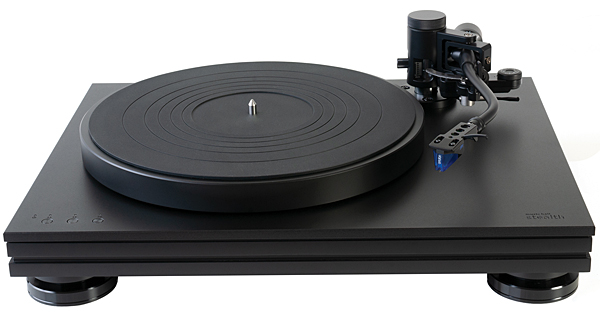
The earliest direct-drive record player I've discovered is Garrard's Model 201 from 1930. It only played 78s. In their advertising, Garrard claimed the 201 was the world's first "transcription turntable." It employed Garrard's latest in a line of what they called "prestige" motors: an AC-induction "Super Motor." Garrard described the 201's platter as "plush covered" and said it was "popular with HiFi enthusiasts and used by the BBC." The 201 was superseded by the 201A, which rotated at both 78 and 33 1/3 rpm. The venerable Garrard 301 that followed was an idler-drive design.
Oracle Delphi Mk.VI Second Generation turntable
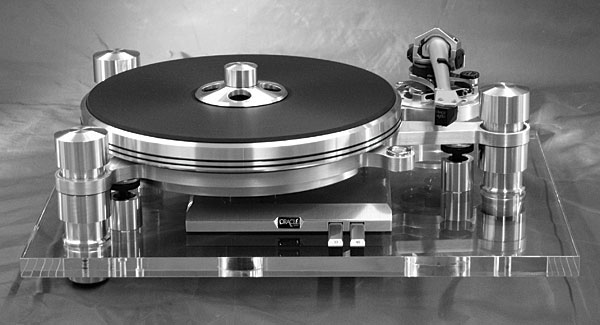
The stats are impressive: Quebec's Oracle Audio Technologies, formerly Trans Audio (footnote 1), has been in business for 37 years, during which they've sold nearly 11,000 Oracle Delphi turntables. That's not bad for a perfectionist turntableand especially not bad for a perfectionist turntable whose first and most estimable competitor, the Linn Sondek LP12, was well established by the time of the Delphi's debut, in 1979.
Oracle Delphi Mk.VI turntable

Thirty years have not diminished the beauty and elegance of Oracle's Delphi turntable. In my opinion, it still ranks among the best-looking turntables ever made. I bought an original Mk.I, used, in 1982, and very positively reviewed the Delphi Mk.V in the December 1997 Stereophile.
In its three decades the Delphi has undergone many upgrades both technical and aesthetic. Not surprisingly, so has the price. The Mk.II Delphi sold for $1250 in 1986; the Delphi Mk.VI with Turbo power supply and dedicated power cord now sells for $8500, which, in today's market, I think is reasonable for what you get. The review sample came with an Oracle/SME 345 tonearm ($3100) and a Benz-Micro Thalia high-output MC cartridge ($1700), for a total cost of $13,300or $11,600 for just 'table and arm.