

The Sound and the Image

It's not surprising that many people, like me, love nice cameras and good stereo gear. In my worse moments, I attribute this to mere consumerism: We love expensive stuff and the thrill of buying something new, whether for reproducing music or creating visual images. In my better moments, it's clear to me that there's more than that to this common taste for audio and photography, and more to the hobby of so-called perfectionist audio.
The Sound Of Music
"Most people really don't like music—they just like the way it sounds"
The Sound of the Human Heart
Not everything that can be counted counts, and not everything that counts can be counted.William Bruce Cameron, Informal Sociology: A Casual Introduction to Sociological Thinking (1963)
I hear not the volumes of sound merely, I am moved by the exquisite meanings.Walt Whitman, "That Music Always Round Me," from Leaves of Grass
These two statements, to me, express the core perspective shared by Stereophile's contributors. When I encountered both of them within a span of 30 days, they spoke so strongly that I felt impelled to hook up the biggest, baddest loudspeakers I could find and broadcast them to the world, without distortion. Failing in that quest, and having not yet attained the status of the Edward R. Murrows and Walter Cronkites of eras past, I share them here.
The Sound of Transistors
Editor's Note: Those of us who cut our engineering teeth on tubes still remember the advent of the solid-state amplifier with mixed feelings. Yes, they were lighter and cheaper per watt than the thermionic hulks we loved so much, but they broke all the time (thanks to the germanium transistor) and sounded like—well, let J. Gordon Holt tell us what they sounded like in an "As We See It" article from Vol.1 No.10, first published in May 1965. We also develop the theme with a JGH review of an early transistorized amp, as well as a selection of readers' letters from the early days of Stereophile. Enjoy.—John Atkinson
The Spaces Between the Notes
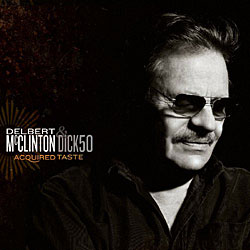
"Check it out." Music editor Robert Baird handed me a CD. "He's 70 years old, it's his 13th album, he got Don Was to produce it, and it's his best yet."
The Spaces Between the Notes

At the beginning of the 2022 novel Checkout 19, by Claire-Louise Bennett, I encountered some ideas that resonate in interesting ways with my recent experience of recorded music. . .
I've been bringing home too many records from the record store, or too many CDs from the CD shop, for decadesso many that it's difficult to focus on just one, to listen to it again and again, to give it the attention it deserves. In the era of streamingof having a sizeable fraction of the history of recorded music at your fingertips for $10$20/monththe temptation is especially acute. It's too easy to move among favorite bits of our favorite musicespecially when, as is too often true of audiophiles, we're so eager to hear how a favorite moment in this or that piece of music sounds on our system, now that we've added in that new component.
The Stereo Soundstage
What is the angular separation of your loudspeakers as viewed from your favorite chair? Whatever your answer, it's wrong. Of course I don't mean that it's a factually incorrect answer, just that any single value of subtended angle cannot be ideal for all recordings.
The Tiger Wags Its Tail
This is the story of the tiger wagging its tail. It is also the story of a tail trying to wag its tiger...
The Tin-Eared Americans
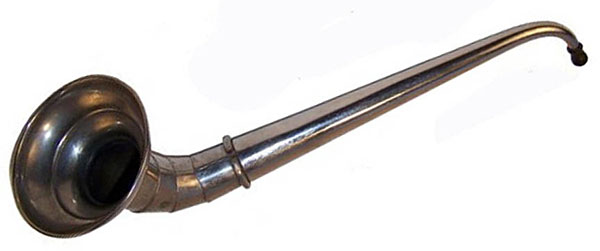
How would you feel after paying $2000 for super-stereo system, you learned that genuinely high-fidelity recordings of many excellent classical musical performances were not available to you? Could you excuse it with a shrug and the philosophical observation that nothing's perfect but things will get better as the state of the recording art improves? Okay then, what if you learned that truly high-fidelity recordings of these performances, that would sound very much like the real thing if reproduced through your super system, are available to millions of other people but not to you? Would you begin to feel just a little bit slighted, or maybe even irritated?
The Tragedy of High End Audio
As I walked through Stereophile's Taipei High-End Hi-Fi show (see the full report next month), I was startled to see four ladies in their 50s carrying Stereophile bags full of brochures. They'd just left a demonstration of Martin-Logan CLSes driven by Aragon electronics and were talking animatedly among themselves as they busily made their way to the next exhibit room. My surprise was repeated throughout the show as I saw an amazingly diverse group of people who had enough interest in high-end audio to get themselves to the Taipei Hilton and pay the show's admission price. Young couples, old couples, entire families, and women were all there to see and hear high-end audio. This was in sharp contrast to the narrow demographic group seen at US and European hi-fi shows: predominantly young to middle-aged males to whom audio is a hobby.