

No server is an island

No hi-fi is an island entire of itself; every component is a piece of the system, a part of the mains.John Donne, from The Compleat Audiophile, 1623
Around the time I took over as Stereophile's editor, I bought a Peloton, the internet-enabled stationary exercise bike. It was a lifesaver during the pandemic, when gyms were closed; despite the poor audio quality and the awful music many of the instructors choose, it's good, diverting exercise.
No Smiths: Matters of Taste
"What? What??? No Smiths?" asks reader Steven J. Wilder in this issue's "Letters" (p.9), regarding my interjection in the "Honorable">http://www.stereophile.com//features/710/index4.html">Honorable Mentions" sidebar of last November's "40 Essential Albums." Hey, I think The Smiths suck—okay, Mr. Wilder? Morrissey's self-absorbed adolescent whining had no place on a list that included music from such grownups as Morrison, Mitchell, and Mingus. I'm not alone in this sentiment. Jon Iverson, www.stereophile.com's webmaster, almost stapled together the pages of Mojo magazine's April 2001 retrospective of Morrissey's and Marr's music so he could skip over it without running the risk of the veins on his forehead exploding.
Noise Pollution
"Imagine a lake," reads the websitehttp://www.nonoise.org">website; of the Noise Pollution Clearinghouse (NPC) , "filled with semi-tractor-trailer trucks, magically skimming across the water.
Not-So-Giant Steps
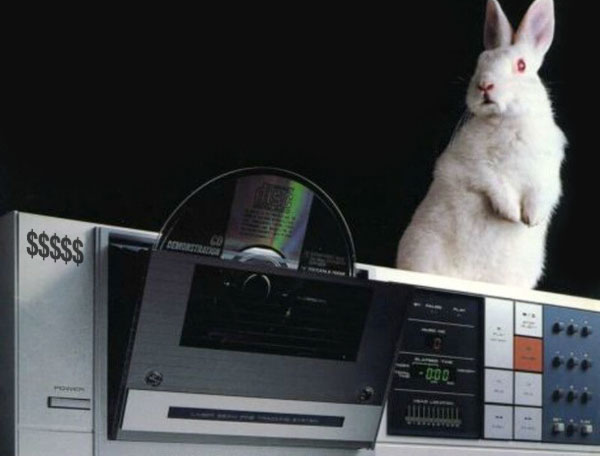
I'm a thirty-year-old puppy doing what I'm told And I'm told there's no more coal for the older engines,"Andy Partridge, "Train Running Low on Soul Coal"
"[We] know the truth of this: We would likely live happily ever after with a system from nearly 60 years ago. An idler-drive turntable, some Marantz electronics, and Quad ESL-57s can be very satisfying. The main improvements to be made are not necessarily in the area of musical enjoyment, but rather boring old reliability."
Nothing Is What I Want

I recently experienced an alarming audiophile episode. John Atkinson wanted to send me BorderPatrol's Digital to Analogue Converter SE, so that I could write the Follow-Up published in the November issue. But he wouldn't tell me anything about Herb Reichert's original review of the product, which had not yet been published. Instead, he said, cryptically, "If this is a 'great' DAC, I'll have to hang up my measurements." I took this to mean Herb liked it, but JA's test rig did not.
Sure, why not? Go ahead and send me the DAC, I thought. I'd love to hear what something covered in audio fur sounds like.
Nowhere to Go?
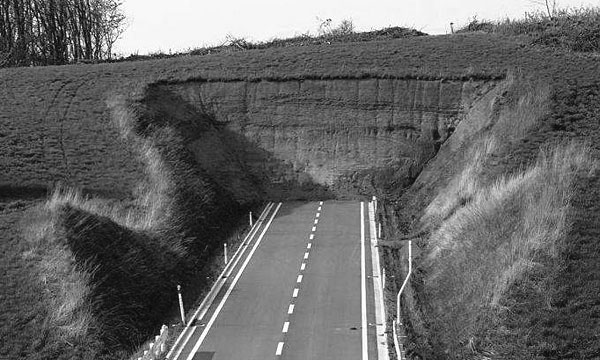
Our mail, in recent months, has brought a number of comments (some of them printed in this issue) from professional audio men who decry the fact that developments in the audio field seem to have come to a screeching halt.
There would seem to be some justification for believing this, too. There hasn't been a new kind of loudspeaker, amplifier, pickup, or tuner for the past five years or so. The professional engineering journals, once loaded with juicy articles about research and developments in music reproduction, are now devoted largely to public-address techniques and new methods for the "creation" of electronic music.
Nude, Not Naked
The keyboard player looked at his watch. It was midnight. "Time for my break," he said. My heart sank.
Observations and Prognostications for 1965
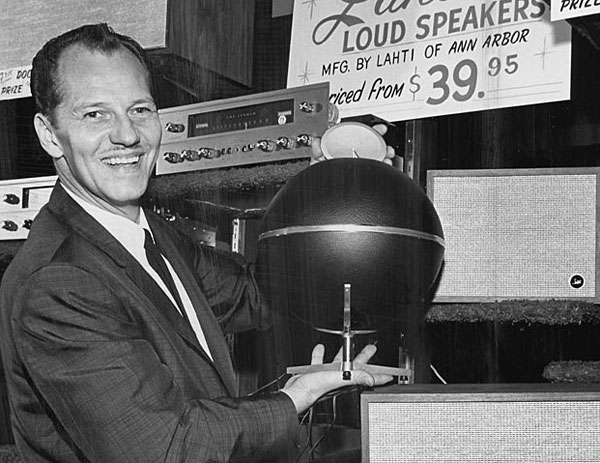
Well, the New York Hi-Fi wingding has come and gone once again, and now is the time when audio editors dutifully adopt the role of oracle, divining the future of high fidelity, and generally sketching out The Big Picture for those of us too blind to see the graffiti on the wall. So, who are we to shirk our duty? Herewith, The Stereophile's audio observations and predictions for 1965.
Occupy Avery Fisher Hall

Stop me if you've heard this: On January 10, at Avery Fisher Hall in New York's Lincoln Center, a performance of Mahler's Symphony 9, led by conductor Alan Gilbert, was stopped in its tracks by the ringing of an iPhone.
It wasn't just any part of the Mahler Ninth: It happened during the exceedingly quiet closing measures of the final movement.
It wasn't just any symphony orchestra: It was the New York Philharmonic, which Gustav Mahler directed during the last two years of his life.
Of Gravity, Clocks, and Audio Dragons
John Atkinson examines the role of myth and magic in high-end audio.