

Us and Them
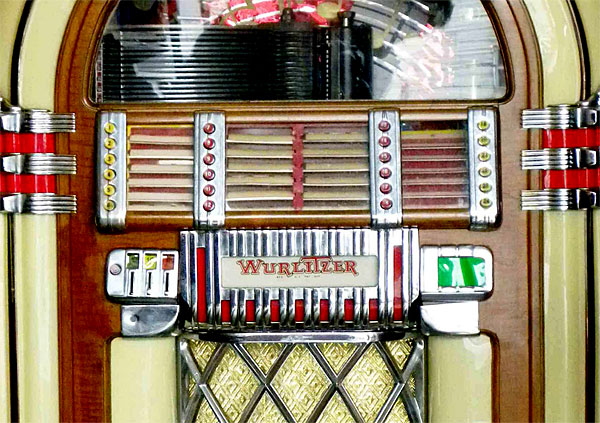
I've known a lot of folks with impressive LP and CD collections who were perfectly content with the sound of the crappiest of hi-fis. This diverse group has included recording engineers, musicians, and owners of record stores. Loving music isn't the same thing as caring about the sound of music, and maybe, in some alternate universe, those folks would-have-been, could-have-been audiophiles. But in this universe, they didn't, and I'm not sure why.
Video Actions & Audio Reactions
To every action there is always opposed an equal reaction.—Sir Isaac Newton, 1687
Vinyl Value
I recently bought a turntable, the first I've owned in about 15 years. I had sold my vinyl collection—a mix of classic rock, early 1980s pop, and the odd jazz or classical LP—when I was in grad school, for economic reasons: I needed the money for rent, or food, or beer, or something. Nor do I know what happened to my old plastic turntable; more than likely, I left it curbside for anyone strolling by who was able to appreciate its value.
Voices to Live For

Every music-loving audiophile has a unique storya story of the first time he or she was grabbed, body and soul, by a first, usually low-budget listen to a 78, LP, CD, open-reel, cassette, or MP3a story that continues today in that audiophile's quest for high-end bliss. For me, it was my desire to move closer to the voices of the singers I most loved.
Wash, Repeat, Don't Rinse; More on Cleaning LPs
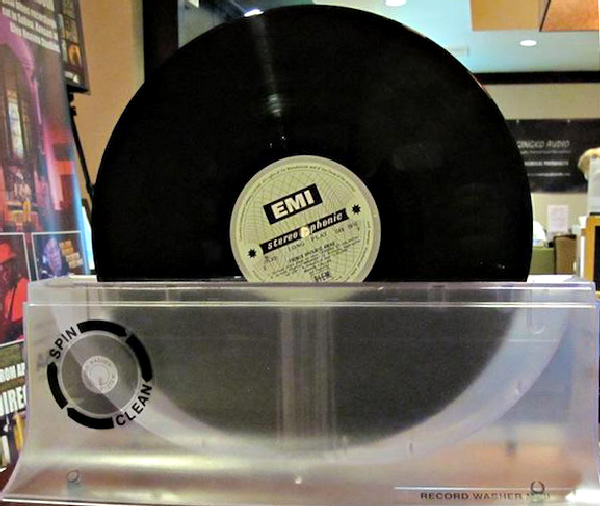
I wrote in the April 2026 issue of Stereophile that when you clean records in an ultrasonic bath, you need to make some decisions. The first is whether it's necessary to use distilled water or whether tap water is good enough . . . The next decision is, should I use a surfactant?
Watching the Detectives
I made myself comfortable. The system—Linn Unidisk universal player, Meridian digital active speakers—was obviously working well: "For unto us a Child is born..." pum pum pum pum...
Watermarking & DVD Conspiracy Theories
I've recently been rereading Mark Lane's and Donald Freed's 1970s screenplay cum novel, Executive Action, which develops the theory that John F. Kennedy was assassinated by a conspiracy between organized crime, expatriate Cuban Batistists, and Eisenhower's "military-industrial complex." Long predating Oliver Stone's JFK, the book is fascinating, convincing stuff, from authors who had done considerable research into what really happened in November 1963. But, like all conspiracy theories, it falls down on the hard rock of reality: the more people and organizations are involved in a conspiracy, the less likelihood there is of anything happening at all, let alone going according to plan.
Watermarking & the SDMI
Mastering engineer Denny Purcell let out a long sigh. "Does anyone in this room believe that any of this is going to do any good?" he asked. Of the eight or nine people—each with decades of experience in the music and/or audio industries—hanging out at Georgetown Masters Studios for SDMI's Phase II listening tests this past October, not one said "Yes." The consensus: the watermarking">http://www.stereophile.com/asweseeit/2002awsi">watermarking issue will probably be dead and forgotten within a year.
Watermarking: the Devil's Work!
I left you last month 104 miles from Santa Fe, New Mexico, heading east on I-40 accompanied by a dog and two cats, with 1946 miles to go to reach Stereophile's new editorial home, New York City. To cut a long story short, I did arrive in New York (covered in dog and cat hair). After a nerve-wracking delay, so did our furniture. We will be living out of boxes for a while chez Atkinson, but that's a mere inconvenience compared with the Great Adventure of setting up a new listening room.
We Are What We Are
As I write these words, it is exactly 15 years to the day since I left the English magazine Hi-Fi News (then Hi-Fi News & Record Review) to take">http://www.stereophile.com//asweseeit/352/">take the editorial helm of Stereophile. What has driven my editing of both magazines (and, Carol Baugh, p.10, I certainly do "edit" them) has been the view that the traditional model of a magazine—that it dispense and the readers receive wisdom—is fundamentally wrong. Instead, I strongly believe that a magazine's editors, writers, and readers are involved in an ongoing dialog about their shared enthusiasms. Stereophile's involvement in Shows stems from this belief, and it is in this light that its "Letters" column should be regarded as the heart of each issue.