

Audio Research Reference 5 SE line preamplifier
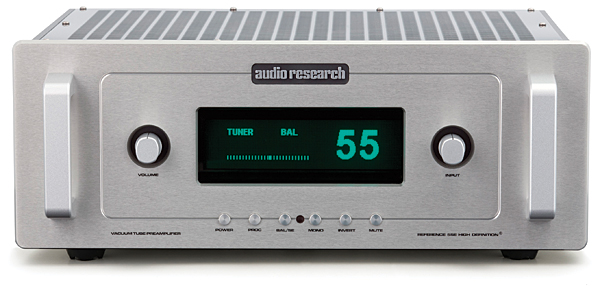
I've heard a lot of great audio components over the years, but even in that steady stream of excellence, a few have stood out as something special. These are the products that, in their day, set a new standard for performance, and many of them are ones I wish I'd hung on to. Among these products are three preamps from Audio Research: the SP3A, the SP6B, and the SP10 (footnote 1). I know I'm not alone in viewing these models as classics.
Audio Research Reference 6 line preamplifier
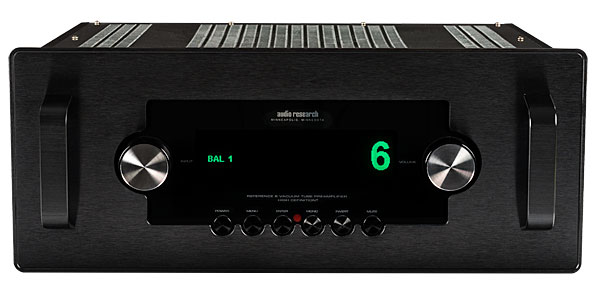
The last time I reviewed an Audio Research componentit was the VTM200 monoblock amplifier in January 2001my hair was mostly dark brown. The wait since has been not of my choosing, but that's now flux under the circuit board. Since then, much has happened to both me and to the Audio Research Corporation, a long-lived company for which the descriptor "legendary" is well deserved.
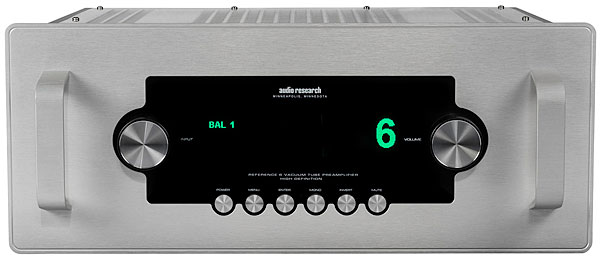
Audio Research Reference 6SE line preamplifier
"As long as you're happy."
That's the line long uttered by the most dreaded members of my family, and their friends, whenever they tried to pry into my personal affairs. Often the last word, "happy," was uttered with a downward cadence and accompanied by a shrug.
Then came the kicker. "You are happy, aren't you?" said with eyes boring into my soul. "Well, as long as you're happy."
Audio Research Reference Two preamplifier
Audio Research's first 21st-century, audiophile-quality line-stage preamplifier combines retro-tech vacuum-tube amplification and power-supply circuitry with innovative, remote-controlled gain, balance, tape monitoring, and signal routing. The price is also 21st-century: $9995. As in ARC's Reference phono section, the Reference Two's pair of vertically mounted circuit boards results in a single, relatively tall chassis.
Audio Research SDP1 multichannel music processor
For those of us who have succumbed to the enticements of surround-sound for music, Audio Research's SDP1 is both vindication and cause for rejoicing: vindication because surround-sound's acceptance by such an ultraconservative, uncompromising company as ARC will give it a respectability in the high-end community that it never enjoyed before, and cause for rejoicing because someone has finally done music surround right.
Audio Research SP-10 preamplifier
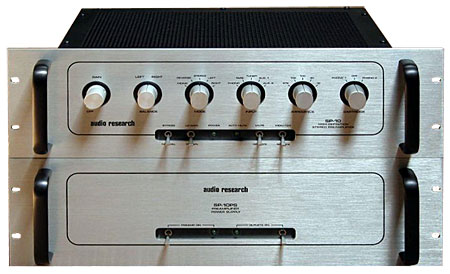
It says something for the state of technology that, after a quarter of a century, there still is no authoritative explanation for why so many high-end audiophiles prefer tubes. Tubes not only refuse to die, they seem to be Coming back. The number of US and British firms making high-end tube equipment is growing steadily, and an increasing number of comparatively low-priced units are becoming available. There is a large market in renovated or used tube equipment—I must confess to owning a converted McIntosh MR-71 tuner—and there are even some indications that tube manufacturers are improving their reliability, although getting good tubes remains a problem.
Audio Research SP-11 preamplifier
If there is indeed a renaissance of tubes in high-end audio—and it is clear there is—much of the blame lies with Audio Research Corporation.
Audio Research SP-3 preamplifier
We thought Audio Research's previous-model SP-2C (footnote 1) was excellent, but this is even better—the closest thing available, in fact, to the ideal straight wire with gain. Our sample had a minor glitch—there was a slight "plop" if you rotated the tone controls rapidly—but we could find nothing else about it to criticize. Currently, by far the best preamplifier than money can buy. And would you believe it uses tubes (at reduced heater voltage, for extended life and cooler operation)!
Audio Research SP14 preamplifier
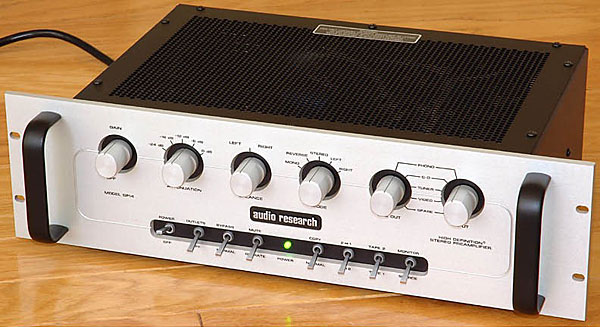
The name "Audio Research" will be familiar to many readers of this magazine. It belongs on the list of that select group of manufacturers who continue to offer the audiophile and music lover equipment which enables him or her to truly enjoy the muse. With equipment of this caliber, one is no longer caught up in the anxiety-inducing process of listening to (evaluating) the equipment used in the presentation of the music. Instead, the listener can focus attention on the much more important message uncovered in the music via the performance and conveyed through the network of transducers, cables, tubes or FETs, more cables, more tubes or FETs, and more transducers, to the brain. If this process has been successful and our sensitivities heightened, our souls will be touched.
Audio Research SP20 preamplifier
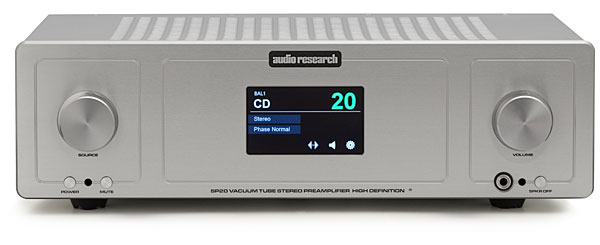
When I began my journey into audiophilia, I was in awe of the Audio Research Corporation's flagship SP preamplifiers. As I sat there in the early 1980s with my modest Apt Holman preamp, all of my friends had ARC SP6Bs. By today's standards, the SP6B was colored, did not portray a realistic soundstage, and lacked sufficient gain to amplify the low-output moving-coil cartridges of the day. But it had an intimacy in the midrange that was intoxicating. (Still considered a classic design by many, the SP6B's price on the used market has remained virtually unchanged for 30 years.) Then, still in the early '80s, ARC raised the bar with the SP-10 ($3700). It had 15 tubes and an outboard power supply, and set a new standard for delicacy, drama, and authority. (John Atkinson still has the SP10 he bought in 1984.)