

Aesthetix Saturn Calypso line preamplifier
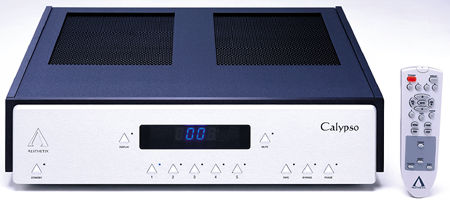
A straight wire with gain? That's what a line stage is supposed to provide, but few in my experience actually accomplish it, and I'm not sure that most audiophiles would really want it that way. Some want a bit of tightening and brightening, while some prefer a bit of added warmth and richness. But whatever the preference, none of us wants too much of a good thing—the tighter, brighter line stages better not sound etchy and hard, and the warmer, richer ones better not sound thick and plodding.
Ampsandsound Yellowstone preamplifier
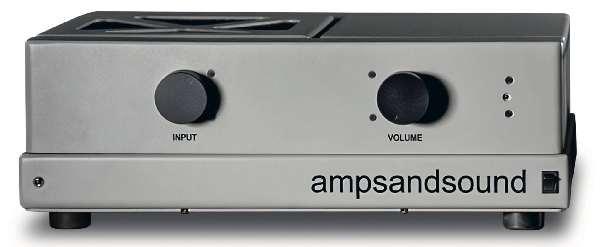
At hi-fi shows and across social media, Ampsandsound's Justin Weber projects a sense of upbeat. Positive, placid, disarmingly pleasant, he looks less like a high-end audio manufacturer than a big-hearted camp counselor about to gather berries and butterflies. And honestly? That's not far from the truth.
Audible Illusions Modulus 3A preamplifier
What a thankless task! No, not reviewing audio equipment (though the case could be made). I'm talking about preamplification in the digital age: who needs it? The EAD DSP 9000 MK3 digital processor I'm using includes an ingenious full-resolution digital-domain volume control accessible by remote control.
Audible Illusions Modulus preamplifier
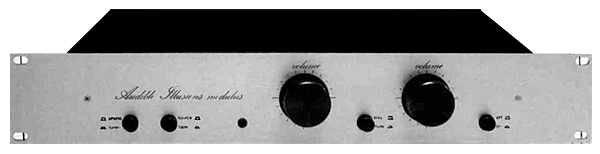
Once upon a time, all audio equipment used vacuum tubes. In recent years, however, tubes have become the exclusive province of super high-end audio. It is more expensive to accomplish any particular task with tubes than with transistors, and few manufacturers (with the exception of Conrad-Johnson) seemed willing until now to refine their techniques and pare back their budgets to make tube components more affordable.
Audio By Van Alstine Super-PAS Three preamplifier
If I had to pick one amplifier designer as having had the greatest continuing influence on the high-end market, as much as I admire John Curl, Audio Research's Bill">http://www.stereophile.com/interviews/894z">Bill Johnson, and Krell's Dan">http://www.stereophile.com/interviews/1203dagostino">Dan D'Agostino, the name of David">http://www.stereophile.com/news/11661">David Hafler inexorably springs to mind. Not because he challenged the very frontiers of hi-fi sound, but because he combined a fertile, creative mind (footnote 1) with a need to bring good sound to as wide an audience as possible, both by making his products relatively inexpensive and by making them available as kits. (The Major Armstrong Foundation apparently agrees with me—they presented David with their "Man of High Fidelity" award at the summer 1988 CES.) It remains to be seen if the Hafler company will continue in this tradition, now that David has sold it to Rockford-Fosgate. But there is no doubt that many audiophiles were first made aware of the possibilities of high-end sound by Hafler products in the late '70s, and by Dynaco in the '60s.
Audio Note M2 Balanced Phono preamplifier
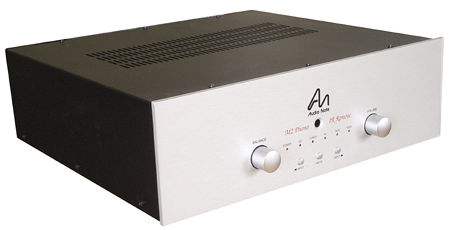
The first time I heard an Audio Note preamp was seven or eight years ago, when I sampled their entry-level M1—a refreshingly musical thing that brought the same kind of color and drama to preamplification that Audio Note's more famous products brought to the driving of speakers. And the M1 cost only $1250 at the time, with phono stage. (Newcomers, please don't wince: That's awfully cheap for what it was.)
Audio Research LS5 preamplifier & BL2 input controller
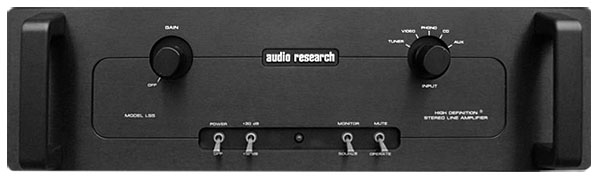
From the front, the LS5 looks identical to Audio Research's popular LS2: two knobs on either side of the Audio Research nameplate, and a row of toggle switches along the bottom. But that's where the similarities end; the LS5 is a completely different animal from the LS2, or even the balanced LS2B.
Audio Research LS8 line preamplifier
 While high-priced equipment can easily acquire stature on grounds of outright performance and physical appearance, we critics have more admiration for genuine achievement at lower price levels. One such product was the all-triode SP8 preamplifier from Audio Research, launched back in 1982 and priced at $1400. This classically tasteful preamplifier came equipped with a medium-sensitivity phono equalizer and the usual tape and line inputs.
Audio Research Reference 1 preamplifier & VT200 power amplifier
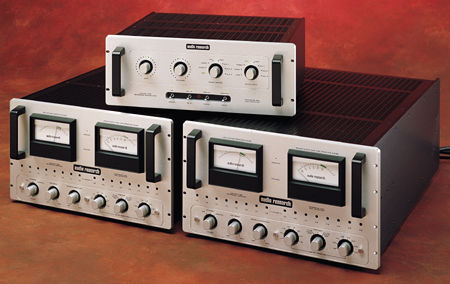
They say you never forget your first time. For me, it was an Audio Research SP-6B that had been heavily modified by Analogique in NYC—which meant, among other things, that yellow capacitors shunted other yellow capacitors all the way up to the top plate. That first taste of the High End—prior to that, you might say my face had been pressed against the window—was definitely love at first listen. That SP-6B was warm yet detailed, and I ended up building a system around it that at least one friend described as a huge musical wet kiss.
Audio Research Reference 3 line preamplifier
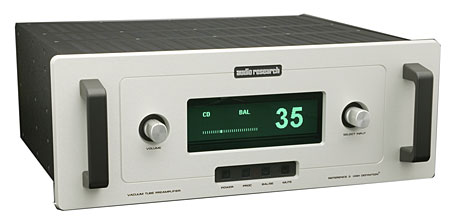
In any category of product or service, there is a gold standard—one company that epitomizes the best in its field of endeavor. Consider the Rolex watch, the Ferrari sports car, the Steinway piano, the Dunhill pipe. All of these artisanal manufacturers have spent decades, even centuries, earning their names' cachet with their histories of consistent excellence. While high-end audio boasts no names with a 60-year pedigree, such as Ferrari's—much less Steinway & Sons' +150 years—there is one firm whose storied past stretches back to the very emergence of the concept of high-end audio itself: Audio Research Corporation.