

Listening #123

Let's say you're lucky enough, or just plain old enough, to have bought a copy of Truman Capote's In Cold Blood on January 12, 1966. Let's say you're lucky enough or just plain smart enough to have held on to it and kept it in perfect shape for the past 47 years. And let's say it was one of the first 500 copies, which the author signed. If so, congratulations: For once in your life, even the smuggest collector can't claim that his copy of a book is "better" or more valuable than yours.
Listening #34

What is best in music is not to be found in the notes.—Gustav Mahler
Listening #45
"The public will put up with anything except boredom."—Giuseppe Verdi
Listening #68
Snobbery is a disease of the imagination.—Peter Straub, "Little Red's Tango"
Listening #70

Stereo Review, the world's most popular audio magazine during most of its time on Earth, was a common target of derision from the hobby's so-called high-end press, not least of all from me. We criticized its nerdy, boring prose, its uniformly positive reviews, and, most of all, its shameless pimping of the notions that measurements reveal all there is to know about a component, and that all competently engineered components sound equally fine.
Listening #81
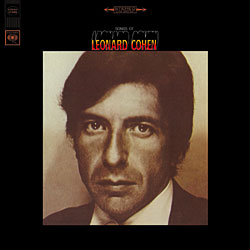
For an artform in which sound is everything, popular music has been blessed with strangely little poetry: There may be no other genre where high-mindedness falls with such a thud. Leonard Cohen remains the most striking exception, not just for the genuine seriousness of his music or the adulation of his audience, but for the ability of the former to survive the latter.
Listening #9
In the town where I grew up there were two places to buy records: a family-owned department store and the local Woolworth's, both long gone. The first record I ever bought, the 45rpm single of Roger Miller's "King of the Road," came from the former in 1965. I was 11 years old.
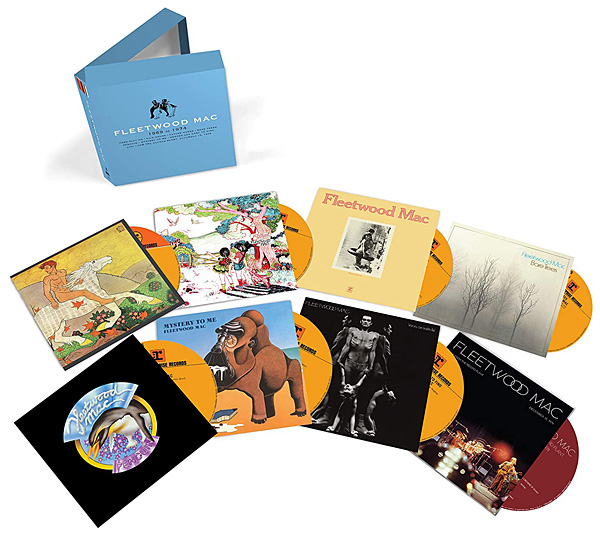
Looking Back at Fleetwood Mac
I've just recently finished reading guitarist/vocalist Walter Lure's autobiography, To Hell and Back. Walter has a great story about his days in Johnny Thunders's Heartbreakers and his own Waldos. Until he died in late August, you could still hear him playing with the Waldos and running periodic tributes to Johnny. But he also took some space to write about his first band, a hard-rock dance band called Bloodbath that pounded the risers in the North Bronx at the dawn of the 1970s.
Lost Nights, Found Solos: The Penthouse Tapes
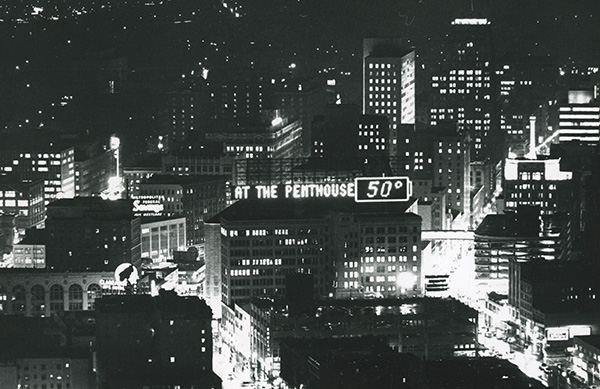
The Penthouse jazz club was on First and Cherry in Seattle. It had a seven-year run from 1962 to 1968 as one of the premier jazz venues on the West Coast. The site is a parking lot now. Yet the Penthouse lives. This is the story of why.
Loudon Wainwright III: a Biography in Song
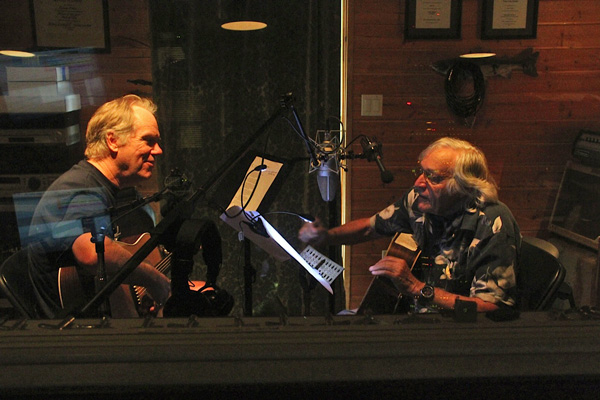
Photo: Aiyana Elliott
Even when Loudon Wainwright III (left in photo with Ramblin' Jack Elliot) was a young man he was writing autobiographical songs, and his old themes of family, sex, and death resonate more deeply on his new record, Older Than My Old Man Now. He usually performs solo, armed with just an acoustic guitar or a banjo, but most of his recordings present more heavily produced versions of LWIII's music. When I chatted with LWIII in late April I wanted to explore that dichotomy and how those transformations take place.