

MBL Noble Line N11 line preamplifier
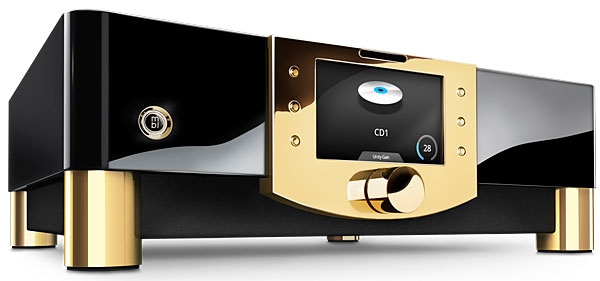
During the four years that I've reviewed for Stereophile, I've had the privilege of evaluating products from some of the world's best-known audiophile companies: Audio Research, Bel Canto, CH Precision, dCS, D'Agostino, Dynaudio, EMM Labs, Jadis, Krell, Nordost, and Wilson, among others. But one long-standing manufacturer whose exhibits at audio shows invariably inspire ecstatic reports, Germany's MBL, has remained outside my purview.
McCormack Line Drive TLC-1 preamplifier
A truly great preamplifier lets everything through, both music and distortion, but with such generosity that neither...is cramped and narrow.—Larry Archibald(footnote 1)
McIntosh C200 preamplifier
In August, I reviewedhttp://www.stereophile.com/amplificationreviews/804mcintosh">reviewed; McIntosh's MC501 monoblock power amplifier. In terms of what I'd thought was possible from Mac, this was a revelation. Once memories and lurking preconceptions had been set aside and the amps installed in my system, the MC501 easily established itself as among the finest overall performers I have ever reviewed.
Music First Audio Baby Reference passive preamplifier
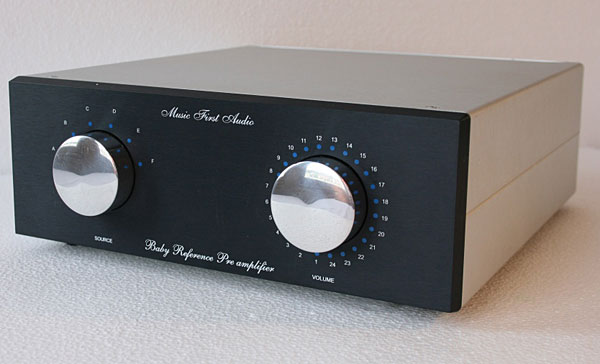
In April 1987, Anthony H. Cordesman had mixed feelings about the Mod Squad Passive Line Drive System Control Center. (Read his review here.) Introduced in 1984, the Line Drive offered volume and balance controls, five line-level inputs, and switching and monitoring for two tape decks. You didn't plug it into the wall; it provided no gain. Was it even a proper preamp? (footnote 1)
AHC demurred. "I'm not sure that I'm ready to advise anyone to take the risk of not buying a unit with a top-quality phono stage, no matter how well CD or DAT perform," he concluded, between commenting on Middle East wars.
Myryad MDP 500 preamplifier-processor
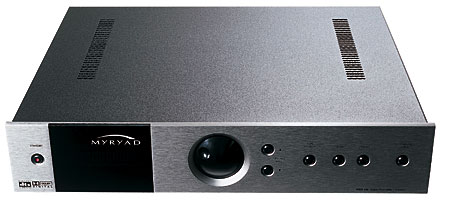
In my February">http://www.stereophile.com/hirezplayers/201">February 2000 review of Meridian's multi-talented, multichannel, multi-kilobuck Digital Theatre system, I fumed about the lack of a medium for discrete multichannel music. Even more loudly, I railed against the irresponsible mastering of many Dolby Digital and DTS discs, which place the listener in the middle of an ensemble and swirl the voices around his or her head with little concern for musical or artistic coherence.
NAD 118 digital preamplifier
Tone controls? I ripped them out of my Dyna PAS-3! And that was the last time I had tone controls. As a card-carrying audiophile, I wanted just what the engineer had inscribed on the recording, with as little change as possible (read: high fidelity).
NAD Monitor Series 1300 preamplifier
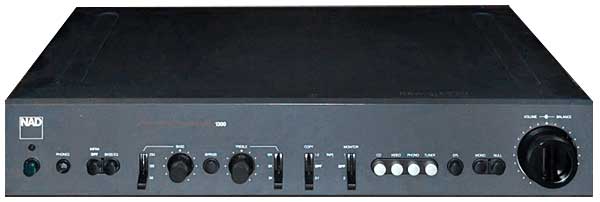
By far the most complicated of the three preamps i review in this issue in terms of facilities offered, NAD's "Monitor Series" 1300 ($398) provides two buffered tape loops, an external processor loop (which can also be used as a third tape-recorder loop), a headphone output, a "null" switch, switchable bass equalization to extend the low-frequency range of small loudspeakers, and treble and bass controls, each with a choice of three turnover frequencies: 3kHz, 6kHz, 12kHz, and 50Hz, 125Hz, 250Hz, respectively.
Naim NAC 552 preamplifier
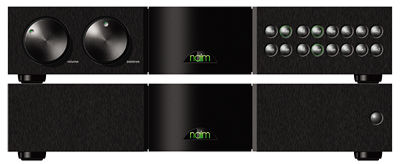
There's nothing groundbreaking about the technology included in Naim's new $22,400, two-box, remote-controllable, top-of-the-line NAC 552 preamplifier. Still, the inclusion of two sets of RCA input jacks is a departure from Naim's tradition of DIN jacks, and the NAC 552's programmability is unusual for a high-end two-channel audio product. And you can order RCA output jacks at no extra cost, which is how my review sample was configured.
Naim NSC 222 streaming preamplifier & NPX 300 power supply
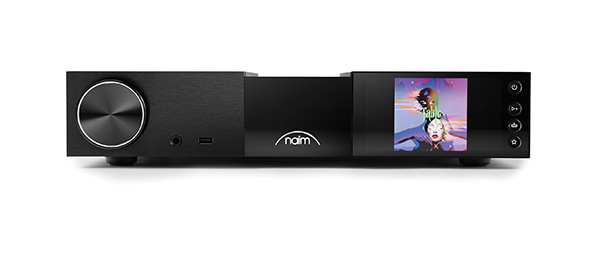
Naim has comprehensively reimagined its Classic Series, which has been around for some 20 years with improvements along the way. Included in the new range of products is the 200 series, comprised of two products: the NAP 250 power amplifier, which I reviewed in the November 2023 issue of Stereophile, and the NSC 222 streaming preamplifier ($8999), which is reviewed here. A third component in the New Classic series, the NPX 300 power supply (also $8999), which is intended to be paired with the NSC 222 and other Naim components, is also considered in this review.
Parasound Halo JC 2 line preamplifier
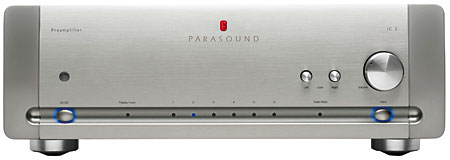
My very first review of a preamplifier, for British magazine Hi-Fi News & Record Review in May 1984, was of the Audio Research SP-10. In my opening to that review, I wrote that, "more than any other component," a preamplifier "should approximate to the late Peter">http://www.stereophile.com/news/121503walker">Peter Walker's 'Straight Wire with Gain.'" By this I meant that a preamplifier should not be in the business of effecting dramatic changes, and in any case, dramatic changes are not the kind that prove to be of lasting value. However, I also wrote back then that what I became increasingly aware of while using the SP-10 "was the fact that 'neutrality' is a positive virtue rather than just an absence of aberration."