

Spendor S3/5se loudspeaker
Transistors can be made to sound like tubes, digital can be made to sound like analog, and cables can be made to sound like no cables. You'd almost think we live in an age of miracles.
Spendor SA1 loudspeaker
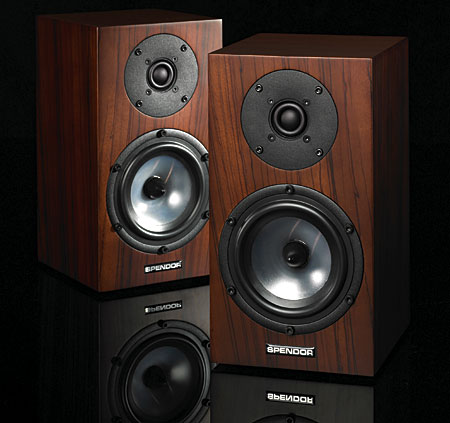
Two years ago, I embarked on a series of reviews of mostly state-of-the-art, mostly full-range floorstanding speakers: the Sonus">http://www.stereophile.com/floorloudspeakers/1207sonus">Sonus Faber Cremona Elipsa (December 2007), KEF">http://www.stereophile.com/floorloudspeakers/208kef">KEF Reference 207/2 (February 2008), PSB">http://www.stereophile.com/floorloudspeakers/408psb">PSB Synchrony One (April 2008), Magico">http://www.stereophile.com/floorloudspeakers/508mag">Magico V3 (May 2008), Avalon">http://www.stereophile.com/floorloudspeakers/708ava">Avalon NP Evolution 2.0 and Epos">http://www.stereophile.com/floorloudspeakers/708ava/index1.html">Epos M16i (July 2008), Esoteric">http://www.stereophile.com/floorloudspeakers/808eso">Esoteric MG-20 (August 2008), Dynaudio">http://www.stereophile.com/floorloudspeakers/dynaudio_sapphire_loudspea… Sapphire (January 2009), and Revel">http://www.stereophile.com/floorloudspeakers/608revel/index6.html">Revel Ultima Salon2 (March 2009). I had intended to intersperse those reports with coverage of some high-performance minispeakers, but for various reasons that never happened, so in the next few issues I'll be making up that lost ground, beginning with a promising contender from the UK, the Spendor SA1.
Spica SC-50i loudspeaker
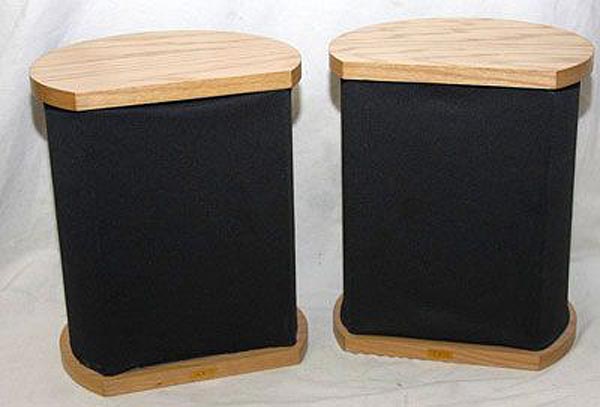
This is a speaker we've been fairly intimate with over quite a period of time. Designed by John Bau, the SC-50i started out three years ago as an inexpensive speaker system ($330/pair) not sold through dealers.
One of the factors allowing it to cost so little was the clever adaptation of cardboard tubes, normally used as forms for pouring concrete pillars, for use as speaker enclosures. They have a number of advantages, other than low cost: their circular form helps eliminate resonance of the back wave within the enclosure; the material is rigid because of its shape, and is non-resonant due to its construction.
Spica TC-50 loudspeaker
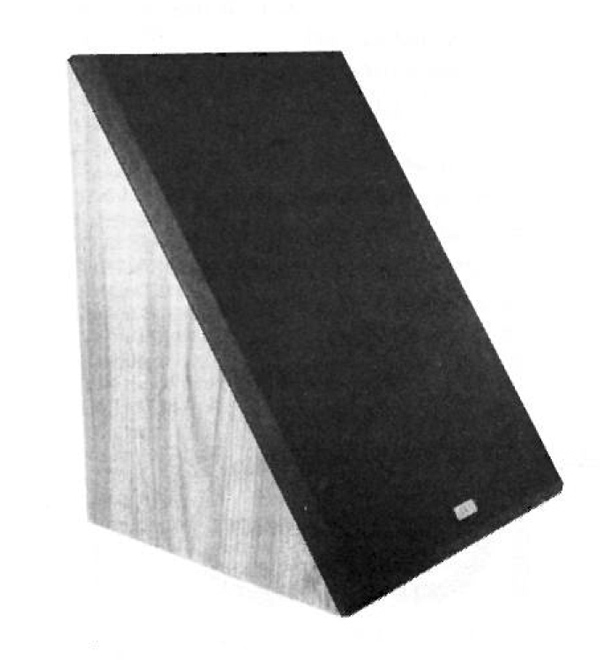
High-quality, low-cost loudspeaker systems are not an everyday blessing. The Rogers LS3/5a has survived for more than a decade precisely because so few US manufacturers sought musical accuracy as distinguished from high output and powerful bass. The economics of loudspeaker manufacture also don't lend themselves to economy. The cost of woodwork is driving the price of speakers up almost as fast as the cost of sheet-metal work is escalating the price of electronics.
Spica TC-60 loudspeaker
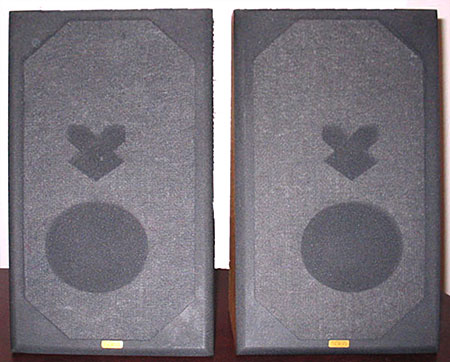
As far as I can tell, Santa Fe–based speaker engineer John">http://www.stereophile.com/interviews/694">John Bau had designed but four commercial loudspeakers before the TC-60 was launched at the 1994 Winter CES: in order of appearance, they were the Spica SC50i (1980), the TC-50http://www.stereophile.com/standloudspeakers/446">TC-50; (1983), the Angelushttp://www.stereophile.com/floorloudspeakers/693">Angelus; (1987), and the SC-30 (1989). None were expensive, and all garnered much praise, both in Stereophile's pages and elsewhere.
Stenheim Alumine loudspeaker
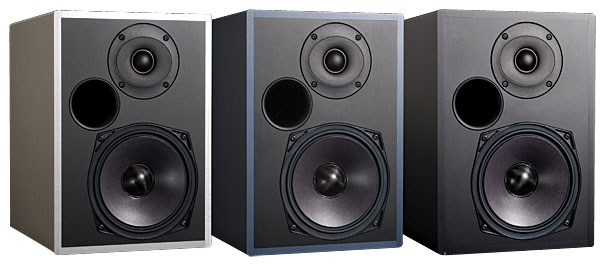
The sound of the Stenheim Alumine loudspeakerits openness, transparency, and freedom from temporal distortions, not to mention its good bass extension for such a small enclosurereminded me at once of my favorite small loudspeaker from the late 1980s, the Acoustic Energy AE1. On reflection, the comparison is extraordinary: The two products are as different as night and day, the AE1 being a wooden loudspeaker with a metal-cone woofer, the Alumine a metal loudspeaker with a pulp-cone woofer. I suppose one can skin a catfish by moving the knife or by moving the fish.
Stirling Broadcast BBC LS3/6 loudspeaker
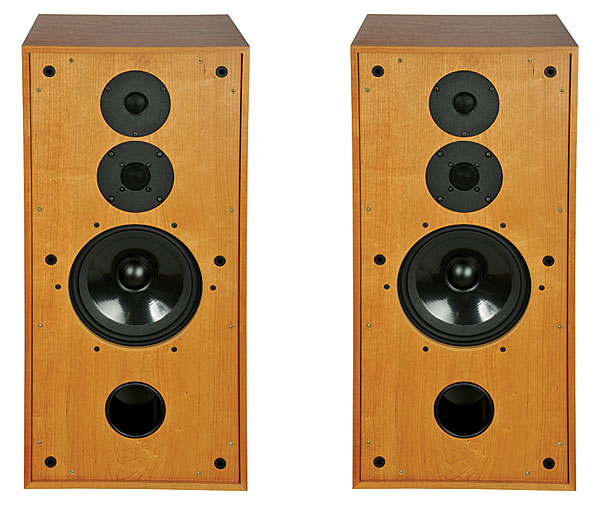
I know someone who bought, for his own kitchen, a stove intended for the restaurant trade, simply because it enhances his enjoyment of cooking. Another friend, a motoring enthusiast, has equipped his garage with a brace of tools, including a hydraulic lift, that would be the envy of some humbler repair shops. Yet another friend indulges her enthusiasm for ceramics with a potter's wheel and kiln that one might find in a well-endowed art school. Among the most serious consumers, it seems, the watchword is professional; odd, then, that professional-quality monitors don't account for an even bigger chunk of the domestic loudspeaker market.
SVS Prime Pro wireless active loudspeaker
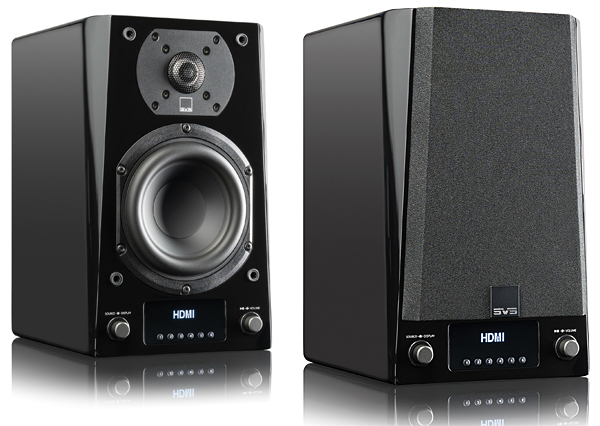
Patches was the first to exit the car, sporting a nose like an overripe tomato. Amid the sawdust-andtiger-dung smell that wafted through the bigtop, he nimbly extracted himself from the multicolored Mini Cooper, face beaming with vows of slapstick and mischief. Patches gestured behind him, to Chuckles, who emerged with floppy shoes the length of baguettes. Next to squeeze out of the Mini were Bozo, Klutzy, Wiggle, Dinky, Cletus, Peewee, Pinhead, Joey, Sparkles, and Poppyall wearing baggy pants in shouty hues and huge smiles applied with grease paint. I shuddered with delight. I was 8.
SVS Ultra Evolution Bookshelf loudspeaker & SB-3000 R|Evolution subwoofer
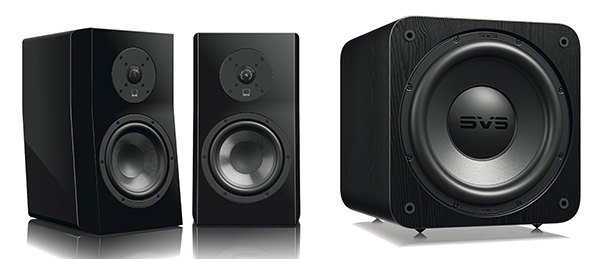
Those of us who like to listen to music at room-filling scale may worry when we sit between a pair of standmount speakers. Sure, many of us have heard remarkably large and expansive sound from relatively smallish boxes . . . But it's always a crapshoot. Will that little two-way speaker excite my blood to musical ecstasy or boil it in frustration?
TAD CE1TX loudspeaker
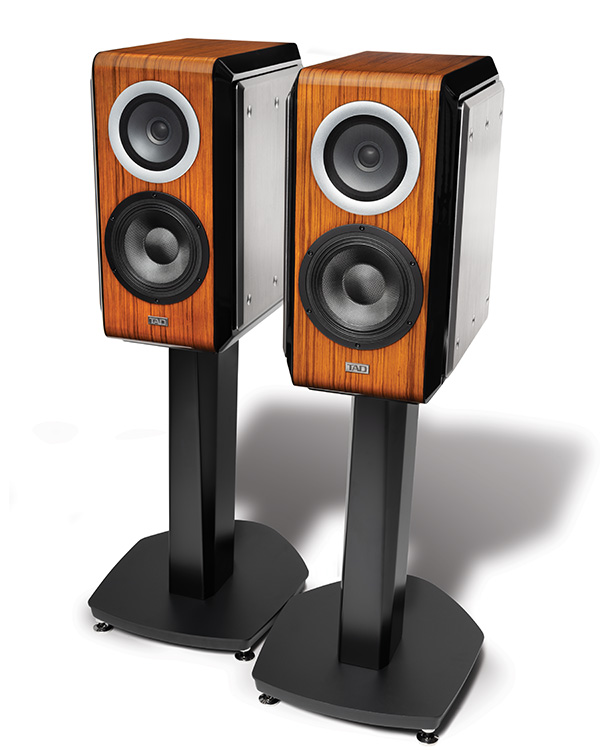
The most money I've ever spent on a pair of loudspeakers was back in the early 1990s, when I bought a pair of used TAD TH-4001 wooden horns and their associated TD-4001 compression drivers. The TAD horn's smooth, micro-resolved response was a refinement upgrade from my multicell Altec horns; plus, the TADs' French-polished wood looked radically less industrial than the soldered-tin, tar-filled 1005/288C horns they replaced. None of my horn-fanatic friends had anything sonically or aesthetically comparable, and all of them were envious. I didn't keep the TADs long, because the friend who admired them most made me a very "friendly" offer.
That was my first experience with Japanese loudspeaker design, and it exposed me to a level of engineering precision and fine craftmanship I had not yet encountered in American-made speakers.