Audiophiles know there is no better reason to travel abroad than to attend a hi fi show in a foreign city. I'm only half kidding. With dozens of shows, most open to the public and scattered across every continent, what better way to see the world?
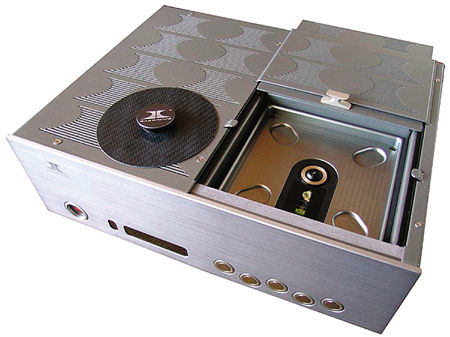
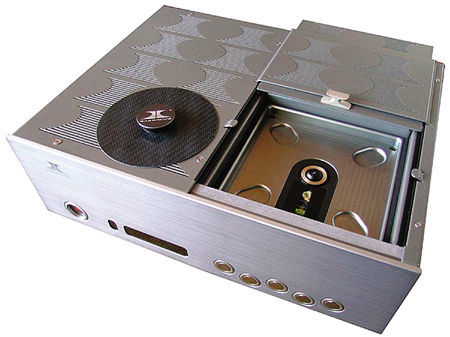
I've encountered a number of audio products over the years whose thoughtful design and intricate craftsmanship brought to mind the expression "built like a Swiss watch." As often as I'd thought or even written that phrase, however, I don't think I'd ever stopped to seriously consider what an audio component might be like if actually built by the nation that produces Rolex and Breitling wristwatches.
I've encountered a number of audio products over the years whose thoughtful design and intricate craftsmanship brought to mind the expression "built like a Swiss watch." As often as I'd thought or even written that phrase, however, I don't think I'd ever stopped to seriously consider what an audio component might be like if actually built by the nation that produces Rolex and Breitling wristwatches.
I've encountered a number of audio products over the years whose thoughtful design and intricate craftsmanship brought to mind the expression "built like a Swiss watch." As often as I'd thought or even written that phrase, however, I don't think I'd ever stopped to seriously consider what an audio component might be like if actually built by the nation that produces Rolex and Breitling wristwatches.
I've encountered a number of audio products over the years whose thoughtful design and intricate craftsmanship brought to mind the expression "built like a Swiss watch." As often as I'd thought or even written that phrase, however, I don't think I'd ever stopped to seriously consider what an audio component might be like if actually built by the nation that produces Rolex and Breitling wristwatches.
I've encountered a number of audio products over the years whose thoughtful design and intricate craftsmanship brought to mind the expression "built like a Swiss watch." As often as I'd thought or even written that phrase, however, I don't think I'd ever stopped to seriously consider what an audio component might be like if actually built by the nation that produces Rolex and Breitling wristwatches.
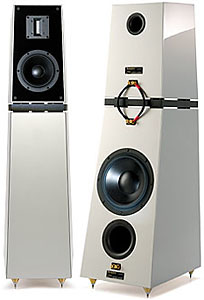
Over the past year or so, a parade of expensive loudspeakers has passed through my listening room (footnote 1), each claimed by its manufacturer to deliver the real musical deal. Like the people who designed them, these speakers have come in all shapes, sizes, and personalities. While the designer of every one of these speakers has claimed "accuracy" and "transparency" as his goal, the truth is, <I>any</I> concoction of pulsing cones, ribbons, sheets of Mylar, or whatever that's bolted into or on top of a box makes music because it is a musical instrument. How could it be otherwise, when all of these accomplished and expensive loudspeakers have sounded very different from one another, and made me <I> feel</I> different while listening to them?