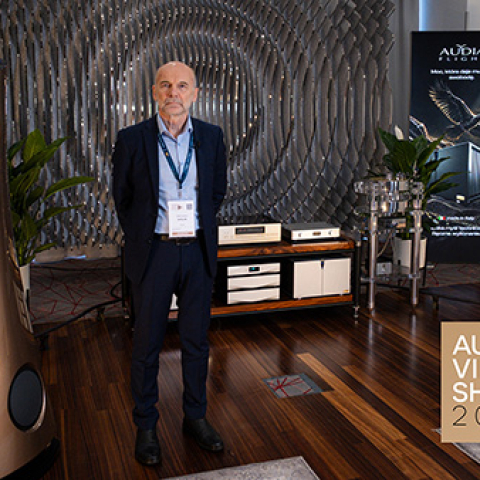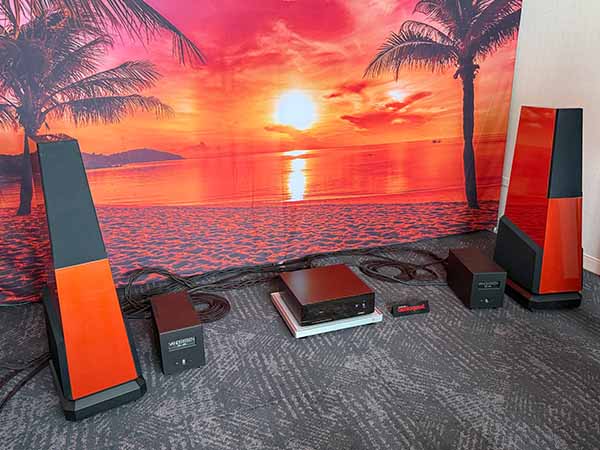
Richard Vandersteen was in a fine mood at AXPONA 2026, and why not? The Vandersteen system in the next room sang—and when I caught up with him, he was contemplating both his future and his past, smiling. His four children all work for the company, he told me, and he still loves listening to music—preferably with his wife Eneke, who is golden-eared enough to remark that their home stereo sounds "unexciting" when her spouse swaps in class-D amps without telling her.
In the near future, he said excitedly, Vandersteen Audio may develop a statement stereo system without regard to cost. Not a bad way to cap a nearly 50-year career in high-end sound.
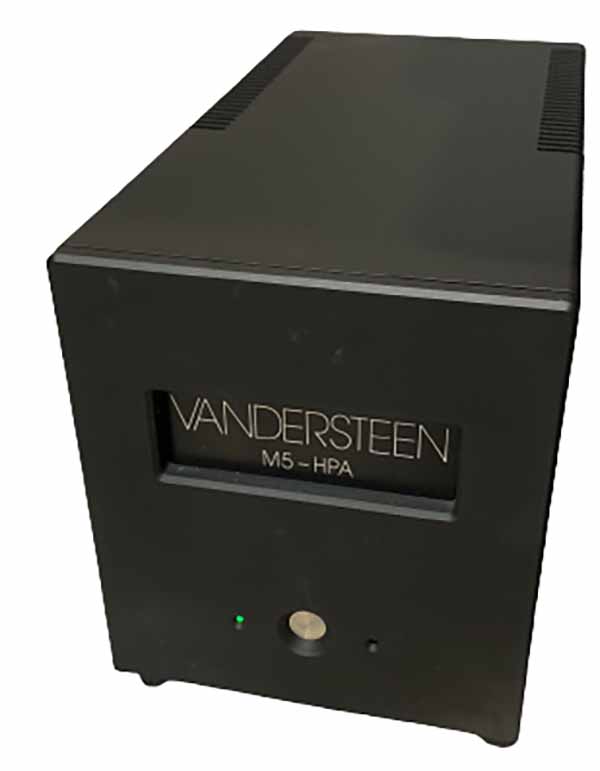 Next door, in room 1434, Ultra Fidelis—a prominent Wisconsin retailer—had put together a system built around Vandersteen Kento loudspeakers finished in a lovely burnt sienna (think dark orange). Powering those Kento speakers ($47,000/pair) were Vandersteen M5-HPA monoblocks ($21,000/pair), with a Vandersteen L5-ACC Audio Control Center ($15,000) doing preamp duty. It was the L5's debut as a production model, following previous outings as a prototype.
The system's analog front end consisted of an AMG Viella Forte turntable with a 12J Turbo tonearm ($35,000 for the combo), a Lyra Atlas Lambda MC phono cartridge ($14,500), and an Audio Research Reference Phono 3SE phono preamp ($22,500). An Aurender N30SA server/streamer ($27,500) and an Audio Research DAC9 DAC ($12,000) were on digital duty. Top-shelf AudioQuest cables did the rest.
Next door, in room 1434, Ultra Fidelis—a prominent Wisconsin retailer—had put together a system built around Vandersteen Kento loudspeakers finished in a lovely burnt sienna (think dark orange). Powering those Kento speakers ($47,000/pair) were Vandersteen M5-HPA monoblocks ($21,000/pair), with a Vandersteen L5-ACC Audio Control Center ($15,000) doing preamp duty. It was the L5's debut as a production model, following previous outings as a prototype.
The system's analog front end consisted of an AMG Viella Forte turntable with a 12J Turbo tonearm ($35,000 for the combo), a Lyra Atlas Lambda MC phono cartridge ($14,500), and an Audio Research Reference Phono 3SE phono preamp ($22,500). An Aurender N30SA server/streamer ($27,500) and an Audio Research DAC9 DAC ($12,000) were on digital duty. Top-shelf AudioQuest cables did the rest.
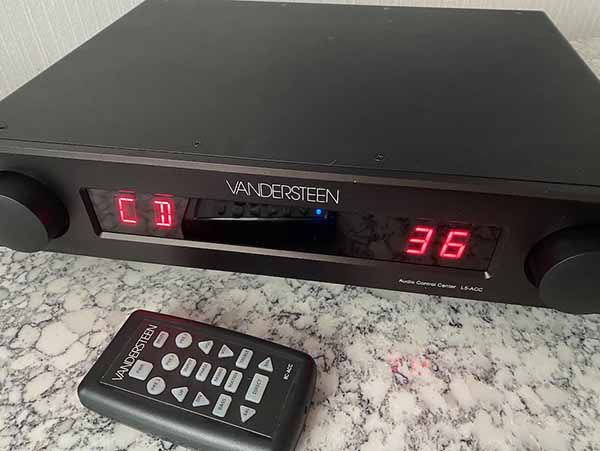 I learned that there's a lot of non-DSP adjustability in the current crop of Vandersteen products. The M5-HPA's have selectable high-pass settings, so that bass below the chosen frequency point is sent to the Kentos' internal 400-watt powered subwoofers. This configuration allows the main amplifiers to operate with greater headroom and less thermal stress.
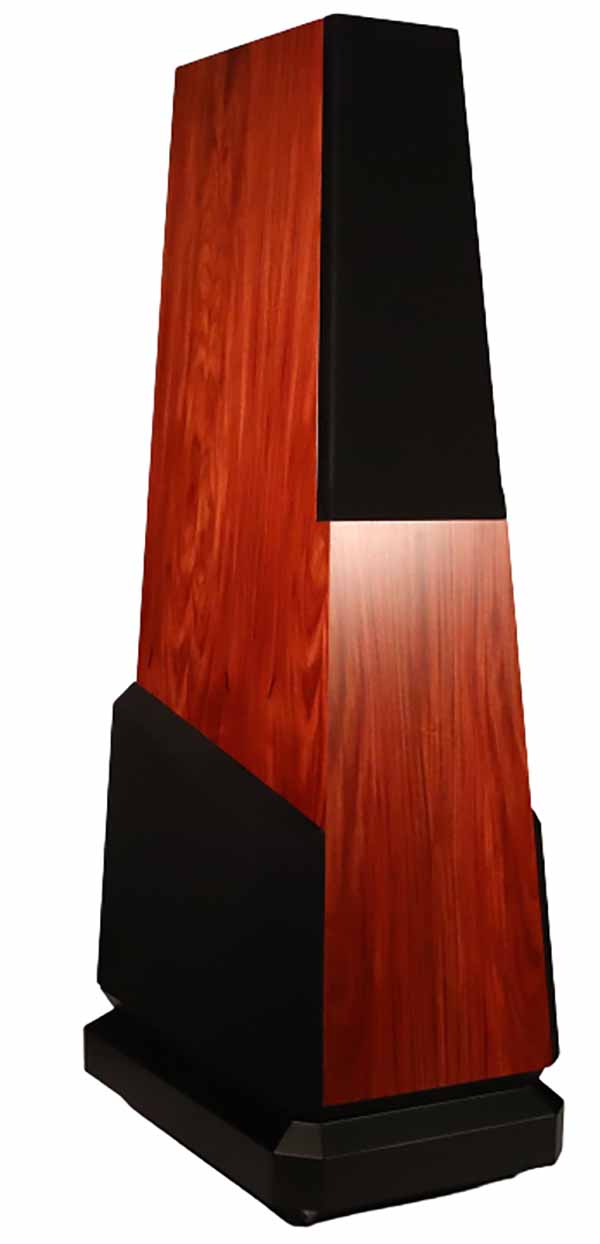 In addition, the rear of each Kento speaker features low-frequency room compensation controls; a strip of 11 small analog potentiometers allows for small tweaks to the powered subwoofer section, letting the user tune the bass output by hand, counteracting the standing waves and resonances of the room.
We listened to Mark-Almond's "The Ghetto" (originally from the English group's self-titled 1971 debut LP on Blue Thumb), and the track's gospel-esque backup vocalists seemed to appear in the room, lifelike and grand. Recorded 55 years ago, it all sounded both lusty and surprisingly contemporary.
"Million-dollar sound without a few zeros on the end," Vandersteen sales director Brad O'Toole had winkingly promised visitors—and although I try to resist slogans and puffery, it was hard to disagree.
In addition, the rear of each Kento speaker features low-frequency room compensation controls; a strip of 11 small analog potentiometers allows for small tweaks to the powered subwoofer section, letting the user tune the bass output by hand, counteracting the standing waves and resonances of the room.
We listened to Mark-Almond's "The Ghetto" (originally from the English group's self-titled 1971 debut LP on Blue Thumb), and the track's gospel-esque backup vocalists seemed to appear in the room, lifelike and grand. Recorded 55 years ago, it all sounded both lusty and surprisingly contemporary.
"Million-dollar sound without a few zeros on the end," Vandersteen sales director Brad O'Toole had winkingly promised visitors—and although I try to resist slogans and puffery, it was hard to disagree.
Next door, in room 1434, Ultra Fidelis—a prominent Wisconsin retailer—had put together a system built around Vandersteen Kento loudspeakers finished in a lovely burnt sienna (think dark orange). Powering those Kento speakers ($47,000/pair) were Vandersteen M5-HPA monoblocks ($21,000/pair), with a Vandersteen L5-ACC Audio Control Center ($15,000) doing preamp duty. It was the L5's debut as a production model, following previous outings as a prototype.
I learned that there's a lot of non-DSP adjustability in the current crop of Vandersteen products. The M5-HPA's have selectable high-pass settings, so that bass below the chosen frequency point is sent to the Kentos' internal 400-watt powered subwoofers. This configuration allows the main amplifiers to operate with greater headroom and less thermal stress.
In addition, the rear of each Kento speaker features low-frequency room compensation controls; a strip of 11 small analog potentiometers allows for small tweaks to the powered subwoofer section, letting the user tune the bass output by hand, counteracting the standing waves and resonances of the room.