Moving to a larger ensemble—10 voices and players—L'Escadron Volant de la Reine (The Queen's Flying Squadron) offers a stylish program of music in the French style by Giovanni Girolamo Kapsberger (Il Tedesco, Harmonia Mundi HMM 902645, 16/44.1 PCM download). The opening a cappella of "Lunge da voi ben mio" is lovely and airy with realistically rounded voices spread across the front within a moderately deep acoustical space. The full ensemble soon joins; the instruments fill that space, front to back and side to side, even as all the voices and instruments remain distinct.
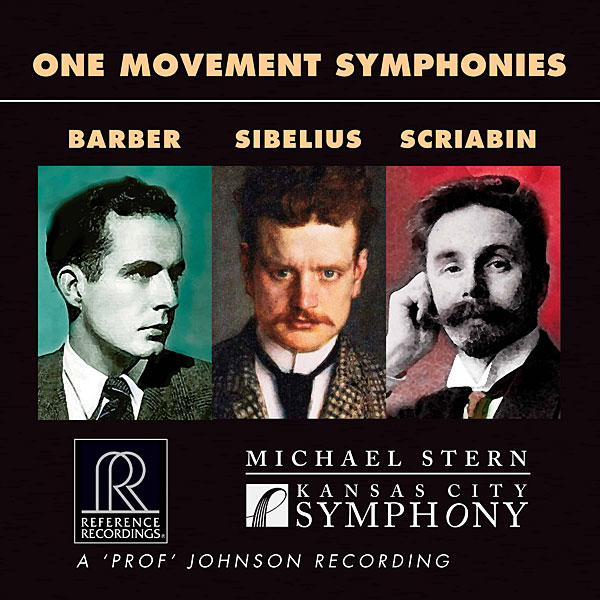 Finally, I tested the Pre90 with a full symphony orchestra, the Kansas City Symphony conducted by Michael Stern in Sibelius's Symphony No.7 (One Movement Symphonies, 24/176.4 PCM download, Reference Recordings RR-149). The bass fiddles open, rumbling from the deep, far right, as the upper strings slowly fill in across the front. The woodwinds enter center right between the two tiers of strings. The most remarkable moment occurs with the astonishing Largamente (19:33) as the hushed strings extend over a wide, deep soundstage. The Pre90 offers it up with great depth and detail, approaching what I hear in the multichannel version of this recording.
In order to hear what of the lively, balanced, dynamic sound can be ascribed to the Pre90, I removed it. Without it, I noted marginally less weight and a bit less dynamic impact.
Is the Pass XP-32 a silly comparison?
Finally, I tested the Pre90 with a full symphony orchestra, the Kansas City Symphony conducted by Michael Stern in Sibelius's Symphony No.7 (One Movement Symphonies, 24/176.4 PCM download, Reference Recordings RR-149). The bass fiddles open, rumbling from the deep, far right, as the upper strings slowly fill in across the front. The woodwinds enter center right between the two tiers of strings. The most remarkable moment occurs with the astonishing Largamente (19:33) as the hushed strings extend over a wide, deep soundstage. The Pre90 offers it up with great depth and detail, approaching what I hear in the multichannel version of this recording.
In order to hear what of the lively, balanced, dynamic sound can be ascribed to the Pre90, I removed it. Without it, I noted marginally less weight and a bit less dynamic impact.
Is the Pass XP-32 a silly comparison?
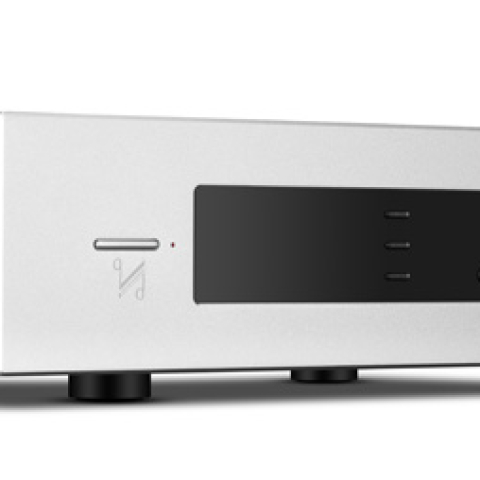
I don't own a preamp, so I sent out an SOS to other reviewers, hoping that I might borrow an already-reviewed preamp to compare the Topping to. Among the amplifiers that would make reasonable, logical candidates for comparison to the Topping Pre90 are the two Benchmark preamplifiers—the LA4 line preamplifier ($2599) and the HPA4 headphone amplifier ($2999), which can also be used as a line preamplifier—although both are considerably more expensive than the Topping. Neither was available. Pricewise, the Schiit Freya+ ($949 with tubes) makes an even better match, but it has not yet been reviewed in Stereophile—an omission that will soon be corrected. In any case, its tubed operation (in its active mode: the Freya+ can operate in passive, differential buffer, or differential gain modes, the latter using tubes) makes it a very different creature than the Pre90. In my search for a preamp for comparison, only one turned up: Pass Laboratories' three-chassis, 62.5lb, $17,500 XP-32 line preamplifier. On its face, it may seem silly to compare a $17,500, three-box preamp with Topping's diminutive, $850 (including the Ext90), 5lb preamp. And yet, they accomplish the same tasks with comparable functionality and, on the test bench, should perform comparably. Besides, I was eager to try out the big, beautiful Pass Labs machine.
The unboxing and setup experience was certainly different: The Pass called on muscles usually reserved for loudspeakers and power amps. The XP-32 has more inputs and outputs, including a dedicated home-theater bypass and a useful balance control. Pass's metal remote control is heavier than Topping's lightweight plastic one and much more dependable. The XP-32's large volume knob is almost too large, just as the Topping's knob is almost too small. The XP-32's volume settings range over 200 0.5dB steps, from 000 to 199 (–99dB to +10dB); 179 is equal to 0dB, or a gain of 1×. The volume chosen applies to all inputs (except the HT bypass). The XP-32 cannot be powered off from the front panel or the remote control. The Pre90's volume settings range over 232 0.5db steps, from –99dB to +16dB, and can be set and remembered for each input; settings are retained through a power recycle. The Pass runs moderately warm.
I inserted the XP-32 into the system by simply pulling the XLR cables from the Pre90 and plugging them into the appropriate jacks on the Pass preamp. Powering up the Pass initiates a warm-up process that takes a few minutes and concludes with a subtle relay click and the display of the volume level: 000. After advancing the level up to "179" (0dB), I could hear a barely discernible soft "ssshh" with my ear within 1–2" of the tweeter—much too quiet to have any effect on listening at any level. The Pre90 was even quieter.
 With the XP-32 in the system and Sol & Pat cued up, I clicked "play" and—gosh darn, the Pass XP-32 does sound wonderful! Just as lively, just as dynamic, just as transparent as the Topping, but different. The tambourine sounded the same, but the foot-stomping was deader and quieter. The instruments sounded clear, more rounded, and a foot or two farther back; that gave me the impression of a gentle treble rolloff, although JA's measurements refute that.
 I had a surprising experience with a recent recording, Concerti All'Arrabbiata (Aparte AP262 CD, 16/44.1 download) with the Freiburger Barockorchester conducted by Gottfried von der Goltz. It includes spirited, zesty concerti, all employing winds, including horns. With the Pre90, I was startled by the up-front, in-your-face horns and, although the winds remained integrated with the strings, there was little depth to the soundstage. Exciting and delightful as that was, I hoped that the XP-32 would expand the soundstage and restore the brass to their proper place at the rear of the stage. With the XP-32, the lower end of the spectrum (mostly two cellos and a double bass) was full, and the ambient space seemed deep if less detailed. The main ensemble was a bit more distant, but the brass was still up front. When I consulted the booklet, I found a photograph of the ensemble in performance and, lo and behold, the horns were right up front!
 On Jane Ira Bloom's "Song Patrol" (Early Americans, Sono Luminus SLE-70005, Blu-ray), the XP-32 sounds louder and richer, especially in the bass, and the instruments fill the space between the speakers. With the Pre90, instruments have marginally less impact but are more distinctly placed within the space. With the above-mentioned Kapsberger recording, the XP-32 offered a more immediate and flattering presentation of voices and instruments than the Topping, at the expense of their disambiguation and a reduction in the sense of place.
Is one preamp more accurate than the other? There's no way to know, since we cannot know exactly what the mastering engineers committed to the recording. That's Floyd Toole's Circle of Confusion. All we can determine by listening is what sounds right or merely more right in our own systems. F. Scott Fitzgerald said, "The test of a first-rate intelligence is the ability to hold two opposed ideas in mind at the same time and still retain the ability to function." My dominant left hemisphere says that the Pre90 is more literal and therefore more honest; it argues that the XP-32 is adding something. My right hemisphere maintains that the XP-32 simply sounds better, whatever that means, and the resulting enjoyment is what this is really all about. My left and right hemispheres often wrestle over this at night.
Multichannel use
On Jane Ira Bloom's "Song Patrol" (Early Americans, Sono Luminus SLE-70005, Blu-ray), the XP-32 sounds louder and richer, especially in the bass, and the instruments fill the space between the speakers. With the Pre90, instruments have marginally less impact but are more distinctly placed within the space. With the above-mentioned Kapsberger recording, the XP-32 offered a more immediate and flattering presentation of voices and instruments than the Topping, at the expense of their disambiguation and a reduction in the sense of place.
Is one preamp more accurate than the other? There's no way to know, since we cannot know exactly what the mastering engineers committed to the recording. That's Floyd Toole's Circle of Confusion. All we can determine by listening is what sounds right or merely more right in our own systems. F. Scott Fitzgerald said, "The test of a first-rate intelligence is the ability to hold two opposed ideas in mind at the same time and still retain the ability to function." My dominant left hemisphere says that the Pre90 is more literal and therefore more honest; it argues that the XP-32 is adding something. My right hemisphere maintains that the XP-32 simply sounds better, whatever that means, and the resulting enjoyment is what this is really all about. My left and right hemispheres often wrestle over this at night.
Multichannel use
I introduced this review by saying that I needed a multichannel preamp. But the Topping Pre90 is a stereo preamp—not multichannel—and this review has been conducted in stereo. What gives? I bought three Pre90s. In principle, the volume on all three Pre90s can be controlled with a single carefully aimed remote control and monitored via the numbers on the front-panel display. But I tried that approach with the Benchmark LA4 and found it a less-than-ideal solution. It's not ideal because the volume can easily get out of synch among the three preamps, and we already know that the Pre90's remote control is finicky. With the Benchmark preamplifiers, I improved things by buying an IR receiver/splitter on the internet for about $20. This little box accepts a tiny, wired IR sensor as input and has four tiny, wired IR transmitters as outputs. I attached one transmitter to the IR sensor on each of the three Benchmark LA4s. It's a bit of a kludge, but it worked. I intend to try the same thing with the Topping preamps.
Conclusions
The Pre90 is a simple, compact, analog stereo preamplifier with a transparent, noise-free sound. Signal selection, power on/off, muting, and volume adjustments are equally noise-free, save for the subtle ticks of the relays that accomplish those tasks. Although it is small and inexpensive, the Topping preamp (with the Ext90 extension) has all the necessary features, with one exception. It lacks a channel-balance control, which may be critical to some users. Also, the effectiveness of the remote control could be improved. Some people may summarily reject it because of its low cost, small size, limited warranty, Chinese manufacture, or the fact that it's only sold online. All those parameters must be weighed against its low price and outstanding performance. It fits my needs, and it fits my ears, so for me it's a great bargain.
Finally, I tested the Pre90 with a full symphony orchestra, the Kansas City Symphony conducted by Michael Stern in Sibelius's Symphony No.7 (One Movement Symphonies, 24/176.4 PCM download, Reference Recordings RR-149). The bass fiddles open, rumbling from the deep, far right, as the upper strings slowly fill in across the front. The woodwinds enter center right between the two tiers of strings. The most remarkable moment occurs with the astonishing Largamente (19:33) as the hushed strings extend over a wide, deep soundstage. The Pre90 offers it up with great depth and detail, approaching what I hear in the multichannel version of this recording.
In order to hear what of the lively, balanced, dynamic sound can be ascribed to the Pre90, I removed it. Without it, I noted marginally less weight and a bit less dynamic impact.
I don't own a preamp, so I sent out an SOS to other reviewers, hoping that I might borrow an already-reviewed preamp to compare the Topping to. Among the amplifiers that would make reasonable, logical candidates for comparison to the Topping Pre90 are the two Benchmark preamplifiers—the LA4 line preamplifier ($2599) and the HPA4 headphone amplifier ($2999), which can also be used as a line preamplifier—although both are considerably more expensive than the Topping. Neither was available. Pricewise, the Schiit Freya+ ($949 with tubes) makes an even better match, but it has not yet been reviewed in Stereophile—an omission that will soon be corrected. In any case, its tubed operation (in its active mode: the Freya+ can operate in passive, differential buffer, or differential gain modes, the latter using tubes) makes it a very different creature than the Pre90. In my search for a preamp for comparison, only one turned up: Pass Laboratories' three-chassis, 62.5lb, $17,500 XP-32 line preamplifier. On its face, it may seem silly to compare a $17,500, three-box preamp with Topping's diminutive, $850 (including the Ext90), 5lb preamp. And yet, they accomplish the same tasks with comparable functionality and, on the test bench, should perform comparably. Besides, I was eager to try out the big, beautiful Pass Labs machine.
With the XP-32 in the system and Sol & Pat cued up, I clicked "play" and—gosh darn, the Pass XP-32 does sound wonderful! Just as lively, just as dynamic, just as transparent as the Topping, but different. The tambourine sounded the same, but the foot-stomping was deader and quieter. The instruments sounded clear, more rounded, and a foot or two farther back; that gave me the impression of a gentle treble rolloff, although JA's measurements refute that.
I had a surprising experience with a recent recording, Concerti All'Arrabbiata (Aparte AP262 CD, 16/44.1 download) with the Freiburger Barockorchester conducted by Gottfried von der Goltz. It includes spirited, zesty concerti, all employing winds, including horns. With the Pre90, I was startled by the up-front, in-your-face horns and, although the winds remained integrated with the strings, there was little depth to the soundstage. Exciting and delightful as that was, I hoped that the XP-32 would expand the soundstage and restore the brass to their proper place at the rear of the stage. With the XP-32, the lower end of the spectrum (mostly two cellos and a double bass) was full, and the ambient space seemed deep if less detailed. The main ensemble was a bit more distant, but the brass was still up front. When I consulted the booklet, I found a photograph of the ensemble in performance and, lo and behold, the horns were right up front!
On Jane Ira Bloom's "Song Patrol" (Early Americans, Sono Luminus SLE-70005, Blu-ray), the XP-32 sounds louder and richer, especially in the bass, and the instruments fill the space between the speakers. With the Pre90, instruments have marginally less impact but are more distinctly placed within the space. With the above-mentioned Kapsberger recording, the XP-32 offered a more immediate and flattering presentation of voices and instruments than the Topping, at the expense of their disambiguation and a reduction in the sense of place.
Is one preamp more accurate than the other? There's no way to know, since we cannot know exactly what the mastering engineers committed to the recording. That's Floyd Toole's Circle of Confusion. All we can determine by listening is what sounds right or merely more right in our own systems. F. Scott Fitzgerald said, "The test of a first-rate intelligence is the ability to hold two opposed ideas in mind at the same time and still retain the ability to function." My dominant left hemisphere says that the Pre90 is more literal and therefore more honest; it argues that the XP-32 is adding something. My right hemisphere maintains that the XP-32 simply sounds better, whatever that means, and the resulting enjoyment is what this is really all about. My left and right hemispheres often wrestle over this at night.
I introduced this review by saying that I needed a multichannel preamp. But the Topping Pre90 is a stereo preamp—not multichannel—and this review has been conducted in stereo. What gives? I bought three Pre90s. In principle, the volume on all three Pre90s can be controlled with a single carefully aimed remote control and monitored via the numbers on the front-panel display. But I tried that approach with the Benchmark LA4 and found it a less-than-ideal solution. It's not ideal because the volume can easily get out of synch among the three preamps, and we already know that the Pre90's remote control is finicky. With the Benchmark preamplifiers, I improved things by buying an IR receiver/splitter on the internet for about $20. This little box accepts a tiny, wired IR sensor as input and has four tiny, wired IR transmitters as outputs. I attached one transmitter to the IR sensor on each of the three Benchmark LA4s. It's a bit of a kludge, but it worked. I intend to try the same thing with the Topping preamps.
The Pre90 is a simple, compact, analog stereo preamplifier with a transparent, noise-free sound. Signal selection, power on/off, muting, and volume adjustments are equally noise-free, save for the subtle ticks of the relays that accomplish those tasks. Although it is small and inexpensive, the Topping preamp (with the Ext90 extension) has all the necessary features, with one exception. It lacks a channel-balance control, which may be critical to some users. Also, the effectiveness of the remote control could be improved. Some people may summarily reject it because of its low cost, small size, limited warranty, Chinese manufacture, or the fact that it's only sold online. All those parameters must be weighed against its low price and outstanding performance. It fits my needs, and it fits my ears, so for me it's a great bargain.