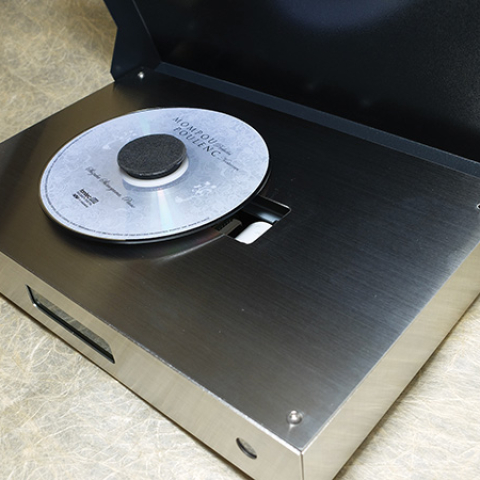
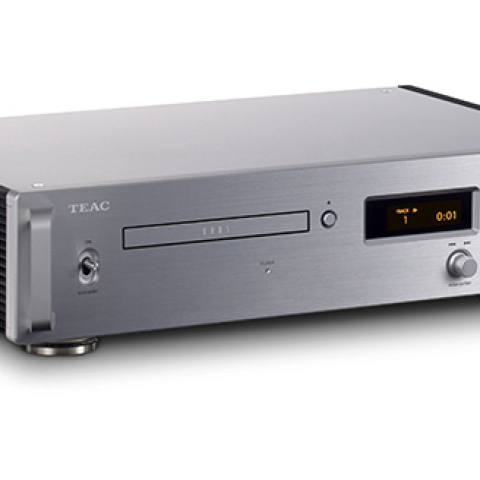
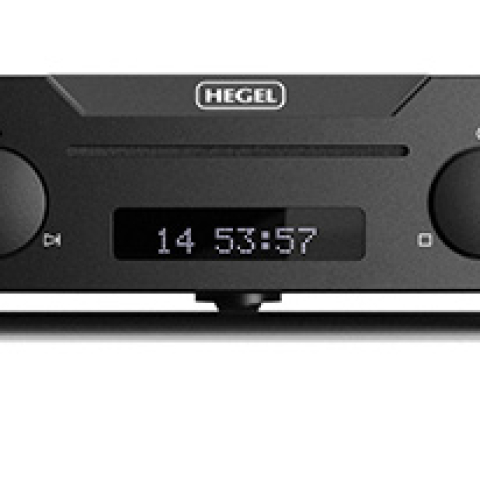
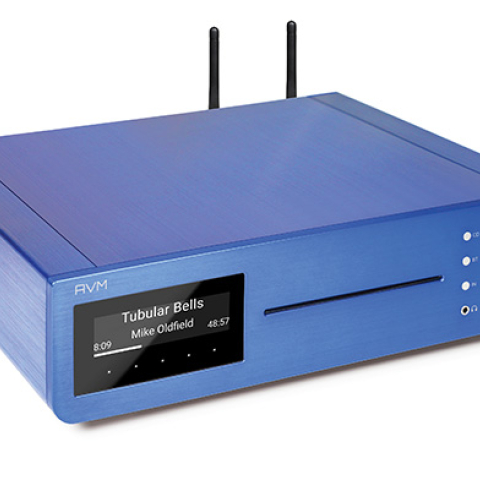
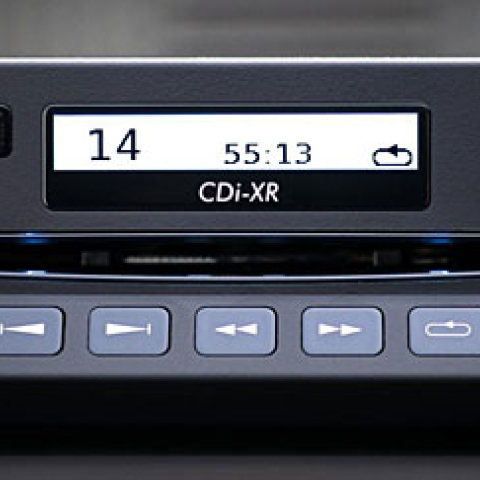
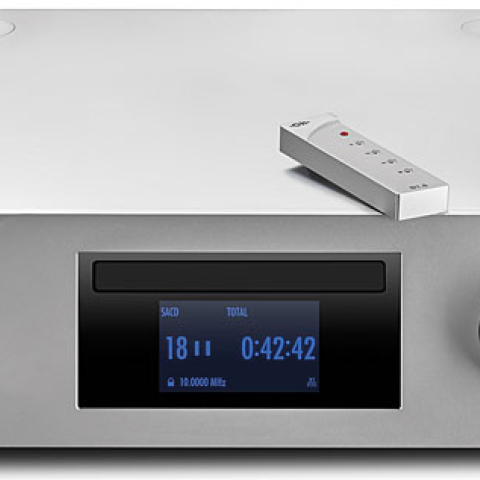
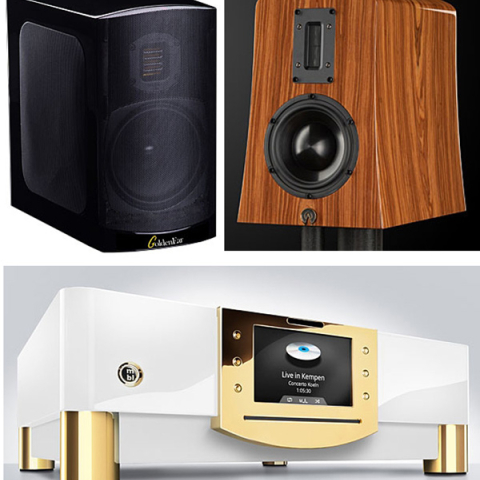
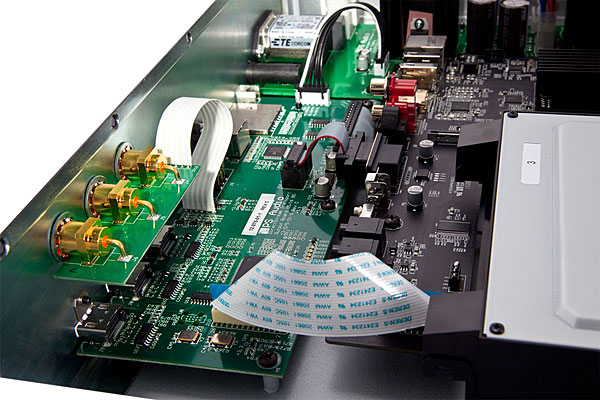
As well as having a Stereo/Two-Channel digital output through its I2S/HDMI connection, the DMP can also accommodate multichannel SACD via two additional I2S/HDMI connections. But before multichannel fans get too excited, they should keep in mind that getting high-resolution multichannel playback requires three DirectStream DACs—two channels per DAC—with no convenient way of adjusting channel balances.
Listening
In comparing the sound of a new audio component with that of a familiar reference, there are three possibilities: 1) The sounds of the two products may be extremely close, the difference, if any, being so subtle that multiple A/B comparisons are needed to get a handle on it.
2) The difference is fairly easy to hear, but it's hard to know whether the sound of the new product represents a) an improvement, b) just a change, or even c) a degradation in the sound.
3) Without extensive comparisons, the new product immediately impresses as sounding not merely different but better, an impression reinforced by further listening.
The DirectStream Memory Player fell into that third category. I played the same CDs in the DMP and the PerfectWave Transport, using the same HDMI cable, and the improvement wrought by the DMP was akin to the one produced by cleaning an LP with the Audiodesksysteme Gläss ultrasonic Vinyl Cleaner—not in noise level as such (the CD format has that under control), but in overall clarity. My copy of the Chesky Records Jazz Sampler & Audiophile Test Compact Disc, Vol.1 (Chesky JD37) has seen a lot of use—despite my best efforts to handle it with care, many tiny scratches are visible on its playing surface. Played in the PWT, it gave no indication that these scratches had any detrimental effect on the sound (no dropouts); but played in the DMP, the same disc sounded somehow fresher, cleaner. I heard the same effect with CDs that had hardly been played before, and whose surfaces were pristine. It seems that there's more information hidden in those bits, information that the DMP somehow retrieves. Yes, I know: bits are bits, and a technical examination of the two players' bitstreams would almost certainly show that the patterns of zeros and ones put out by their transports are identical, with any differences in retrieval of information handled by error correction. Perhaps the differences in sound are due to the timing of the bits. This is, in fact, what PS Audio claims is the benefit of the latest iteration of their Digital Lens circuit. But whatever the cause, the result was obvious—and once I'd heard it, it was hard to go back to the PWT.
 HDMI Interconnects
The DMP has three types of digital outputs: I2S, XLR (AES/EBU), and RCA coax (S/PDIF), with the recommended I2S connection made through the HDMI connector/cable. As the owner's manual points out, the data at the HDMI output are I2S data, not HDMI, as with home-theater components. Included with the DMP is a 1m-long HDMI link with the PS Audio logo. PSA notes that the quality of the HDMI link, as well as its length, can significantly affect the sound: shorter is better, but whatever the cable's length, "make certain that you install the highest quality HDMI cable you can afford." My initial listening to the DMP was with its stock HDMI cable, and the sound was very good indeed. But I had to hear what the DMP would sound like with something better. For this, I chose 1m lengths of Nordost Heimdall 2 4K UHD and AudioQuest Coffee. Various technical claims are made for both HDMI cables, but they deal mostly with the transmission of Ultra High Definition video signals, not audio. (The exception is the minimization of jitter, claimed by both makers.) Each costs about $600, or 10% of the DMP's price—a not-unreasonable price for an upgrade. (Nordost and AudioQuest also make far more expensive HDMI links.) I did a series of comparisons: First, I switched back and forth between the PS Audio and Nordost HDMIs until I felt I had a handle on any sonic differences. Then I switched repeatedly between the PSA and AudioQuest, and finally between Nordost and AQ. The recordings used were constants: the Chesky Records Jazz Sampler & Audiophile Test Compact Disc, Vol.1, and track 1 of Tutti! An Orchestral Sampler: Eiji Oue and the Minnesota Orchestra performing Rimsky-Korsakov's Dance of the Tumblers (HDCD, Reference RR-906 CD). I used no SACDs.
Compared to the PS Audio link, the Nordost and AudioQuest HDMIs were more detailed, with better soundstage definition. In a shoot-out between the Nordost and AQ, however, my preference was for the Nordost. The AQ was more laid-back, the Nordost more lively and dynamic, with a greater sense of transparency. My system is wired with Nordost Valhalla 2, so the perceived superiority of Nordost's Heimdall 2 4K may represent what some audiophiles consider to be an advantage of wiring an entire system with the same brand of cable. The magnitude of improvement with the Nordost or AQ cables wasn't great—much less than between the PWT and DMP—but it was definitely worthwhile.
SACD Sound
Prior to getting the DMP for review, I owned about a dozen SACD/CDs. None was in my Frequently Played category, so I didn't feel unduly deprived by being able to play only their "Red Book" (PCM) CD layers. However, given that the DMP's claim to fame is its ability to read SACDs' high-resolution DSD layer using the DirectStream DAC, I felt it incumbent on me to evaluate the claimed sonic superiority of SACD/DSD to PCM, using recordings known for their sound quality. I got hold of some recordings of a variety of contemporary artists from Blue Coast Records, some Mobile Fidelity Sound Lab reissues of albums by Frank Sinatra and Dean Martin—and One, a collection of performances recorded in DSD, and the first release on PS Audio's own Sonoma Music label.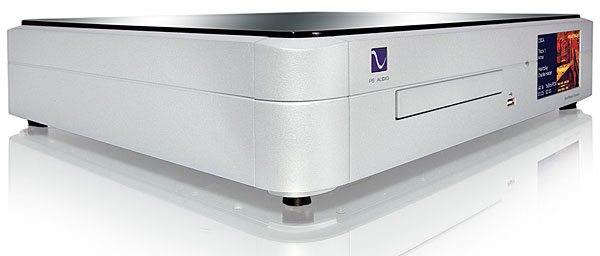 Using the DMP to compare the sounds of these discs' CD and SACD layers wasn't as straightforward as I'd hoped. The simplest thing would have been a button on the remote control that toggles the playback between CD and SACD layers while the disc is playing—but the technical differences between the two formats prevent such an arrangement. With a hybrid disc, the DMP defaults to two-channel SACD. To play the CD layer, you have to access the setup menu on the touch-sensitive display and select CD. However, this works only if there is no disc loaded. If a Hybrid disc has been loaded and you try to change the playback from Stereo SACD to CD playback, it still plays the SACD layer. You have to eject the disc, then switch the DMP to CD playback. If you then play another SACD/CD, it will retain the instruction to play the CD layer. If you want to switch back to SACD, you have to select Stereo SACD playback on the menu—again without a disc being loaded. This somewhat cumbersome procedure is needed only if you want to compare SACD with CD, as in a review.
If I was disappointed in any aspect of the DMP's performance, it was in its playback of SACDs. Don't get me wrong—in every comparison I made, the DSD layer sounded better than the CD layer. The trumpets in Sinatra's Swingin' Session!!! (SACD/CD, Capitol/Mobile Fidelity Sound Lab UDSACD 2110) were sweeter, more like the real thing; and on his While She Sleeps: Piano Lullabies, Art Lande's closely miked solo piano had a more precisely defined image (SACD/CD, Blue Coast BCRSA 2012a). But the differences, while not negligible, were also not that great. Given a choice, I'd always play the DSD layer, but without direct comparison to the DSD, the CD layer still sounded excellent. On one occasion, I was listening to and admiring what I thought was DSD, only to look at the display and find out that I was actually playing the CD layer. Switching to DSD did produce an improvement; that being said, it seems that, in the DMP, PS Audio has also produced a marked improvement in CD playback, thus reducing the margin of superiority of DSD over CD. For someone like me, who has a lot of CDs but few SACDs, this is not a bad outcome. In fact, if the DMP provided superior DSD playback but had no effect on CD playback, I wouldn't consider buying one—which I ultimately did.
After wrapping up my formal audition of the DMP, I installed a set of IsoAcoustics Gaia speaker isolators (footers) in the plinths of my Monitor Audio Platinum PL300 II speakers (see review elsewhere in this issue). This produced an across-the-board improvement in focus and transparency.
Conclusions
Using the DMP to compare the sounds of these discs' CD and SACD layers wasn't as straightforward as I'd hoped. The simplest thing would have been a button on the remote control that toggles the playback between CD and SACD layers while the disc is playing—but the technical differences between the two formats prevent such an arrangement. With a hybrid disc, the DMP defaults to two-channel SACD. To play the CD layer, you have to access the setup menu on the touch-sensitive display and select CD. However, this works only if there is no disc loaded. If a Hybrid disc has been loaded and you try to change the playback from Stereo SACD to CD playback, it still plays the SACD layer. You have to eject the disc, then switch the DMP to CD playback. If you then play another SACD/CD, it will retain the instruction to play the CD layer. If you want to switch back to SACD, you have to select Stereo SACD playback on the menu—again without a disc being loaded. This somewhat cumbersome procedure is needed only if you want to compare SACD with CD, as in a review.
If I was disappointed in any aspect of the DMP's performance, it was in its playback of SACDs. Don't get me wrong—in every comparison I made, the DSD layer sounded better than the CD layer. The trumpets in Sinatra's Swingin' Session!!! (SACD/CD, Capitol/Mobile Fidelity Sound Lab UDSACD 2110) were sweeter, more like the real thing; and on his While She Sleeps: Piano Lullabies, Art Lande's closely miked solo piano had a more precisely defined image (SACD/CD, Blue Coast BCRSA 2012a). But the differences, while not negligible, were also not that great. Given a choice, I'd always play the DSD layer, but without direct comparison to the DSD, the CD layer still sounded excellent. On one occasion, I was listening to and admiring what I thought was DSD, only to look at the display and find out that I was actually playing the CD layer. Switching to DSD did produce an improvement; that being said, it seems that, in the DMP, PS Audio has also produced a marked improvement in CD playback, thus reducing the margin of superiority of DSD over CD. For someone like me, who has a lot of CDs but few SACDs, this is not a bad outcome. In fact, if the DMP provided superior DSD playback but had no effect on CD playback, I wouldn't consider buying one—which I ultimately did.
After wrapping up my formal audition of the DMP, I installed a set of IsoAcoustics Gaia speaker isolators (footers) in the plinths of my Monitor Audio Platinum PL300 II speakers (see review elsewhere in this issue). This produced an across-the-board improvement in focus and transparency.
Conclusions
PS Audio's website describes the DirectStream Memory Player as "the last transport you'll ever need."3 But describing an audio product as "the last," "the ultimate," or "perfect" is a chancy business. Like the DirectStream DAC, the DMP's use of FPGAs makes its firmware upgradable, so I suppose they can make the claim of "future-proof" as well as anyone. PS Audio's position on MQA is still unfolding, but the DMP will almost certainly play any MQA-encoded disc as a "Red Book" CD. The latest firmware version, Huron, which was released in June, prepares the PS Audio DACs for a forthcoming update to PS Audio's Network Bridge II cards that will add support for MQA and Tidal. A report on Huron and the Bridge II update appears elsewhere in this issue.
However, from my perspective, whether or not to what extent the DirectStream Memory Player will handle future digital audio formats is of little importance, as any such recordings are unlikely to form a significant part of my listening diet. What's important to me is playback of the CDs in my collection. Played through the DMP and the DirectStream DAC, my CDs sound better than I'd thought possible.
There's life in the ol' CD yet.
In comparing the sound of a new audio component with that of a familiar reference, there are three possibilities: 1) The sounds of the two products may be extremely close, the difference, if any, being so subtle that multiple A/B comparisons are needed to get a handle on it.
HDMI InterconnectsThe DMP has three types of digital outputs: I2S, XLR (AES/EBU), and RCA coax (S/PDIF), with the recommended I2S connection made through the HDMI connector/cable. As the owner's manual points out, the data at the HDMI output are I2S data, not HDMI, as with home-theater components. Included with the DMP is a 1m-long HDMI link with the PS Audio logo. PSA notes that the quality of the HDMI link, as well as its length, can significantly affect the sound: shorter is better, but whatever the cable's length, "make certain that you install the highest quality HDMI cable you can afford." My initial listening to the DMP was with its stock HDMI cable, and the sound was very good indeed. But I had to hear what the DMP would sound like with something better. For this, I chose 1m lengths of Nordost Heimdall 2 4K UHD and AudioQuest Coffee. Various technical claims are made for both HDMI cables, but they deal mostly with the transmission of Ultra High Definition video signals, not audio. (The exception is the minimization of jitter, claimed by both makers.) Each costs about $600, or 10% of the DMP's price—a not-unreasonable price for an upgrade. (Nordost and AudioQuest also make far more expensive HDMI links.) I did a series of comparisons: First, I switched back and forth between the PS Audio and Nordost HDMIs until I felt I had a handle on any sonic differences. Then I switched repeatedly between the PSA and AudioQuest, and finally between Nordost and AQ. The recordings used were constants: the Chesky Records Jazz Sampler & Audiophile Test Compact Disc, Vol.1, and track 1 of Tutti! An Orchestral Sampler: Eiji Oue and the Minnesota Orchestra performing Rimsky-Korsakov's Dance of the Tumblers (HDCD, Reference RR-906 CD). I used no SACDs.
Prior to getting the DMP for review, I owned about a dozen SACD/CDs. None was in my Frequently Played category, so I didn't feel unduly deprived by being able to play only their "Red Book" (PCM) CD layers. However, given that the DMP's claim to fame is its ability to read SACDs' high-resolution DSD layer using the DirectStream DAC, I felt it incumbent on me to evaluate the claimed sonic superiority of SACD/DSD to PCM, using recordings known for their sound quality. I got hold of some recordings of a variety of contemporary artists from Blue Coast Records, some Mobile Fidelity Sound Lab reissues of albums by Frank Sinatra and Dean Martin—and One, a collection of performances recorded in DSD, and the first release on PS Audio's own Sonoma Music label.
Using the DMP to compare the sounds of these discs' CD and SACD layers wasn't as straightforward as I'd hoped. The simplest thing would have been a button on the remote control that toggles the playback between CD and SACD layers while the disc is playing—but the technical differences between the two formats prevent such an arrangement. With a hybrid disc, the DMP defaults to two-channel SACD. To play the CD layer, you have to access the setup menu on the touch-sensitive display and select CD. However, this works only if there is no disc loaded. If a Hybrid disc has been loaded and you try to change the playback from Stereo SACD to CD playback, it still plays the SACD layer. You have to eject the disc, then switch the DMP to CD playback. If you then play another SACD/CD, it will retain the instruction to play the CD layer. If you want to switch back to SACD, you have to select Stereo SACD playback on the menu—again without a disc being loaded. This somewhat cumbersome procedure is needed only if you want to compare SACD with CD, as in a review.
PS Audio's website describes the DirectStream Memory Player as "the last transport you'll ever need."3 But describing an audio product as "the last," "the ultimate," or "perfect" is a chancy business. Like the DirectStream DAC, the DMP's use of FPGAs makes its firmware upgradable, so I suppose they can make the claim of "future-proof" as well as anyone. PS Audio's position on MQA is still unfolding, but the DMP will almost certainly play any MQA-encoded disc as a "Red Book" CD. The latest firmware version, Huron, which was released in June, prepares the PS Audio DACs for a forthcoming update to PS Audio's Network Bridge II cards that will add support for MQA and Tidal. A report on Huron and the Bridge II update appears elsewhere in this issue.