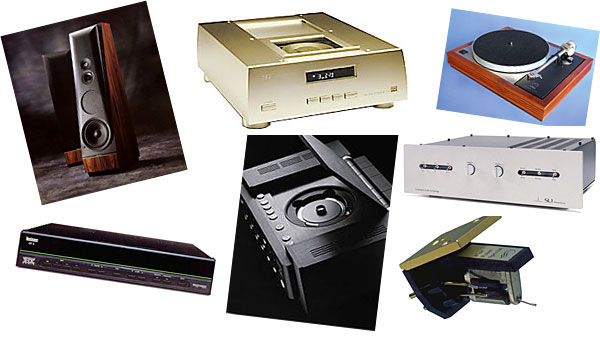
There is a tendency in magazine publishing to concentrate on the present. Writers generally downplay what happened in the irretrievable past as being of lesser importance compared with the new and exciting, their enthusiasm pretty much tied to the ever-in-motion time-line. I instituted Stereophile's annual "Products of the Year" feature, therefore, to give recognition to those components that had proved capable of giving pleasure beyond the formal review period. To confound confusion, there are just five individual categories: "Loudspeakers" (including subwoofers); "Amplification Components" (preamplifiers, power amplifiers, etc.); "Digital Sources" (CD players, transports, D/A processors); "Analog Sources" (phono cartridges, turntables, tonearms, FM tuners, etc.); and "Accessories" (everything else).
The two most important categories are self-explanatory: the "Component of the Year"—the Best of the Best—and the "Budget Component of the Year"—the Best Sound for the Buck. (Last year's winners were the Mark Levinson No.30 D/A processor and the Spica SC-30 loudspeaker, respectively.)
There is also an "Editor's Choice" award, which I reserve to myself to single out those superb-sounding products that have proved themselves. When a company replaces a line of components less than a year old with a whole new line which, in turn, will be replaced in less than a year, I start to wonder if it's even worth reading the promotional literature. When I'm asked to recommend products, therefore, I fall back on mature products that have proven long-term satisfaction. To be eligible for "Editor's Choice," therefore, a component must have been continuously available for at least a decade.
The formal voting procedure consisted of two steps: First, I asked Stereophile's hardware reviewers each to nominate up to five components in each of the seven categories. To be a contender, a product had to have been reported on in Stereophile between the November 1992 and October 1993 issues, either in a full review or in a Follow-Up. Most importantly, only those components for which a writer had put his opinion on the line for public scrutiny could be nominated. I then put together a ballot form which included all the components that had been nominated by three or more writers and/or editors. In this manner, most of the nominees in most of the categories would have been auditioned by most of the reviewers.
So it proved to be. Fifteen of the magazine's reviewing staff gave three votes for their first choice in each category, two votes for their second choice, and one vote for their third choice (if they had a third choice). I tallied the votes; the results you now hold in your hand.