Joint Digital Sources of 1993
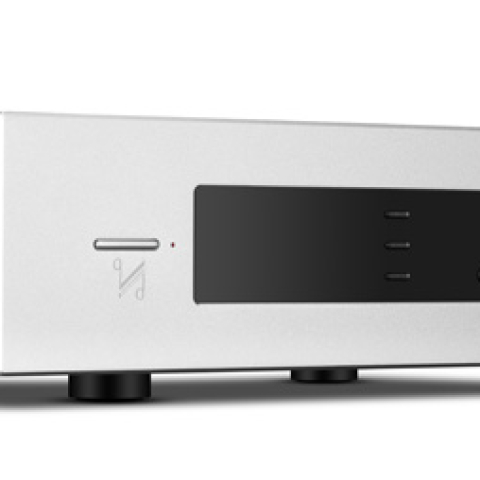
C.E.C. TL 1 CD transport ($4650; reviewed by Robert Harley, Vol.16 No.7, July 1993 Review)
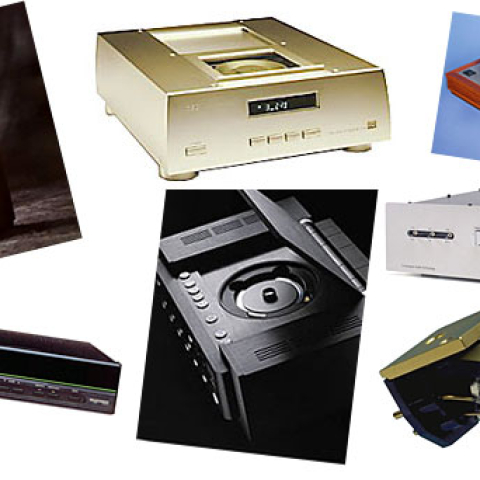
Mark Levinson No.31 CD transport ($8495; reviewed by Robert Harley, Vol.16 No.6, June 1993 Review) I had reorganized the voting strategy this year to minimize the possibility of a tie. Yet in this category, the Mark Levinson and C.E.C. transports remained continually nose-to-nose as the ballots trickled back from the writers. But with hindsight, how could it have been any different? Though each transport sounds quite different from the other, both stand head and shoulders above every other silver-disc spinner in the way they bring digital sound closer to the analog experience. The all-American Levinson has more bass slam; the Japanese belt-drive C.E.C., distributed by Parasound, has a greater sense of ease in the treble; but either one, driving a good inexpensive processor like the Meridian 263, gives a sound that is completely free from digital grain and boasts a soundstage that is as deep and wide as you could wish. And partnered with a state-of-the-art processor like last year's winner, the Mark Levinson No.30, you've got yourself one fine CD player. Objectivists of the "bits-is-bits" persuasion, those benighted souls who feel that CD transports have no right being any different from each other than, say, floppy disk drives, should reread Robert Harley's "Transport of Delight" feature in November '93 (Vol.16 No.11, p.83). Bob's research showed that the portion of that jitter below 20kHz or so almost always goes right through to the DAC chip in the processor to which the transport is hooked up. As you might expect, the No.31 and the TL 1 each have very low jitter in their output datastreams. What is particularly significant is the difference in the spectra of their jitter: the No.31 is lower/better in the bass, the TL 1 is lower/better in the treble—just as you'd expect from how they sound. Exciting times in digital land—perhaps even time for some major credit-card action!
Runners-Up (in alphabetical order)
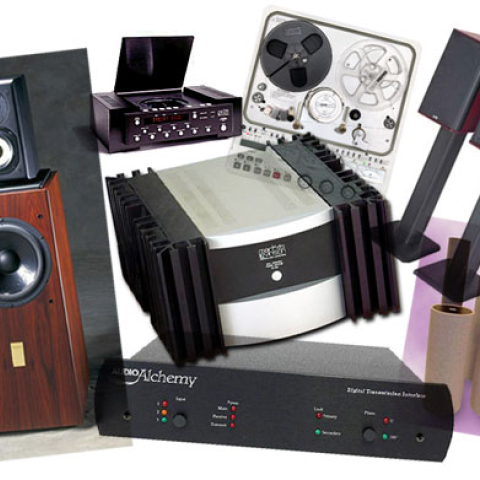
Audio Alchemy DTI ($349; reviewed by Robert Harley, Vol.16 Nos.5 & 11, May & November 1993)
Meridian CDR disc recorder ($6995; reviewed by Robert Harley, Vol.15 No.11, November 1992)
PS Audio Lambda CD transport ($1695; reviewed by Robert Harley, Vol.16 No.10, October 1993 Review)
PS Audio UltraLink D/A processor ($1995–$2195; reviewed by Robert Harley & Robert Deutsch, Vol.15 Nos.6 & 9, June & September 1992; and Corey Greenberg, Thomas J. Norton, & Robert Harley, Vol.16 Nos.1, 3, & 10, January, March, & October 1993 Review)
Theta DS Pro Basic II D/A processor ($1995–$3195; reviewed by Corey Greenberg & J. Gordon Holt, Vol.16 Nos.1 & 6, January & June 1993)
Mark Levinson No.31 CD transport ($8495; reviewed by Robert Harley, Vol.16 No.6, June 1993 Review) I had reorganized the voting strategy this year to minimize the possibility of a tie. Yet in this category, the Mark Levinson and C.E.C. transports remained continually nose-to-nose as the ballots trickled back from the writers. But with hindsight, how could it have been any different? Though each transport sounds quite different from the other, both stand head and shoulders above every other silver-disc spinner in the way they bring digital sound closer to the analog experience. The all-American Levinson has more bass slam; the Japanese belt-drive C.E.C., distributed by Parasound, has a greater sense of ease in the treble; but either one, driving a good inexpensive processor like the Meridian 263, gives a sound that is completely free from digital grain and boasts a soundstage that is as deep and wide as you could wish. And partnered with a state-of-the-art processor like last year's winner, the Mark Levinson No.30, you've got yourself one fine CD player. Objectivists of the "bits-is-bits" persuasion, those benighted souls who feel that CD transports have no right being any different from each other than, say, floppy disk drives, should reread Robert Harley's "Transport of Delight" feature in November '93 (Vol.16 No.11, p.83). Bob's research showed that the portion of that jitter below 20kHz or so almost always goes right through to the DAC chip in the processor to which the transport is hooked up. As you might expect, the No.31 and the TL 1 each have very low jitter in their output datastreams. What is particularly significant is the difference in the spectra of their jitter: the No.31 is lower/better in the bass, the TL 1 is lower/better in the treble—just as you'd expect from how they sound. Exciting times in digital land—perhaps even time for some major credit-card action!
Meridian CDR disc recorder ($6995; reviewed by Robert Harley, Vol.15 No.11, November 1992)
PS Audio Lambda CD transport ($1695; reviewed by Robert Harley, Vol.16 No.10, October 1993 Review)
PS Audio UltraLink D/A processor ($1995–$2195; reviewed by Robert Harley & Robert Deutsch, Vol.15 Nos.6 & 9, June & September 1992; and Corey Greenberg, Thomas J. Norton, & Robert Harley, Vol.16 Nos.1, 3, & 10, January, March, & October 1993 Review)
Theta DS Pro Basic II D/A processor ($1995–$3195; reviewed by Corey Greenberg & J. Gordon Holt, Vol.16 Nos.1 & 6, January & June 1993)