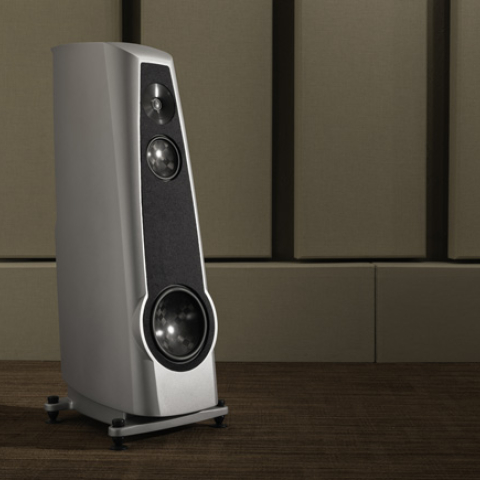
When I visited NHT's manufacturing facility in early May, I was struck by a comment managing director Chris Byrne made when describing NHT's Xd loudspeaker, which employs sophisticated digital signal processing (DSP) for its crossovers and equalization functions. "You do realize that we could have never incorporated such complex slopes in a physical crossover," Byrne proselytized. I did? Well, once the obvious had been pointed out to me, I did. Perhaps, I thought, this is what all that cheap computing power is really for in audio—not those bogus DSP "effects" that the mainstream manufacturers used to stuff into their "sophisticated" components. As Kal Rubinson pointed out in his review of the Xd, audiophiles have not voted with their pocketbooks for electronic components that marry computing power with audio. Yet, some products simply beg for a number-crunching solution. As Meridian's Bob Stuart has insisted for years, loudspeaker crossovers (and room integration) are ripe for this approach, although no single product has managed to grab the public's imagination to date.
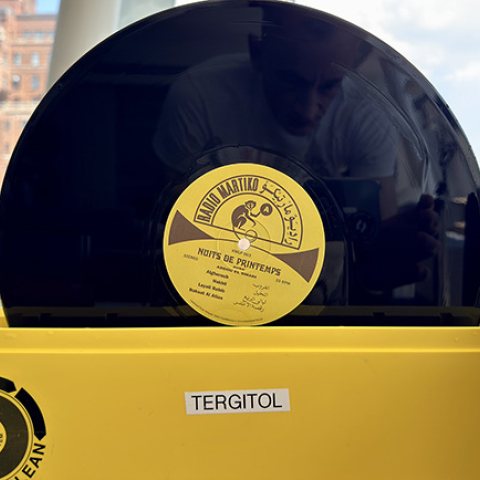
Paradoxically, I suspect that the killer app just might be the analog LP. Stop laughing—it actually makes a great deal of sense, and not because people want to marry the more "relaxed" analog sound with MP3 convenience. I'm talking about phono equalization. Unlike CDs, LPs aren't cut to disc as mastered—in order to cram more music on a side and permit the stylus to track deep bass grooves near the takeout groove, engineers have to apply a special equalization curve to the music before it is fed to the cutting lathe. The phono section then has to apply the reverse of that curve to make the music sound "right" on playback. Compounding the problem, over the years, more than one curve has been employed. In the '60s, phono equalization was standardized as the RIAA curve, but prior to that, there were several competing formats—stop me if you've heard this one before—and preamplifiers offered switchable EQs. And, of course, some cutting labs had EQs that were non-standard or just a smootch out of true, so what made it to disc was not always the same as what was the theoretical ideal. Yet, in the early days of audio—until now, actually—it was just too complicated to offer customized phono equalization curves.
These days, switching EQ values ought to be simple, and my prediction is that the next big thing may be a programmable phono equalizer that either exists in the user's computer or is functionally indistinguishable from a computer. In fact, there are several already available, such as Enhanced Audio's Audio Restoration and Enhancement Software. I haven't heard it, but it just might be the sound of the future. Keep in mind that I also predicted that CD was too complicated for general acceptance and that power cords couldn't possibly make a difference. But hey, I'm bound to be right someday.