 The Golden Road (to Unlimited Devotion)
Setup was easy. After connecting cables, my first order of business was to narrow the many available inputs down to the ones I actually use: one balanced, line-level input fed from my Bricasti DAC and one phono input from my VPI turntable. Unusually for a preamplifier, you must also choose an output, tubed or solid state. Any unused outputs can be turned off. Inputs can be renamed, their trim levels adjusted. I set phono gain and loading to appropriate levels. Then I started listening. I began my listening by A/B-ing solid state and tubed outputs, both via balanced connections. I turned to Decca Records' 2022 remastering of George Solti's masterpiece recording of Wagner's Der Ring Des Nibelungen (Decca 455 555). Jumping straight to Act III of Götterdämmerung, the brief overture, the horns, as they build up slowly, were more easily differentiated via the solid state output. In Act III, I found "Siegfried's Funeral March" more musical via the tubed output as the huge trumpet crescendi waves began to break on the rocks below Valhalla. Both presentations, though, were equally valid. Listening preferences vary, along with the sonic behavior of associated systems. The C12000 is designed to accommodate that. I went back and forth but listened mostly with tubes. Hearing this reborn Wagner was the most riveting hi-fi experience I've had lately. I own the original LP box—rather, boxes—as well as Decca's CD box set from 1997. But advances in digital restoration techniques, when properly applied, are changing the ballgame. Experienced with this system, with the McIntosh C12000 doing the preamplification, the results were mind-blowing. Never before has the introduction of a component in my reference system motivated me to listen to Wagner's entire Ring Cycle—but that's what happened. I couldn't stop. The quantity of musical information being launched at me was almost overwhelming, in a way I think Wagner would approve of, with both types of output from the C12000, tubed and solid state. All those fabulous sound effects, the opera stars moving around the Sofiensaal studio in Vienna, singing their lungs out, the blasts from the brass, the rhythmic energy of the strings. Is this the greatest recording ever made? It was for me, right then.
 Speaking of great: A recording I often pick when evaluating a new component is Shirley Horn's great 1992 album, Here's to Life. In an interview, current Blue Note head Don Was described it to me as "a genius record." Listening to the CD (Verve 314 511 879-2), I sent the balanced AES3 output from my Pro-Ject CD Box RS2 T transport to my recently upgraded, dual-mono Bricasti M1 Series II DAC. The DAC's analog output passed into one of the balanced inputs of the McIntosh C12000 preamplifier then to the T (for Tube) balanced output, from thence into my McIntosh MC462 amplifier. I heard a superwide soundstage; great definition from the Fender Bass; beautiful, silent, black background during the pauses Shirley specializes in. Her vocals sounded among the best I have heard them, and I've heard them a lot. Switching to LP, I did a direct A/B comparison between the C12000's tubed phono stage and the all-tube Audio Research Reference Phono 3SE, which has been in my Upstairs System for several years. This was tough competition for the McIntosh; the phono-pre–only Audio Research costs significantly more than the C12000 does.
Next I chose a 2022 Mercury Living Presence reissue of Chabrier's España, conducted by Paul Paray (Mercury/Decca SR90212). At first I thought the Audio Research displayed a little more top-end air, a bit more sparkle and definition from triangles and tambourines. But when I increased the gain from the phono stage in the McIntosh C12000 to its maximum value of 64dB—adjusting the volume to compensate—that difference went away. (Such an effect could also be corrected by adjusting resistive loading, but I didn't need to try that.) Both preamps contributed to a wide soundstage, and low strings sounded very fine.
Speaking of great: A recording I often pick when evaluating a new component is Shirley Horn's great 1992 album, Here's to Life. In an interview, current Blue Note head Don Was described it to me as "a genius record." Listening to the CD (Verve 314 511 879-2), I sent the balanced AES3 output from my Pro-Ject CD Box RS2 T transport to my recently upgraded, dual-mono Bricasti M1 Series II DAC. The DAC's analog output passed into one of the balanced inputs of the McIntosh C12000 preamplifier then to the T (for Tube) balanced output, from thence into my McIntosh MC462 amplifier. I heard a superwide soundstage; great definition from the Fender Bass; beautiful, silent, black background during the pauses Shirley specializes in. Her vocals sounded among the best I have heard them, and I've heard them a lot. Switching to LP, I did a direct A/B comparison between the C12000's tubed phono stage and the all-tube Audio Research Reference Phono 3SE, which has been in my Upstairs System for several years. This was tough competition for the McIntosh; the phono-pre–only Audio Research costs significantly more than the C12000 does.
Next I chose a 2022 Mercury Living Presence reissue of Chabrier's España, conducted by Paul Paray (Mercury/Decca SR90212). At first I thought the Audio Research displayed a little more top-end air, a bit more sparkle and definition from triangles and tambourines. But when I increased the gain from the phono stage in the McIntosh C12000 to its maximum value of 64dB—adjusting the volume to compensate—that difference went away. (Such an effect could also be corrected by adjusting resistive loading, but I didn't need to try that.) Both preamps contributed to a wide soundstage, and low strings sounded very fine.
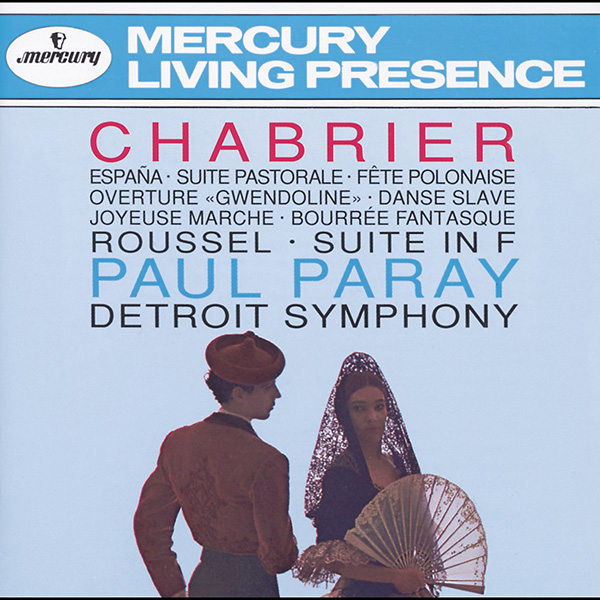 After John Atkinson had concluded his measurements and returned the C12000 to me, I had time to revisit my listening notes. I used the Chabrier España recording to make another comparison between the tubed versus the solid state outputs. This music, and its recording, are percussive and impactful. I got a huge kick in the pants from the solid state presentation; the dynamics were more impressive compared to the tubed output and just plain fun.
Trying out the HDX headphone output on the C12000 was also interesting. As noted previously, the HDX "Headphone Crossfeed Director Circuitry" can be turned on and off, either in Setup mode or with the dedicated switch labeled HDX on the controller module's front panel. For evaluating soundstage and imaging, it makes sense to reach for something acoustic, not some electric pop studio fantasy corresponding to no acoustic reality, so I pulled out the Emerson Quartet performing the Beethoven string quartets (CD, DG 477 8649).
People who invent new roses utilize a process called hybridization. Thousands of new roses can be traced back to a few wild rose species. McIntosh has cross-pollinated tubed and solid state electronics, resulting in lovely sonic flavors and colors. The C12000 blends the best from both worlds while also offering a choice, honoring both innovation and tradition. My time auditioning the C12000 was memorable. Considering its flexibility, whatever your priorities, now and in the future, the McIntosh C12000 2-Channel Solid State and Vacuum Tube Preamplifier merits close consideration if you can swing the price. I bought the review sample. Definitively Class A